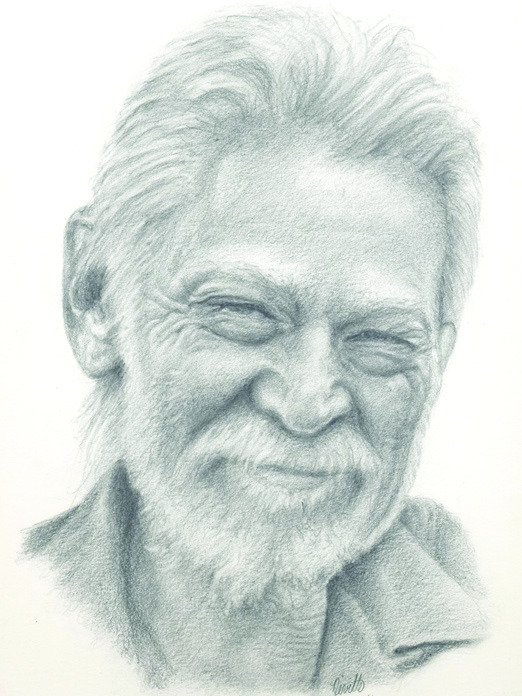
Dr. Grady Early, Distinguished Professor Emeritus, taught math and computer science at Texas State University for 29 years, serving briefly as interim chair of the newly-formed Computer Science department. After retirement, Early began researching his family history and gained some familiarity with various research tools: ancestry, familysearch, newspapers, San Marcos Record archives, findagrave and many more. This made it easy for him to segue into the histories of non-family members, which is how he began to write a story about Southwest Texas Normal in San Marcos, also known as San Marcos Normal, which is now Texas State University. This series will highlight the first staff at Southwest Texas Normal.
The 1907 Pedagogue’s tongue-in-cheek evaluation of William Ansel Palmer’s prowess as a teacher of history and civics was that he: I. Knows all dates. II. Pronounces hard names. III. Historical definiteness. (a) Looks into past with X-ray. (b) Examines historical “germs” with microscope. IV. Active member of Audubon Club. V. An element in “the balance of power.”
William Ansel Palmer was born into a farm family in Rusk County in 1869. He appears in the 1870 census at age one and in 1880 at age seven!
Palmer probably did all of his public school education in Rusk County, then headed off to college to become a teacher. He was in Belton when he was appointed to the Sam Houston Normal in Huntsville where he was superintendent in 1893 and where he remained until 1897 when he became principal in Calvert.
The particulars of Palmer’s first marriage, about 1892, are few. The 1900 census captures Palmer and wife Minta in Bastrop. Minta was born March 1874, in Texas, had been married to Palmer for 8 years, and had no children.
In 1898, Palmer was lured to Bastrop to be superintendent of its public schools. He remained there until leaving to become principal of the East Dallas High School where he was when Harris picked him for the history chair at SWTN.
During Palmer’s brief tenure at SWTN, he stayed busy. Teaching classes, of course, and also delivering papers at various meetings. It appears, though, as if the spark had gone out of his teaching. No doubt that was partly due to the untimely passing of his wife in 1906. If there is fault to be found in the man, it is that when Minta died, he did not put her name on her grave marker; she was Mrs. W.A.Palmer, in death as in life.
In the event, Palmer resigned at the end of the 1907 to 1908 term to go into law and politics. He took the bar exam in Austin in 1908. He passed the bar but was narrowly defeated that Fall when he ran for the state senate against Ferdinand C. Weinert, Seguin. Having abandoned teaching and losing at politics, he left San Marcos in 1908 and moved to Canadian where he appears on the 1910 census as a lawyer, in a rooming house.
In 1912, Palmer ran for representative from the 124th district and lost to Rufus Lee Templeton. In August 1912, he married Ruth Elizabeth Gist in her hometown of Memphis, about 100 miles south of Canadian. They had one child, Lucille Elizabeth, in 1915.
Palmer took Canadian by storm. He was secretary of the Chamber of Commerce and of the old Dallas-Canadian- Denver Highway Association where he was instrumental in securing a highway bridge over the Canadian River. Better roads attracted tourists who brought money to town.
Texas roads certainly need improvement. Few, especially in the sparsely- populated counties, were paved; they were muddy when it rained and dusty when it didn’t. A man claimed to have been walking along such a country road after a good rain storm. He noticed a hat out on the road, so he slithered over to pick it up. He started cleaning mud off the hat when he noticed a bald head where the hat had been. After digging in the mud for a while, he discovered the owner of the hat. After much difficulty, he managed to get the man out of the mud and partly cleaned up. He said, “Come along, old fella, and I’ll help you get to town.” The old fella said, “No, sir, I’ve got a wagon and two mules down there, and I ain’t leaving until I get ‘em out.”
In 1923, Palmer resigned all his positions in Canadian to practice law in Amarillo, which he did until ill health forced him to retire.
The information about his grave can be found at findagrave # 16703202.
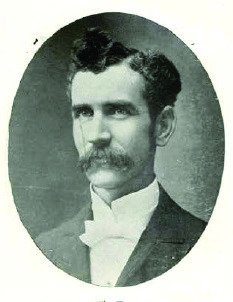
William Ansel Palmer