LOCAL ARTISTS
San Marcos and the surrounding areas are home to abundant natural areas which are protected and celebrated by citizens, organizations and artists alike. Alicia Philley is an artist based in Austin who works often out of her studio in San Marcos at MotherShip Studios. Last April, the San Marcos Arts Commission commissioned her and artists Topher Sipes and Jasna Boudard to create “Alignmentality,” which was an immersive art installation that featured projections of her work on the Hays County Historic Courthouse. She just completed an artist residency at the Wild Basin Wilderness Preservation, which is a 227-acre preserve open to the public in West Lake Hills.
It’s common for artist residencies to require an artist to travel long distances and have a concrete project in place, but Wild Basin’s residency only required once a week visits over a three month period. This aligned perfectly with Philley’s busy life as a mother and artist. The Wild Basin team was open to her open-ended application; she approached the residency without a final project in mind.
“I really wanted to let not just the landscape guide me, but also the people who work there,” Philley said.
Wild Basin is overseen by St. Edwards University, allowing faculty and students access to a rich landscape to conduct research of all kinds.
“My goal was to come in and learn about the different projects and let that open up a possibility for art concepts and ideas,” Philley said.
She was so thrilled by the abundance of interesting research projects that she decided to conduct her art projects in stages.
“The first month I was out there, I spent most of my time hiking on the trails, and I had paper and pencils and gouache, which is like a thick watercolor kind of material and oil pastels. I would just go out on the trail and hike and take photos,” Philley said. “I would just sit and sketch whatever was in front of me; sometimes that would end up being a tree or sort of landscape, but a lot of times, I would look at the branches of the trees and see how they curve and bend and start following the patterns that all of those trees in this forested area were creating.”
The landscape became Philley’s muse, she would notice the shadows that the branches cast or the light filtering in through the trees. She would try to capture the colors that changed throughout the day on her paper.
“I feel really good about that work because I think it’s capturing that kind of connection that you have when you’re face to face with someone, instead of on a phone or sending an email,” Philley said.
In this case it was her face to face connection to the nature that encompassed Wild Basin.
During that first month of her residency, she not only learned about the research taking place at the preserve but about the history of Wild Basin. A portion of the preserve used to be a landfill that was closed down before plastics were introduced to the soil.
“It really sparked my interest to think about what happens to what we discard, and how does it affect the nature around us and the other ecosystems,” Philley pondered.
As the land transitioned from a landfill to a preserve there was a major effort to clean up the area. There was a ravine that was left untouched since it was in such a steep area that it would be inaccessible to the public, and since there were no microplastics, the leftover glass and metal could break down naturally. Nearly 70 years later Philley took this as inspiration and got access to the ravine as a part of her residency. She collected glass and ceramic in an effort to help clean the area but also as a tool for her art.
“I had decided I wanted to make sculptural work, and I knew I wanted to create something that spoke about the land and about the environment and why it was important that this place was being preserved,” Philley said.
She wanted to highlight the Golden-Cheeked Warbler, which is a bird that uses the bark of the juniper trees at Wild Basin as a nesting grounds. The birds use spiderwebs as a glue to keep their nests together. Philley was given access to a ceramic studio at St. Edwards where she explored this concept of nest-making from materials found at Wild Basin.
“I wanted to use the glass like a glue,” Philley explained. “I built some molds out of some tree branches that had been pruned to get that bark texture. I was pressing porcelain into them because I knew that I could get that material really thin and then once it was fired it would still be very strong. And I started using the glass to fuse some of the pieces together.”
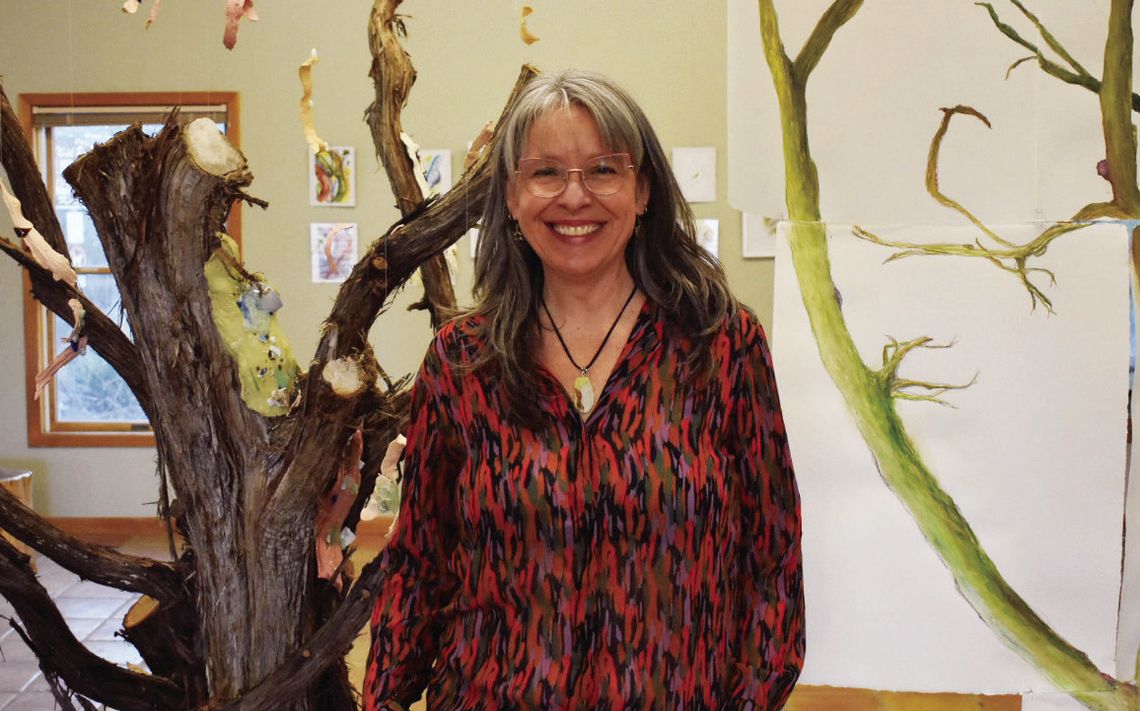
Philley used these experiments to create a large tree installation inside the research center at Wild Basin. She joined together stumps and strips of bark to recreate a juniper tree where she hung the glass fused porcelain strips on and surrounding the sculpture.
“The end result was this very strange and, I think, interesting mix of nature and man made objects,” Philley said. “That’s one of the things that I love, is the way nature and the creatures that are living out in these spaces think differently. Their needs are different, and they are using whatever is around them in such creative ways. So I felt really good about honoring that aspect of the space and helping people learn a little more about why this place existed and what its purpose was, beyond just remaining a really lovely spot to hike.”
Next to her sculpture was a paper tapestry of twelve sheets of paper connected together hanging twelve feet high. Philley had taken each sheet out separately onto the trails and drew one of her favorite trees. The result was a life-size impression of nature inside the gallery space. The beautifully rendered hand-drawn branches contrasted with her earthy and bold sculpture made for multiple expressions of nature communicating together to represent the special landscape of Wild Basin. The walls of the research center were lined with her nature drawings that were made the first month of her residency — abstract renderings of the flora and fauna that encompassed the preserve. Philley maximized the creativity her residence allowed by exploring multiple mediums — from the porcelain strips of bark fused by found glass to the sculptures and drawings — she even created stop motion videos where a little clay character swayed and danced with the movements of the trees. The residency resulted in a multimedia showcase titled “Lessons from the Trails” that allowed the audience to not only learn about the preserve but experience the beauty of nature through the eyes of an artist. You can find more of Philley’s work on her website aliciaphilley.com or her instagram at @alicia_ philley or visit her studio during the San Marcos Studio Tour during the first two weekends of April. Find out more information about the Wild Basin Nature Preserve on their instagram at @wildbasin.
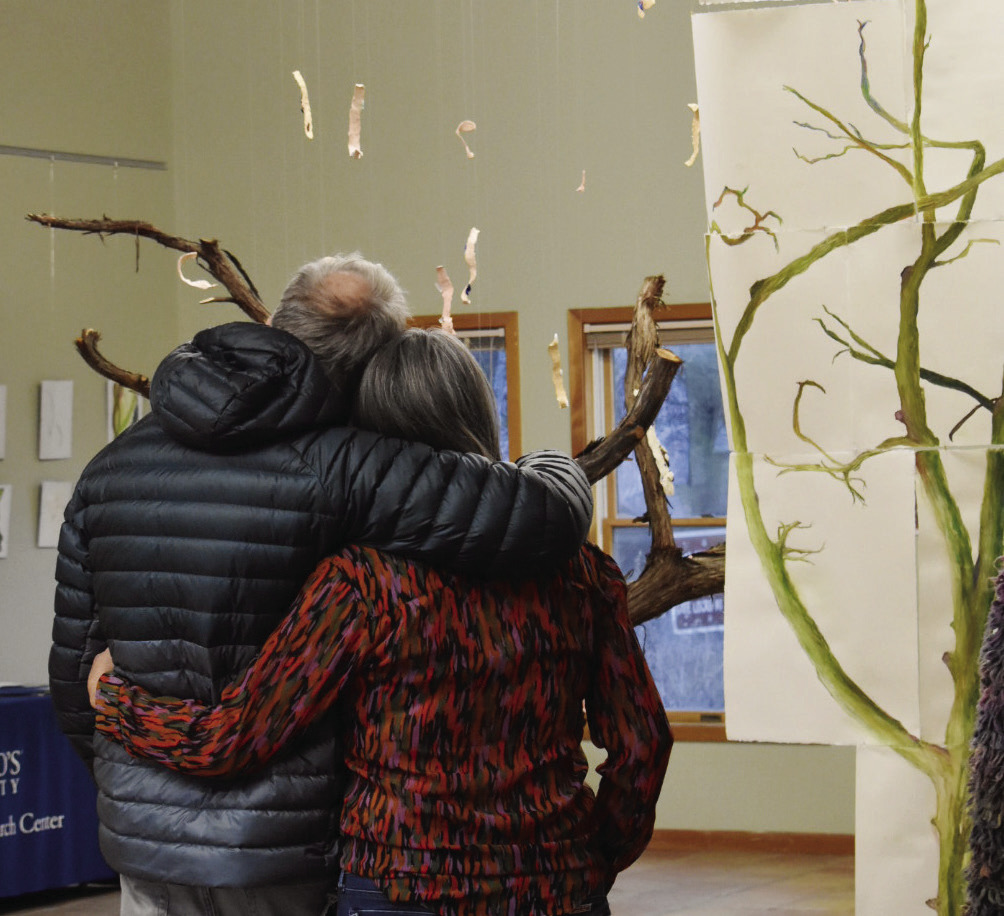
Wild Basin artist in residence Alicia Philley shares an embrace with her husband at the closing reception of her show “Lessons from the Trails.” Daily Record photos by Rebekah Porter