Exploring Nature: Essential E
ggs
Let us consider the egg.
You might consider an egg to be just a mundane little orb, but in the first place, not all are little. An ostrich egg weighs about three pounds and is six inches long. Also, eggs are not really mundane and boring once you consider several fascinating factoids and titillating tidbits.
Here are a few fun facts you might want to know: It takes 24 hours for most female birds to form an egg.
Eggshells, like seashells and coral, contain a lot of calcium carbonate. About 95 percent of an eggshell is calcium carbonate.
Chicken eggs are quite porous and have some 17,000 tiny pores. These allow moisture and air to pass through.
Female meadowlarks construct dome-shaped nests on the ground and lay some five to six eggs inside.
Emperor penguin dads have special flaps to keep eggs warm. They will incubate eggs for 65 days until they hatch.
Egg colors ranging from reddish brown to green are a function mainly of temperature. Eggs with darker colors exist more in colder areas because they absorb heat better.
Wisdom, the 70-yearold Laysan albatross, is probably the oldest known bird to lay an egg — she hatched one in 2021.
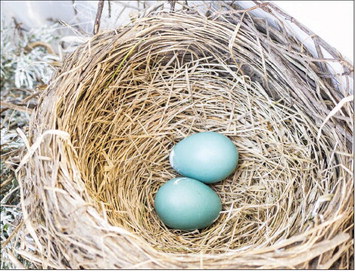
And finally, you might know that female brown-headed cowbirds are notorious for laying eggs in other birds’ nests. But a robin is quick to recognize the speckled eggs among her own blue eggs, and will toss them out of her nest.