SAN MARCOS GREENBELT ALLIANCE
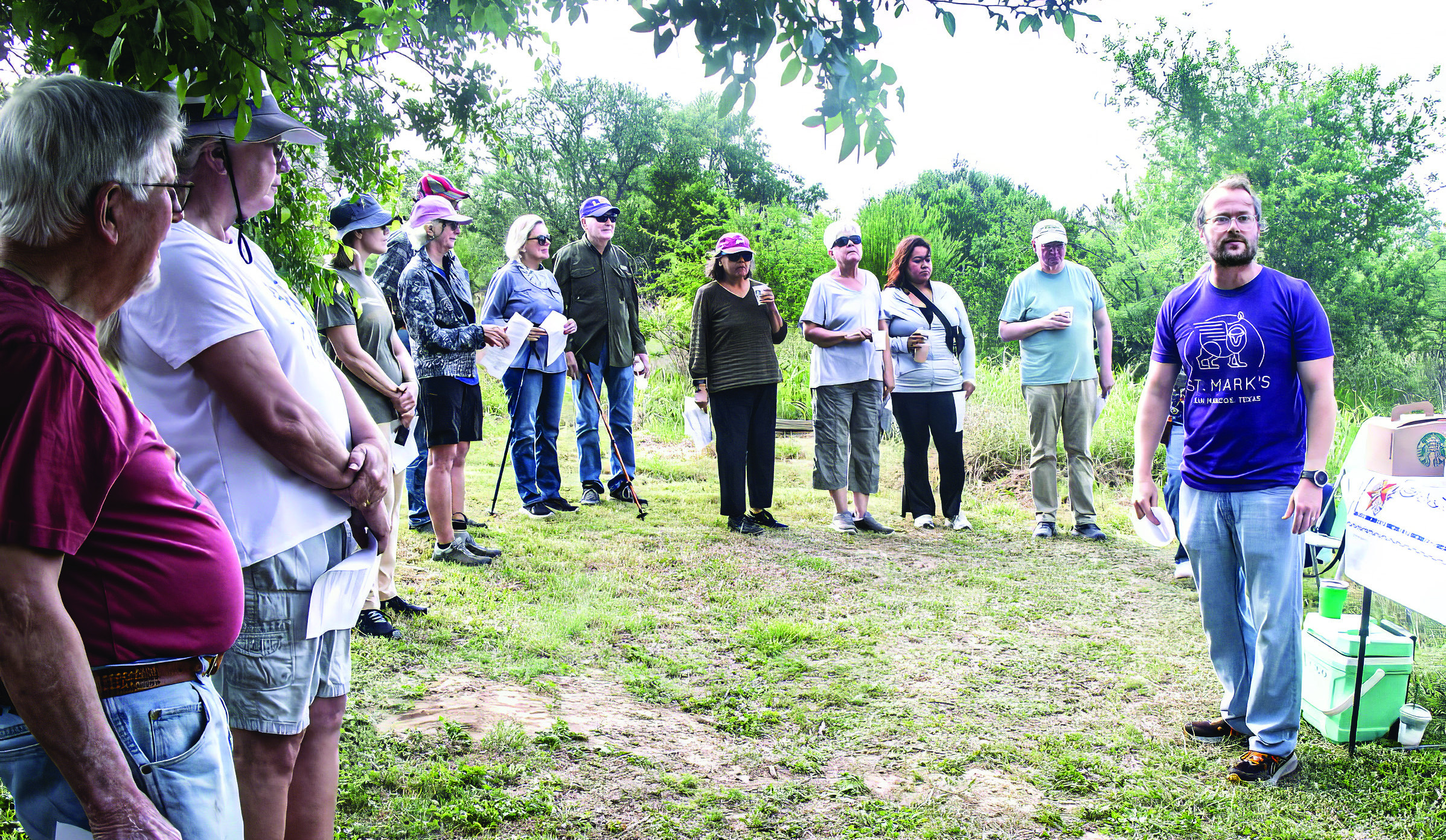
Guests and members of St. Mark’s Episcopal Church gathered to dedicate the trail they have been working on for the last year on Friday, April 18. Meeting twice a week, they grubbed, sawed and raked their way through the acreage behind the church, creating a mile- long single-track trail.
Throughout the process, they received expert guidance from the San Marcos Greenbelt Alliance, particularly members Todd Derkacz and Greg Moore. From them, St. Mark’s volunteers quickly learned there’s far more to building a sustainable trail than drawing a line between Point A and Point B and removing the vegetation in between.
According to American Trails, a nationwide coalition of trails organizations, “Trail design is one of the most important factors to ensure that the route offers optimum scenic, geologic, historic, cultural and biological sites to provide a variety of diverse habitats for the trail user to experience. Trail design is the critical connection to make the trail sustainable, to reduce impacts to the natural environment and to minimize future trail maintenance.”
Before laying out their route, the volunteers had to locate property lines and note any physical barriers, such as the church’s well and old structures left from its days as a ranch. They also took note of changes in elevation that might cause a problem for hikers or increase the likelihood of runoff.
They then selected points of interest such as trees that could offer shade and geologic features such as large rocks, bluffs or lookouts. These would be included on the route.
Several considerations would go into the final design of that route; Is it user friendly? Is it aesthetically pleasing? Will it deter runoff? Does it have minimal impact on the ecosystem? Will it be easy to maintain?
According to the United States Forest Service, “A trail that lies lightly on the land will take advantage of natural dips and draws for grade reversals. The trail user’s experience is enhanced by providing an up-and-down motion as the trail curves up and around large trees.” American Trails advised that “since long straight trails are not aesthetically pleasing, design slight right and left curves into the trails to avoid a highway effect. Sight distance should be 50 to 100 feet ahead of the trail user.”
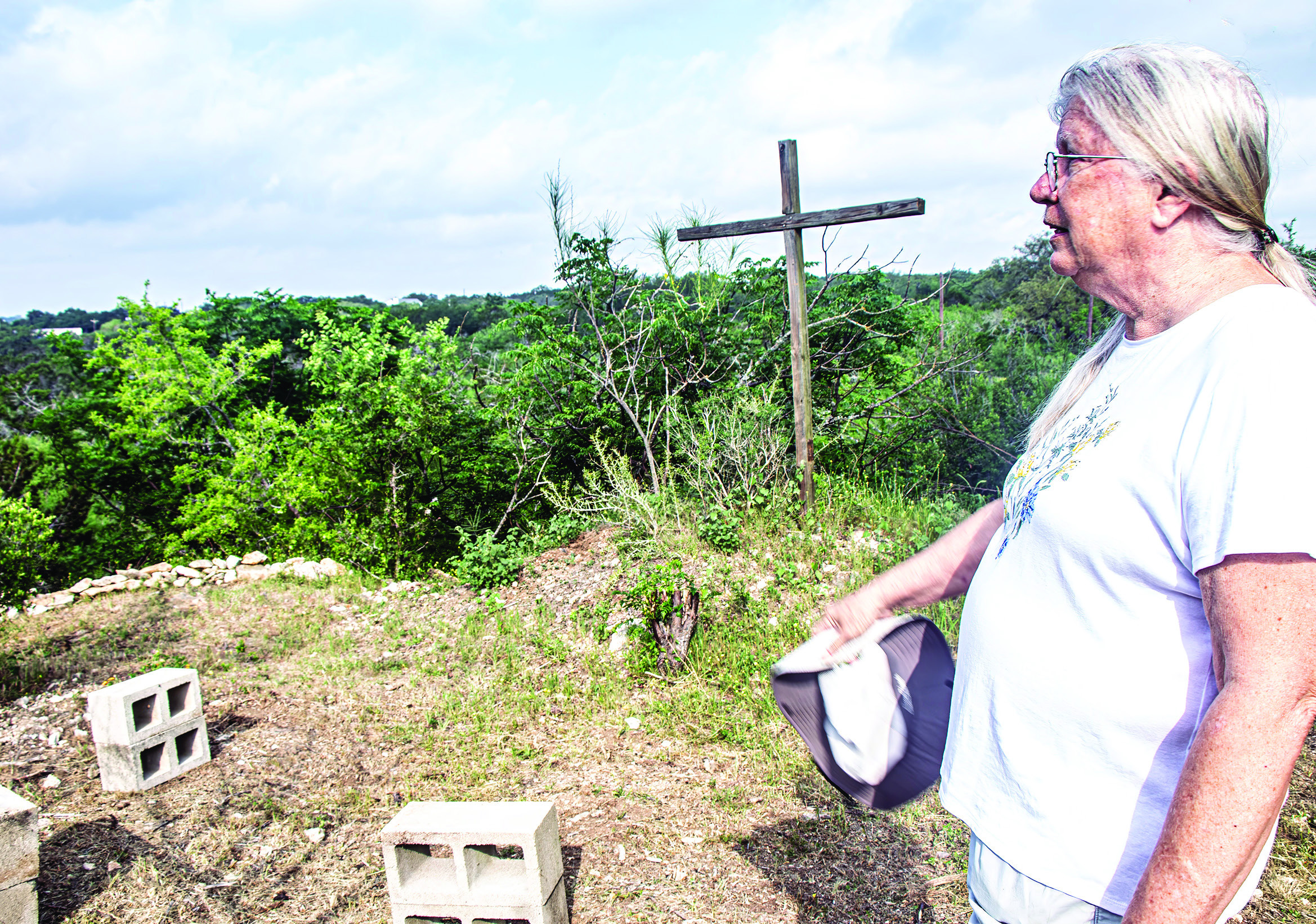
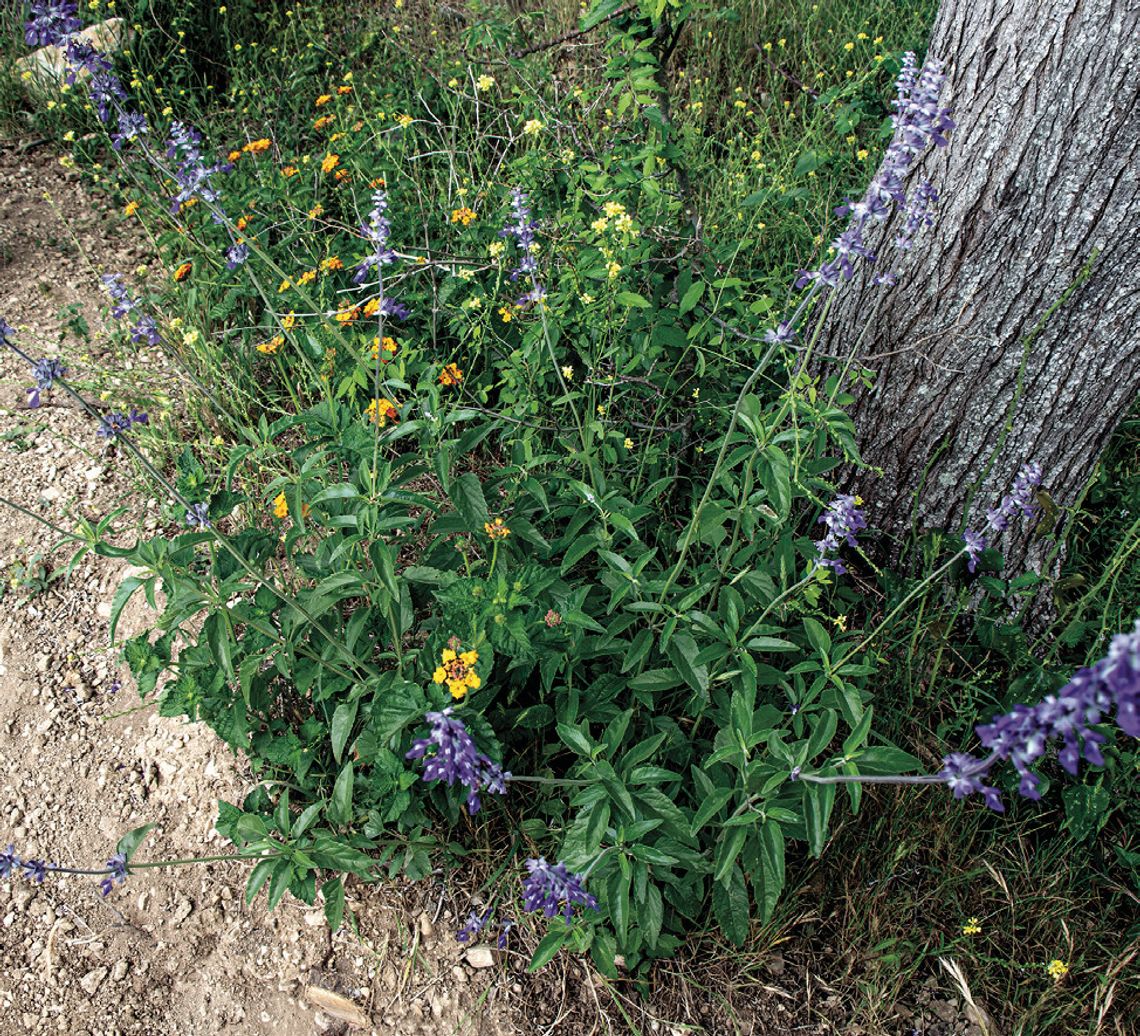
These are among the lessons that St. Mark’s volunteers learned from SMGA, and the result is a family-friendly trail that winds through stands of persimmon and oak, around patches of blooming mealy blue sage and lantana, and past an overlook set up for prayer or reflection.
In the brief service that preceded the inaugural hike on Friday, volunteer leader Elly Dietz noted that creating the trail — known as the Lion’s Path, the lion being the symbol of St. Mark the Evangelist — has been among the most meaningful experiences she has had as a member of St. Mark’s.
Like the building of the trail itself, the litany reflected the parish’s goal of developing a responsible and collaborative relationship with the earth. Occurring as it did on Easter weekend and just prior to Earth Day, the dedication also praised the beauty of the natural world, including “rivers and streams, ranch land and prairie, “ as well as “bluebonnets and firewheels, horsemint and winecups.”
Following the blessing, in which he invoked the “Creator of all things bright and beautiful, all things dark and grounding,” the Rev. Christian Hawley, rector of St. Mark’s, dismissed the hikers to “go in peace to walk and wonder.”
The trailhead for the Lion’s Path is located immediately behind the playground at St. Mark’s Episcopal Church, located at 3039 Ranch Rd 12. The trail is open to the public.
All photos courtesy of San Marcos Greenbelt Alliance.