It seems as technology continues to improve and the people that benefit from these advancements have less work and movement to do. I enjoy being outdoors and look back at my younger days of running, biking, long rides, and working out. Now I see bikes that have electric motors that carry riders along with no effort on their part. No pedaling or exertion needed to get from one place to another. The same is true for the scooters that a person can stand on and not push with the feet to make it move. It is almost like in future years the technology will make running shoes with electric motors so the person can run without moving their feet. A bike is considered the most efficient method of travel when you combine energy cost and distance traveled. Cars and trucks use more energy with gas or electric batteries to move from one location to another. Now I see ads for a pedal machine that a person can use sitting down. The claim is that the machine helps circulation and builds strength while relaxing in an easy chair. When the feet move it is true that it will increase circulation from being motionless. The strength factor I am not sure about as I haven’t tried one of these machines. But to build strength you need to have resistance. If the resistance is minimal and does not stress the muscles the muscles will remain the same. Some studies have mentioned that the stress must be approximately 60% of the muscles strength to get any gains.
The ability to run faster must have a training program that has the runner going at a faster pace than the normal running pace. Besselink writes that long slow training makes for long slow runners. The increase in the pace does not have to be an all-out effort of speed. Muscles adapt to stress. If the stress is greater than the muscle’s ability to withstand the extra stress an injury will more than likely follow. It takes time for a muscle, or the cardio-vascular system, to adapt. The best example is when a runner starts entering a race and averages a 9: minute per mile pace. Over time and a few more races trying to improve their finish time by running a little faster the average pace is now down to 8:30 minutes per mile. It just takes time. My first marathon was a struggling 3:45 time. It wasn’t that long that I was asked if I would ever run the Boston Marathon. The qualifying time for me at that time was 3:10. That meant I would have to run over a minute faster per mile to run the Boston Marathon. Knowing how hard it was to run the time that I did that was a dream that was not going to happen. But after a few more marathons and some faster 10K races my times became closer to that qualifying time. I eventually ran under a 3:04 marathon to qualify and run Boston.
I wonder how these advances in exercise and movement will have a long-range effect on a person’s ability to increase fitness. With the advancement in exercise machines to develop strength without lifting weights it makes it easier to increase strength. The difference is demonstrated when a person can lift a certain amount of weight on a machine but can’t lift an equal weight with a free weight. A person can run a certain pace on a treadmill but has a difficult time running that pace on the road. Whether lifting weights or running there is more muscle involvement when an assistive device such as a treadmill or weight machine is not used. When a person exercises without assistance there are muscles called stabilizers that are brought into action that are not used with an assistive device.
If the use of the bike or scooter is for transportation and not exercise it serves its purpose. If the person thinks this method of riding will increase fitness it will be very slow coming. The body’s muscles and bones need to have increased stress to get stronger.
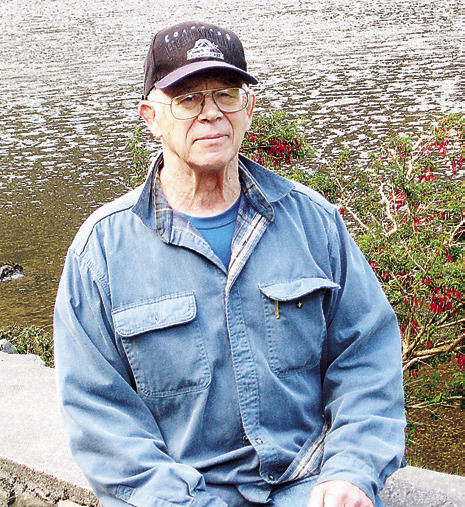
Moe Johnson Running with Moe