I was thinking of the different races we have had here in San Marcos. We have had a large number of 5Ks at over a dozen different locations around town. A few less 10Ks and a couple of 15Ks and then the half marathon that was around for 33 years. We had one marathon that had some dedicated runners. We have had a few open cross-country runs at the old Texas State course that were fun to watch. There is one type of race we haven’t seen but a few times, and that is a relay run. I can’t think of a relay race that comes to mind but there may have been a couple I can’t recall.
In track the relay events are a big part of the meet. I go back to the yard distances – 100-yard dash, the 220-yard dash and the 440-yard run. Since the rest of the countries use the metric system, the track meets became 100 meters, 200 meters, 400 meters and 1600 meters. The one race that is still around is the mile run. It goes back to when Roger Bannister broke the four minute barrier. Roger Landry followed with his faster mile time. The mile is still the standard when listing a runner’s pace. I know that to compete on an international level track had to follow the metric distances. I still wonder why, in local races, very few runners even know how far a kilometer is that the distances are actually three miles, five miles, etc. Even when the race is advertised as a 5K race, the distances are marked in miles.
In track, the 400-meter relay (four 100-meter runners), the 800-meter relay, and the 1600 relay are held. There are now mixed relay events where the team is composed of equal numbers of men and women runners. There are the mixed distance relays where the various legs of the relay are different distances. The biggest and most well known relay race in Texas is the Beach to Bay Relay with close to 1,000 teams of six runners. For some reason, the logic of my team was I had strong legs from lifting weights, so I had to run the first beach leg. I found out that if you run close to the water’s edge, the sand is firmer for better traction. The problem was the shore line was not a straight line, and while I could run faster, the distance increased dramatically. I even tried running through the edge of the water, but I found that not all of the water’s edge was shallow. Running in knee-deep water was not made for speed in a relay.
I started to think of the different types of relay races we could hold here in San Marcos. You have the Open Division where members of the team are all fast runners. After that it is open for a variety of divisions. The Master’s Division where team members have to be over the age of 40 years. These are for both men and women. Then the mixed team of equal number of men and women for a team. I questioned how far each leg should be for a local relay race. A minimum of one mile seemed logical. If you had a 5K distance, the total time for a team of four runners may be over two hours.
I thought of an age category relay where one member is under 20 years, the next member would be in the 20 to 29 age group, the next will be 30 to 39 age group, then 40 to 49 age group, then the 50 to 59 yearold member would be next to the last, and the over 60 years-old member would be last. The 60 years and over age group may be a tough bracket to fill if you had 50 teams. Finding enough teams for both men and women divisions would be difficult to make the sponsoring organization a profit. And if you had a mixed team of equal number of men and women it would be another division. The members would not be limited to which age group they ran. The next step would be the location of the relay race. The Outlet Malls might work. A loop course would be best for ease of direction. Offer to host a relay race are welcome.
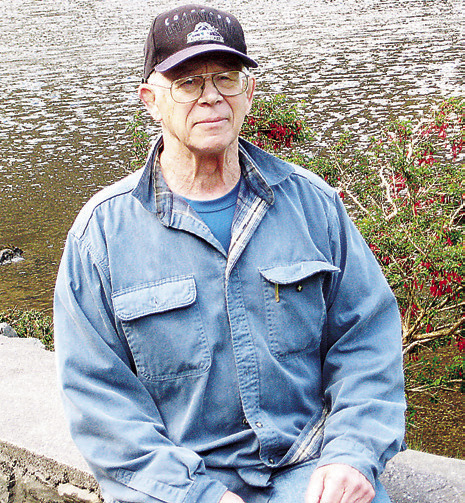
Moe Johnson Running with Moe