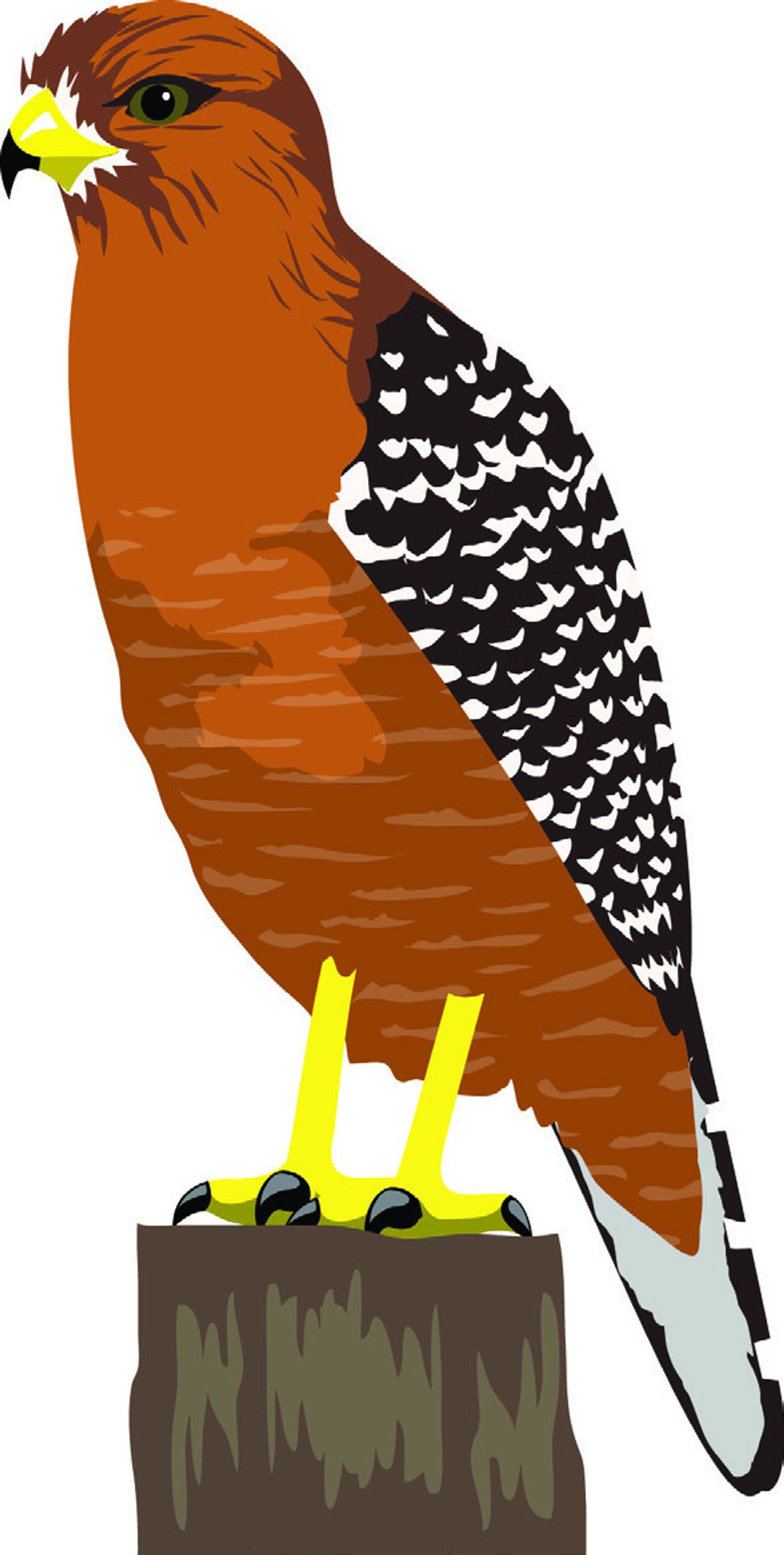
Exploring Nature: F
alcons
Falcons are known for their curiosity and cognition. Like parrots, they are very smart birds.
But that’s not what really sets this bird apart. Speed is their special asset. Speed and the ability to zoom, aim, float and – this is the big one – dive. This bird can dive like no other creature in the animal kingdom.
Falcons are nature’s fighter jets.
There are six different species in the United States — peregrine falcon, American kestrel, merlin, prairie falcon, gyrfalcon and aplamado falcon. Probably most common in Texas is the peregrine, a speedster that is among the fastest of all birds.
In a dive, it can zip along at 150 to 200 miles per hour. In flat, powered flight, it hits 60 miles per hour.
It has a world-wide range that is more extensive than that of any bird and inhabits all continents except Antarctica.
This falcon eats mostly other birds, which it attacks on the wing. Diving like a missile, it hits its prey with sharp talons and feathers can fly in all directions on impact.
It can cover enormous distances with its efficient flight pattern and its Latin name is peregrinus, which means “wandering.”
The sport of falconry is widespread and people of central Asia trained falcons to hunt for sport and food as early as 2000 B.C.
Most peregrine falcons seen in Texas are migrants just passing through, but a few do breed in the rugged Chisos and Guadalupe Mountains and in canyons along the Rio Grande. Many winter as far south as Argentina.
A once endangered species that suffered from pesticide poisoning before DDT was banned, this bird is making a remarkable comeback.
I wish it every success because it is a very special bird.