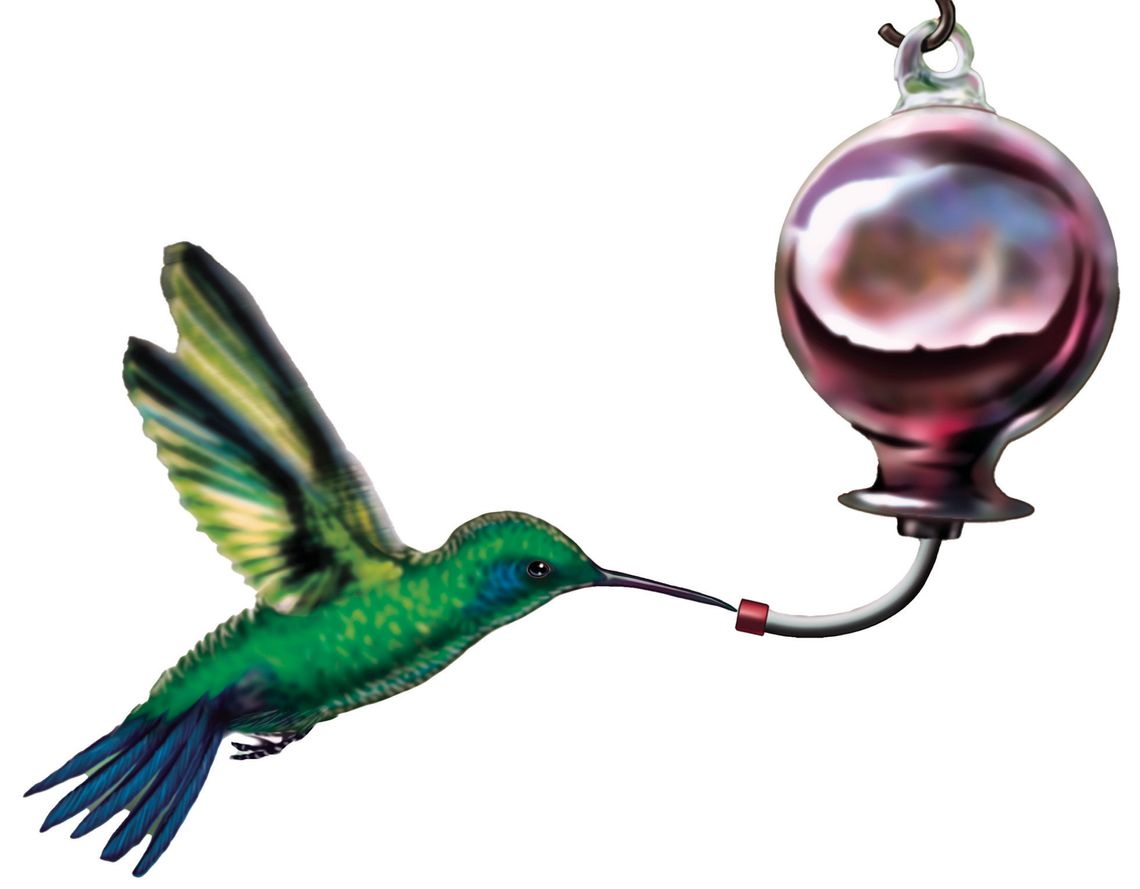
A false assumption made by many people is that hummingbirds do not have a sense of smell.
Even reputable scientists once held this bogus belief. It took researchers at the University of California- Riverside to refute it. Their landmark investigation showed that hummers both in the wild and in aviaries can detect the scent of perilous insects.
The birds immediately flew away once the scent of dangerous insects was detected. Among the insects posing a threat were Argentine and Formica ants and other aggressive species.
Scientists offered the hummers feeders filled with sugar-water and also sugar-water feeders marked with chemical scents indicating the dangerous insects. The hummingbirds routinely avoided the feeders with the dangerous smell.
So while they may not use their sense of smell to locate food, they do use it to avoid dangerous foods.
Here are a few other facts about hummingbirds: 1. They are not found in Europe or Asia, but are strictly a resident of the New World — North and South America.
2. They are the only bird that can hover and fly both backwards and forward.
3. They are the smallest of all birds and the smallest hummer is the bee hummingbird. I saw one in Cuba, and sure enough, it’s about the size of a large bee.
4. Finally, it is called a hummingbird, according to this explanation about the ruby-throated hummer, written by William Wood in 1694 – “It is one of the wonders of the country, being no bigger than a hornet, yet hath all the dimensions of a bird, as bill, wings and quills, spiderlike legs, small claws and for color she is as glorious as the rainbow and as she flies she makes a little humming noise like a humble bee, wherefore she is called the humbird.”
Enjoy them while you can; hummingbirds generally stay around our area into late October when they depart for warmer locales.