OUTDOOR
My brother Wayne and I prefer fishing the bays near Aransas Pass, but, once a year, we like to take a deep-seas fishing trip.
So we booked a 12-hour trip on the Gulf Eagle. The Eagle runs five-hour and eight-hour trips also, but the five hour is primarily a boat ride. There is very little time to fish. The 12-hour trip goes 40 or 50 miles out into the deep blue international waters.
The 12-hour trip makes for a long, tiresome day, especially for an 84-year old fisherman. We boarded the ship at 5:30 a.m. and pulled out of Port Aransas harbor around 6 a.m. The ride was a bit rough for three and half hours.
One of the deck hands told us that bottom snapper fishing would be first. If we got our limits quickly then we would drift fish for king mackerel, mahi-mahi, shark and other deep sea species.
By the time of our arrival, everyone on the boat was ready to fish. The sea calmed down and the deep blue water was so beautiful. Our fishing equipment consisted of stiff, broom rods with big reels. My brother said it’s like fishing with a baseball bat. I would love to bring some lighter tackle, but the captain frowns upon that. A big fish on lite tackle will run down the line and tangle all the other fishermen’s lines.
“This first stop will primarily be Vermilion Snappers,” the captain said. “They are good sized ones. Their limit is 10 each.”
Vermillion Snappers, also called bee-liners, are usually small in Texas waters. On the heavy roads, you hardly know if you have a fish on the line. But 50 miles out into international waters, they were much larger, some up to three to four pounds.
We baited with cut squid and sardines. The water was deep, over 200 feet. So a trip up to the surface, especially with heavy weight, is a tough trip. Put a fish on the line, and it becomes a laborious effort.
Wayne and I began to catch some big Vermilions immediately. Occasionally, a small red snapper would be on the hook. Limits on red snapper on Federal waters are very restrictive, two fish per fisherman with a 16inch minimum.
I landed a red snapper about 18-inches long, and I thought about keeping him. The captain said, “I think you can do better.” So I released the little guy. Any snapper caught in such deep water must have their air bladder punctured, or they will just float on the surface. The deck hands were quick to prick the airbladder on all released red snappers.
Wayne and I were beginning to fill up our stringers with nice Vermilions when I had a powerful bite. Even the stiff rod bent over. Then he was gone. I reeled up my line to find my hook and leader had been cut. A shark had taken my snapper in one gulp.
Later a bigger shark took my bait and ran down the line tangling up several other lines. The deck hand saw my shark and said he probably weighed about 30 pounds. The deck hand had to cut my line to untangle everyone. I didn’t want a shark anyway.
With the anchor now up, we moved to another spot. Most of the places are rock piles. Sometimes a reef can be bought by an old sunken ship or airplane. Any kind of structure will attract all kinds of fish— small and large.
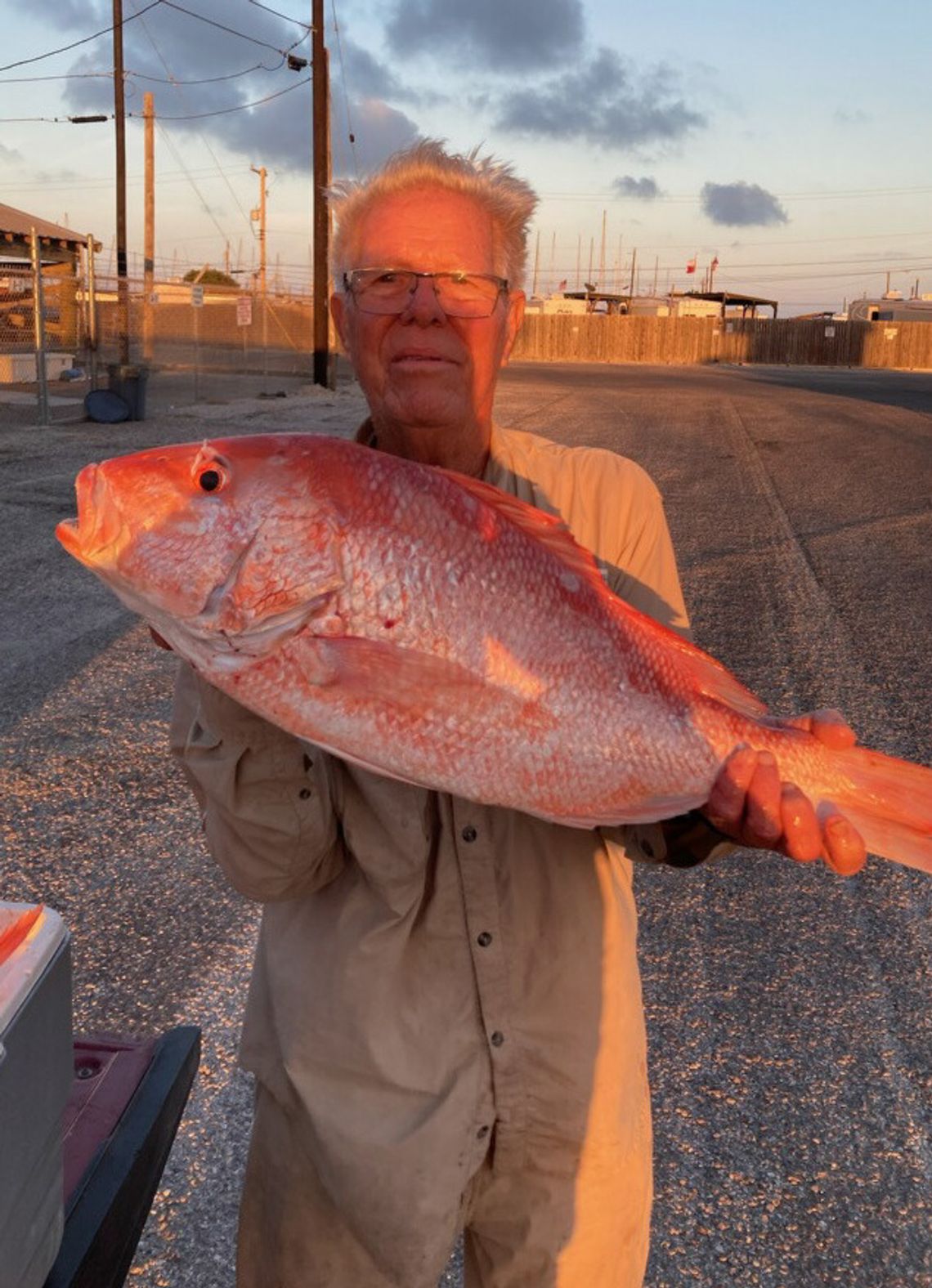
This spot was the hot spot for red snappers. Wayne and I caught our limits. Our two fish limits were really nice. I caught the largest red snapper on the boat, about 12 pounds. Our other three were almost that large.
The three-hour boat ride seemed so long because we were very tired. At the dock, most fishermen on the boat had their fish professionally cleaned. Wayne and I took ours home, iced them down and cleaned the next day.
We took some of the snapper filets to a restaurant and ate grilled and fried snapper. It’s hard to beat a red snapper meal. Will we do it again next summer? Maybe.