REBIRTH OF BOBCAT FOOTBALL PART 5 2005 season spurs the Texas State student body and administration to make the push for FBS
This is the fifth part of a multi-part series on the 2005 Bobcat football season and its impact on Texas State University 20 years later.
For years, talks of Texas State moving up to the Football Bowl Subdivision simmered on campus and among alumni. By the late 2000s, with the university growing rapidly and its reputation as one of Texas’ best college towns rising, the push to join the top tier of college football became too tantalizing to ignore.
“There were a lot of people in the athletic department and beyond that saw this vision,” said Dalton Sweat, the regional editor of the San Marcos Daily Record and member of the Associated Student Government at Texas State during the Drive to FBS. “A lot of people and a lot of alumni were trying to make this push to raise us from a Football Championship Subdivision to Football Bowl Subdivision to formally get to the highest tier of athletics.”
While the passion from the alumni base for Texas State to join FBS burned red hot, the on-field product was ice cold.
Since making the jump to FCS, the Bobcats could only muster four winning seasons between 1984 through 2004. As a result, apathy set in over the program with football games drawing less than an average attendance of 11,000 fans 27 of the 30 seasons between 1984 through 2004.
Needless to say, the passion for the Bobcats making the jump to FBS was not matching the same energy on the field – until 2005 happened.
As the Bobcats continued to win, the support from both the alumni and the students began to get bigger and bigger. By season’s end, Texas State drew 128,751 fans to Bobcat Stadium — shattering the previous record of 82,778 set in 1982.
For Director of Athletics Don Coryell, who worked as Executive Senior Asso- ciate Athletics Director for External Operations in 2005, it was the first time a vision for FBS was finally being seen to its full potential.
“It wasn’t just me. Everybody saw that there was always this underlying idea of you need to be doing bigger and better things, right,” Coryell said. “That started this transition to FBS football. People realized at that point, we could do this consistently. We can win and have great support.
“It flipped the switch for the university and for Texas State Athletics. All these things matter, all your history matters in this game of what you’re trying to do and then you can tie it back to the successes that we’re having now.”
Following the 2005 season, Texas State began what became known as the Drive to FBS.
Spearheaded by Texas State Student Body President Reagan Pugh and Vice-President Alexis Dabney, the student government began the process of pushing Texas State to become a member of the FBS.
“The 2005 season was literally what inspired the students to say, ‘We are ready to do whatever we have to do as students to make sure that this is something that Texas State University can do on a year out basis,’” Sweat said. ”While the 2005 season is what I think inspired the Drive to FBS, that process really started years and years before. It didn’t just happen overnight. The 2005 season was the impetus to actually do it. That’s what inspired the students to be willing to put their money into the athletic program by approving those student fees.”
Having been elected to the student government as a senator, Sweat helped with the process to make sure the student body knew what was at stake.
“It was a very studentdriven initiative,” Sweat said. “The student government put a vote in front of the student body to choose whether or not to put a fee onto every class hour. Every time you purchase a class from Texas State, there is an athletic fee that gets attached to that class that then goes to the athletic department. This was a choice that the students had in front of them.”
At the end of voting, the results were clear. The students voted 4,738 to 1,214 in February of 2008 to approve an increase on their athletics fee to $10 per semester credit hour, resulting in students paying an estimated $10 million a year by 2013 to support athletics.
“While it might seem that we voted on an athletic fee increase, what we really did was make one more step in the direction of bettering our university as a whole,” Pugh said in a Texas State press release following the approval of the increased athletics fee in 2008. “The students have voiced their belief in Texas State and I could not thank them enough for leading us down the path of making today’s vision tomorrow’s tradition.”
With the approval of the student population, Texas State began the process of building the facilities necessary to attract a conference that may want to invite them to transition from FCS to FBS. The Bobcats made their FBS debut in 2012, joining the Western Athletic Conference before joining the Sun Belt Conference a year later.
“Without 2005, there is not the momentum and not the interest from the students to do what we’re doing today,” Sweat said. “It would not have passed student approval to invest to add an athletic fee of a decent chunk into every single class that’s taken. There would not have been a movement for the Drive to FBS without this 2005 season.”
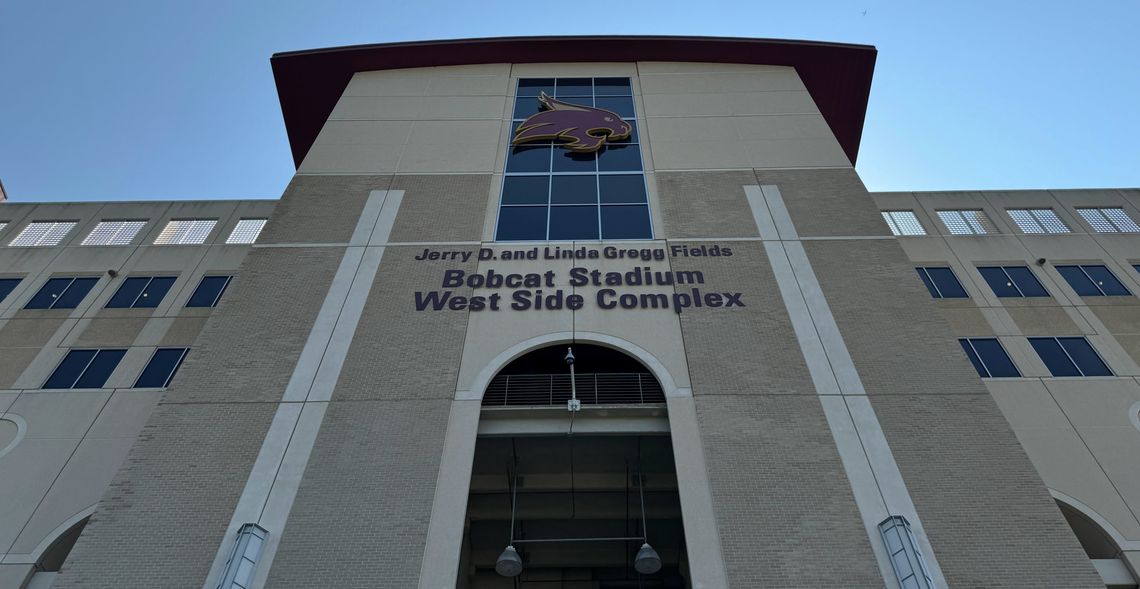
Bobcat Stadium, now UFCU Stadium, expanded from 15,218 seats to 30,000, leading to the removal of the track surrounding the field and the creation of the Bobcat Track and Field Stadium. Strahan Arena was remodeled, expanding to 10,000 capacity along with the removal of ‘The Wall.’ Both Bobcat Ballpark and Bobcat Softball Stadium were expanded extensively and received major upgrades and renovations.
Coryell agreed. Texas State may never be where it is today without the 2005 season.
“Our trajectory looks completely different right now if we didn’t [have 2005,]” Coryell said. “We probably eventually would have [gone to FBS,] but we did it then and they got us on the path that we’re on now. Not only from the wins that they had that season in the excitement that they generated just for that season, that has carried over. We have season ticket holders that started with us in 2005 because of that year that are still with us. Those guys who were a part of that team are super involved. They come back to everything and they are ticket holders themselves now. Coaches who were part of that staff, including David Baifliff who’s obviously with us now with Coach Kinne’s staff, still have a great love for this place and want to see it do better.”
Now, over a decade later, Texas State will make its biggest conference in the history of university athletics as the Bobcats will join the reconfigured Pac-12 Conference on July 1, 2026.
Even as the Bobcats begin their final season in the Sun Belt and begin their transition to the Pac-12, the legacy of the 2005 season remains impactful.
“The 2005 [season] momentum has never stopped,” Coryell said. “It’s still going to this day, similar to the ‘81 and ‘82 national championships. They’re very similar. The people who experienced those runs when we had really good football seasons, a lot of those people are still involved today.”
But the investment into the facilities was only a step in the journey. In the last few years, the vision is beginning to become reality. The Bobcats have seen success on the field, and across the Athletic Department, resulting in the university’s first bowl game invitation and culminating with an invite to the Pac-12 Conference.
This is part five of a multi-part series The sixth and final part of this series will be run in the Sunday, Aug. 30 issue of the San Marcos Daily Record.
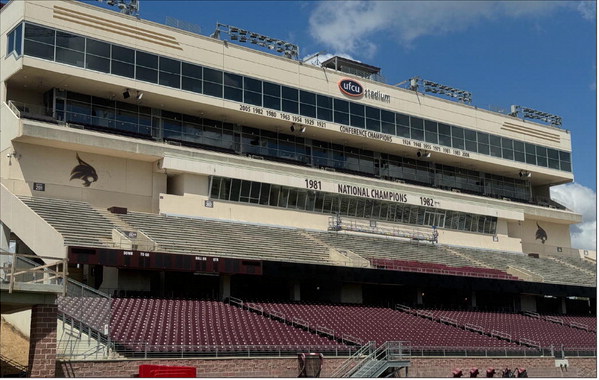
The expansion of UFCU Stadium helped usher in a new era for Texas State in their journey to FBS helped by the success of the 2005 season. Daily Record photo by Colton McWilliams
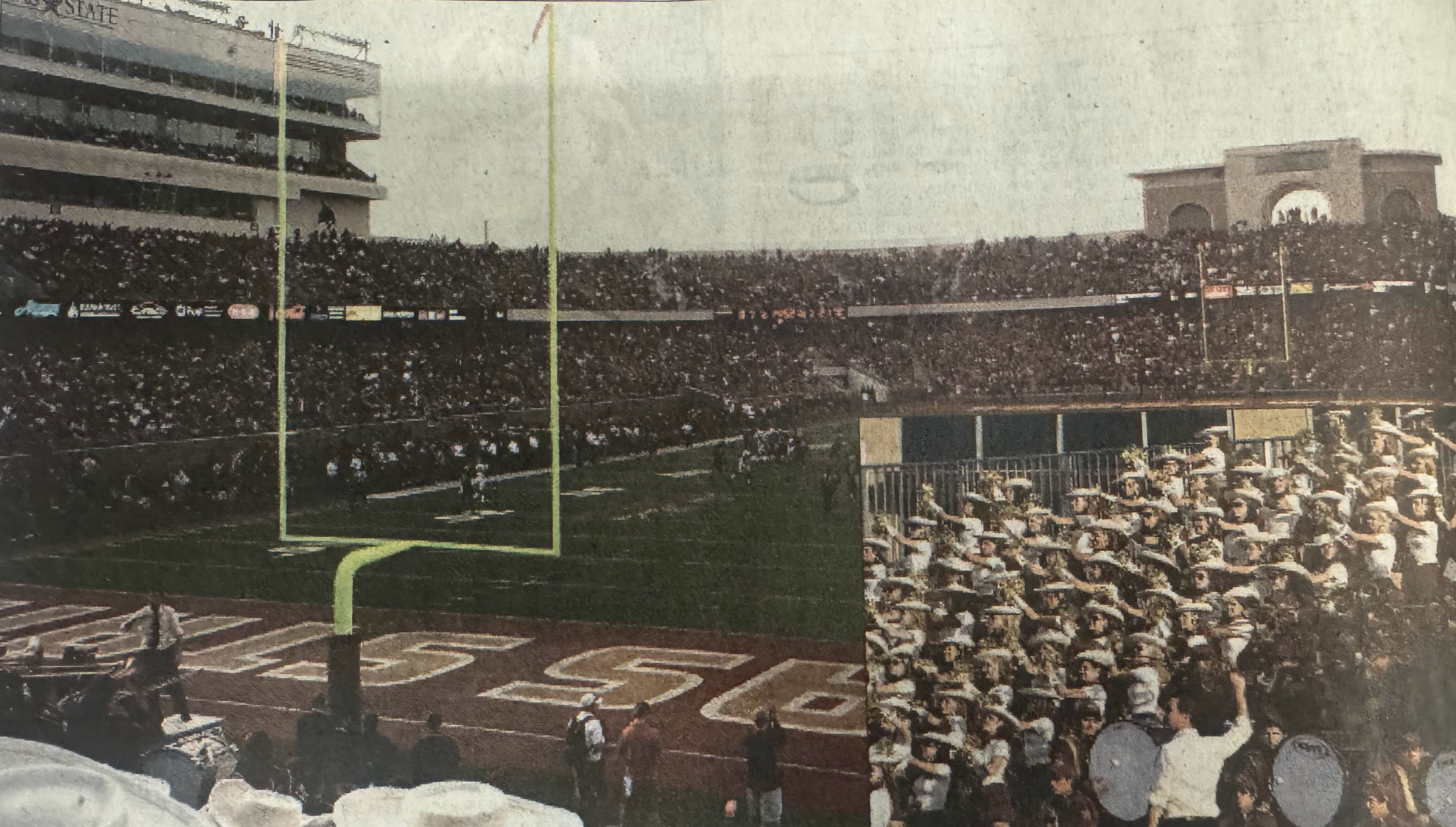
Texas State first home game in FBS saw over 33,000 in attendance watch Texas State’s home opener against Texas Tech in 2012., none of which would have happened without the 2005 season. Daily Record archives