I was looking at some of the social media items this last week and one of the interesting news was about two of the most famous runners that were instrumental in creating the “running boom” in the United States. The first had a photo of Frank Shorter winning the 1972 Olympic Marathon. He was the first American to win the marathon, so he received a lot of coverage in the television and newspapers. He is credited with starting people in the sport of running long distances. He returned to the Olympics in 1976 and won the silver medal. He is still active in promoting running at the age of 77 years. I was fortunate enough to have watched the marathon on television and found watching the strategies during the race and how, as the distance progressed at a fast pace, the pack of lead runners became smaller with each passing mile. I still like to watch marathon races on television, and when the announcers call out the pace and the times that runners are doing today, it is amazing. The four-minute mile is a gold standard in running a fast distance, and today’s marathon runners are running 4:30minute mile times in sections of the race.
The second famous marathon runner on the media tubes this week was Bill Rodgers. Bill Rodgers is known for winning the Boston Marathon four times between 1975 and 1979. He also won the New York Marathon twice in 1976 and 1977. He is also the only marathon runner to win three of the major marathons in one year when he won the Fukuoka Marathon in 1977. He opened up a running store in Boston because of his popularity in the sport. My connection to Bill Rodgers was he ran the Houston Marathon the same year I did. The Houston Marathon was a double-loop course then, and in one section there was a narrow part of the course where you could see the lead runners. Since I was far behind the lead runners, I was at that point when Bill Rodgers and the lead runners were in view. I stopped running and stood at this narrow section to watch the lead runners. My impression was that their feet didn’t hit the ground, as it looked like they were just floating along with no effort. The highlight was after the race Bill Rodgers was around to sign autographs. On my Houston Marathon t-shirt he wrote, “Moe, See you in Boston. Bill Rodgers.” I don’t think I have worn that shirt more than three times, as it is one souvenir that is a valuable reminder of my running days.
There are two more runners that contributed to the increase in running marathons and just running in general. One was Joan Benoit, who won the first women’s Olympic Marathon. She had just recovered from knee surgery to qualify for the Olympic team. Grete Waitz from Norway was the favorite that year. It was in Los Angeles, and the temperature was too hot for most runners. Joan’s jersey had large holes cut into the fabric to help cool her down. She took off early, and most of the runners in the pack figured she had gone out too early and they would catch her near the end of the race. It never happened, as Joan kept her pace and won by a wide margin. I was fortunate to attend a Road Runners Convention in Maine one year where she was a guest speaker. I was able to meet her afterwards and talked with her briefly.
The fourth person to have a big impact on running was Dr. Ken Cooper, who wrote the book Aerobics that became a best seller. I have heard that there are some countries that call running “aerobics” because of his book. He has the Cooper Clinic in Dallas for individuals who want a top physical examination and some tips on running. I have heard him speak twice, and he is one of the most motivational speakers about running I have heard. And his wife, Millie, I have heard once, and she is also a very motivational speaker to get you out the door and running.
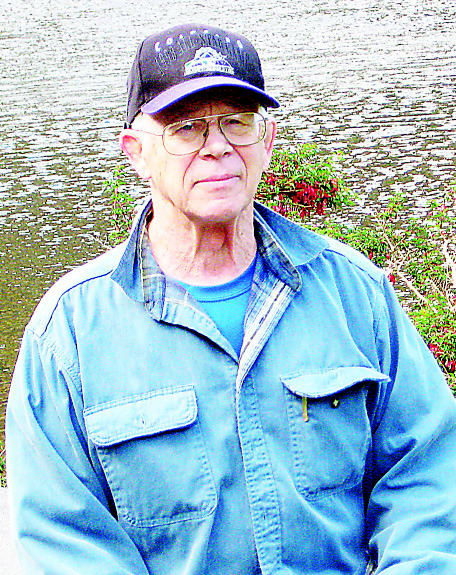
MOE JOHNSON RUNNING WITH MOE