TEXAS STATE UNIVERSITY
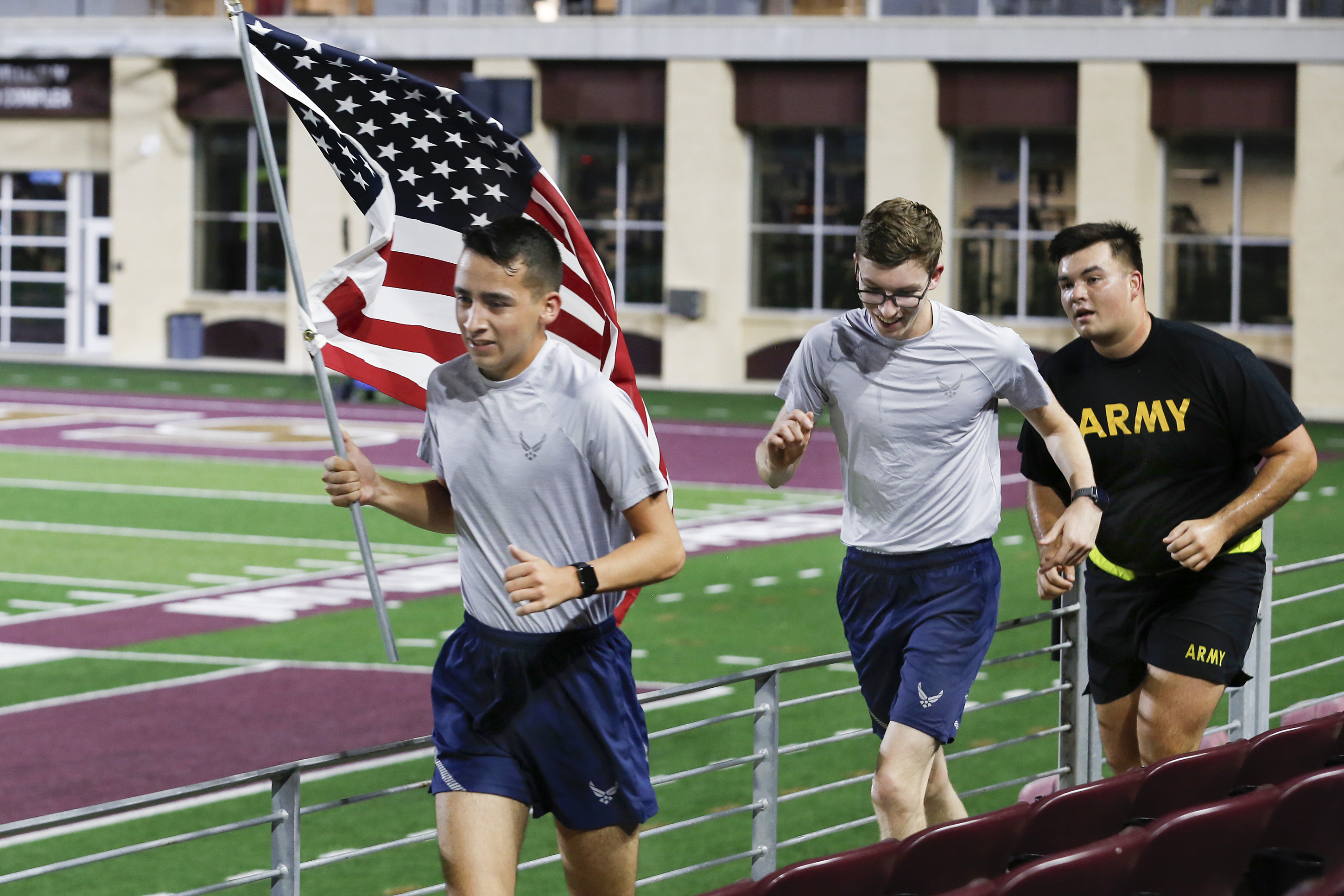
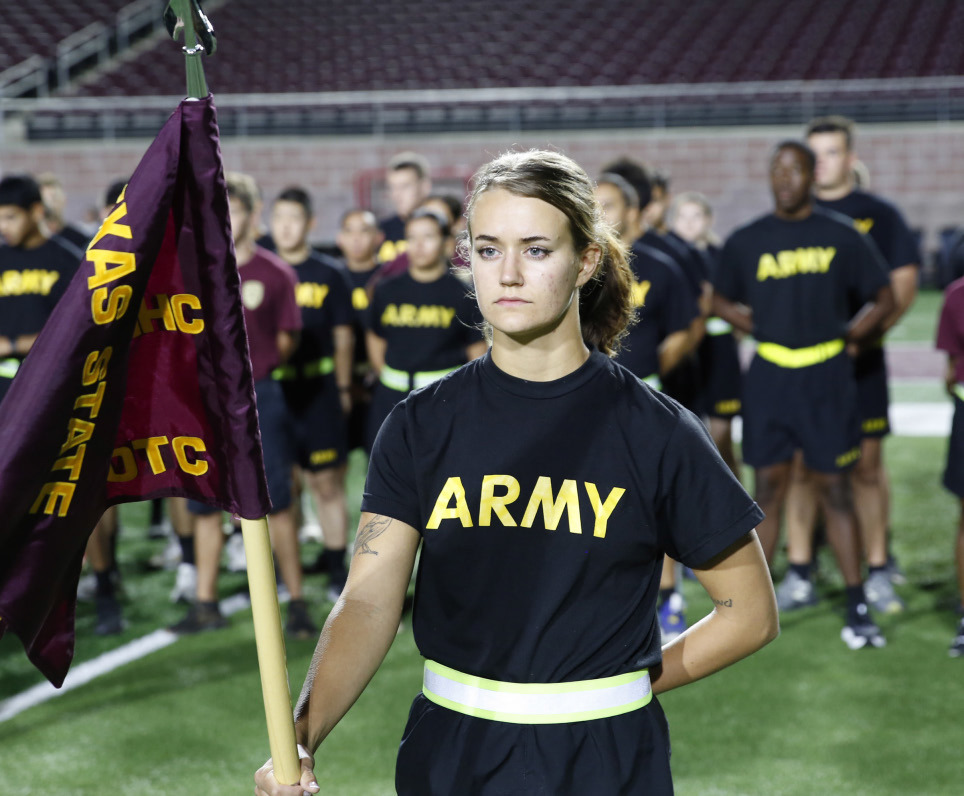
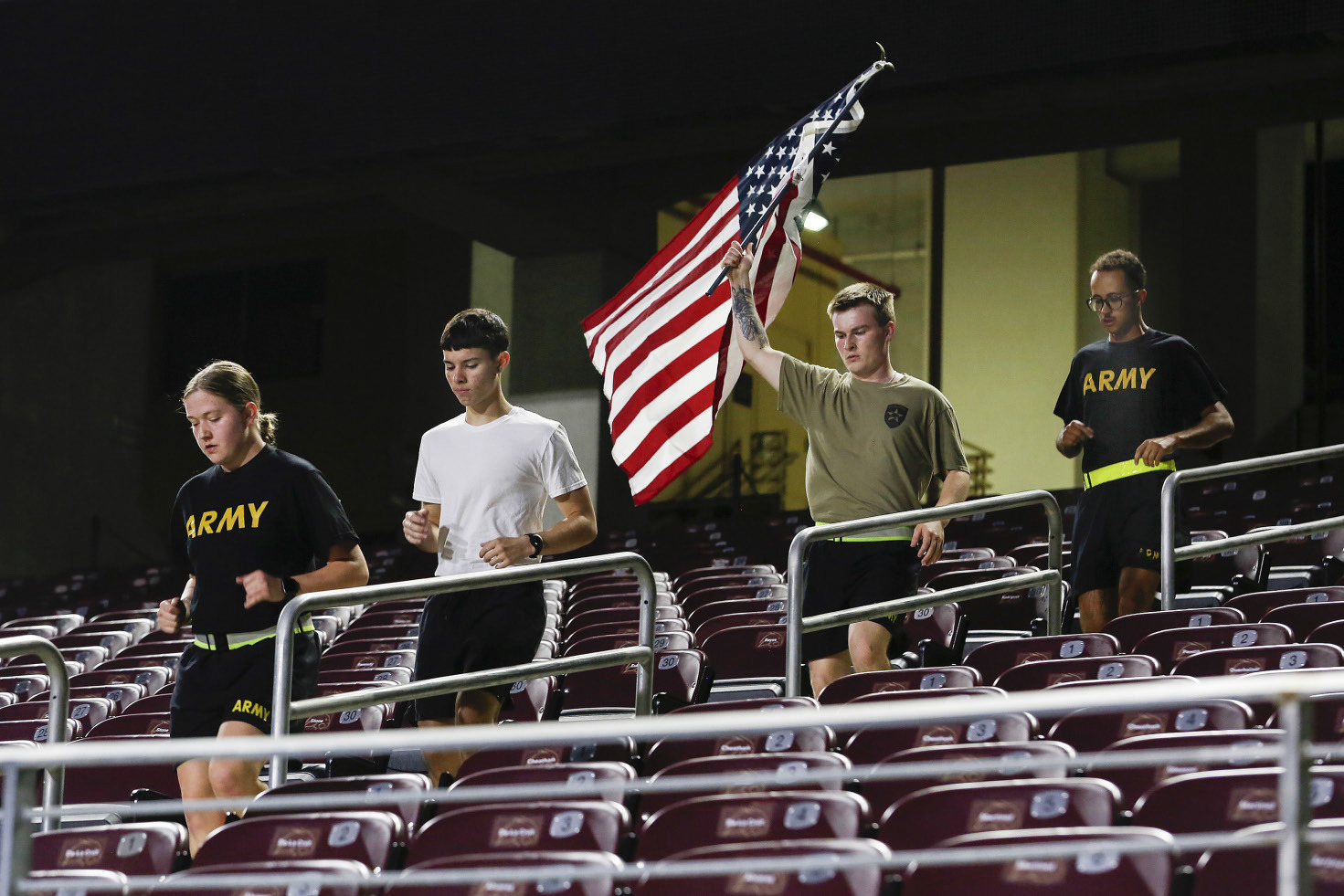
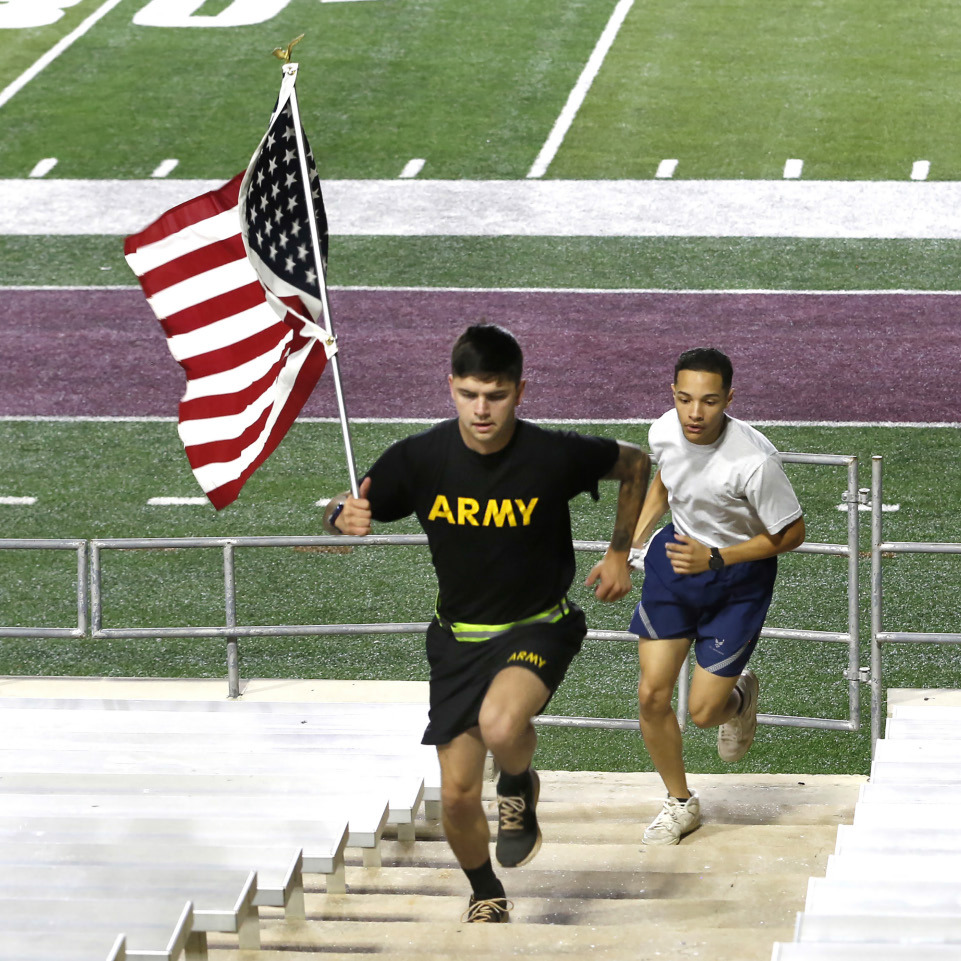
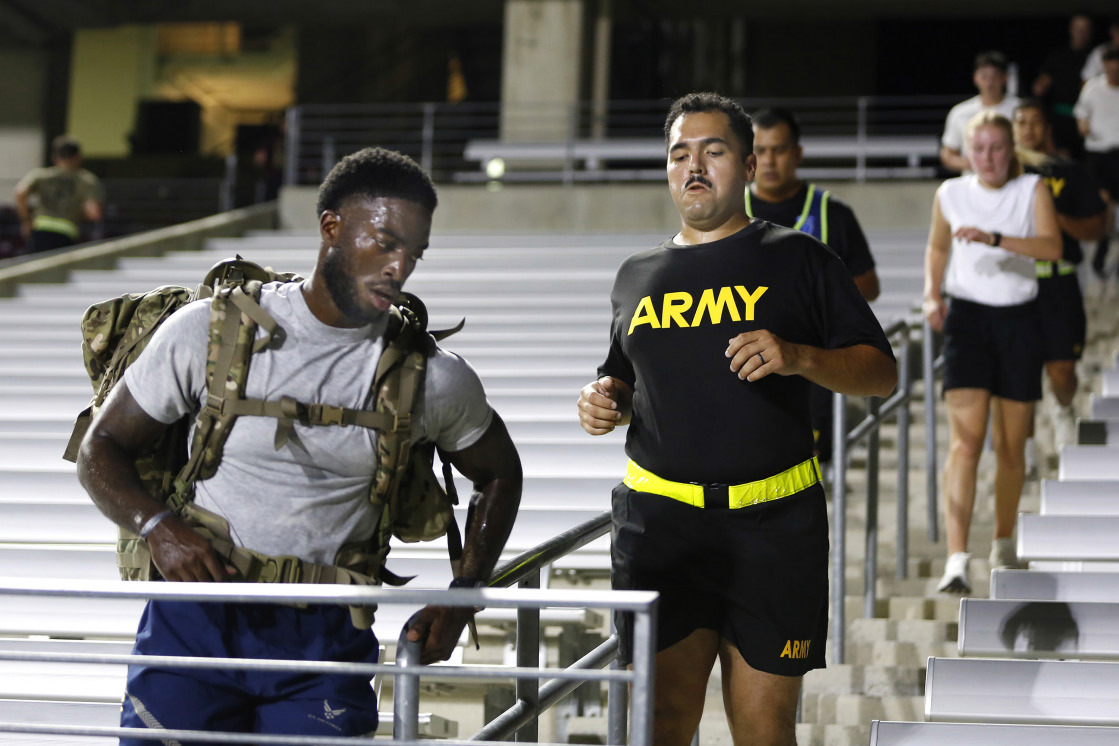
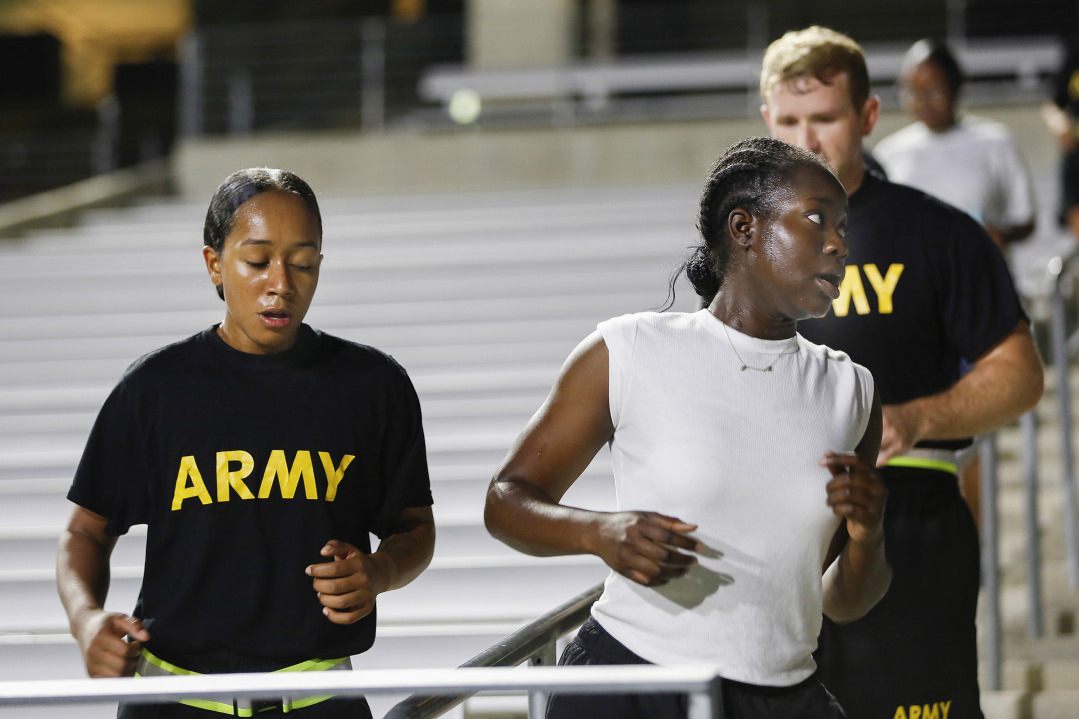
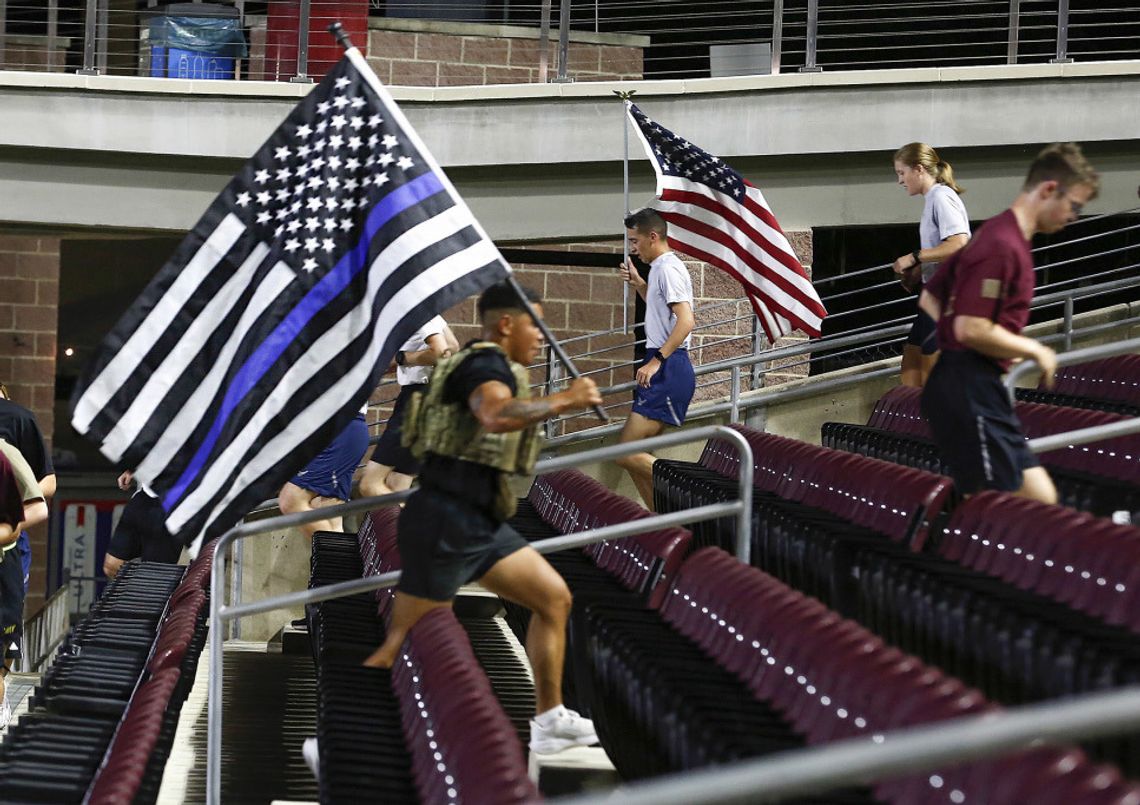
Texas State Army and Air Force ROTC members gathered before dawn at UFCU Stadium on Thursday morning to climb stadium stairs to honor the lives lost on 9/11 as well as the heroic efforts of first responders.
Cadets climbed a total of 2,090 steps during the event, representing the 110 floors of the World Trade Center. ROTC members separated into four groups and crisscrossed four separate sections of the lower level of stadium seating for approximately 20-30 minutes.
This is the second year for this event, according to event organizer Army ROTC Cadet Aiden Gonzales, who stressed the fitness benchmark it set for current cadets as well as the example it sets for future ROTC members.
“I think, while still early in its inception, this event has come to create a narrative within the battalion that we have a standard for the things we do. That standard has been created through many events in history, such as 9/11.”
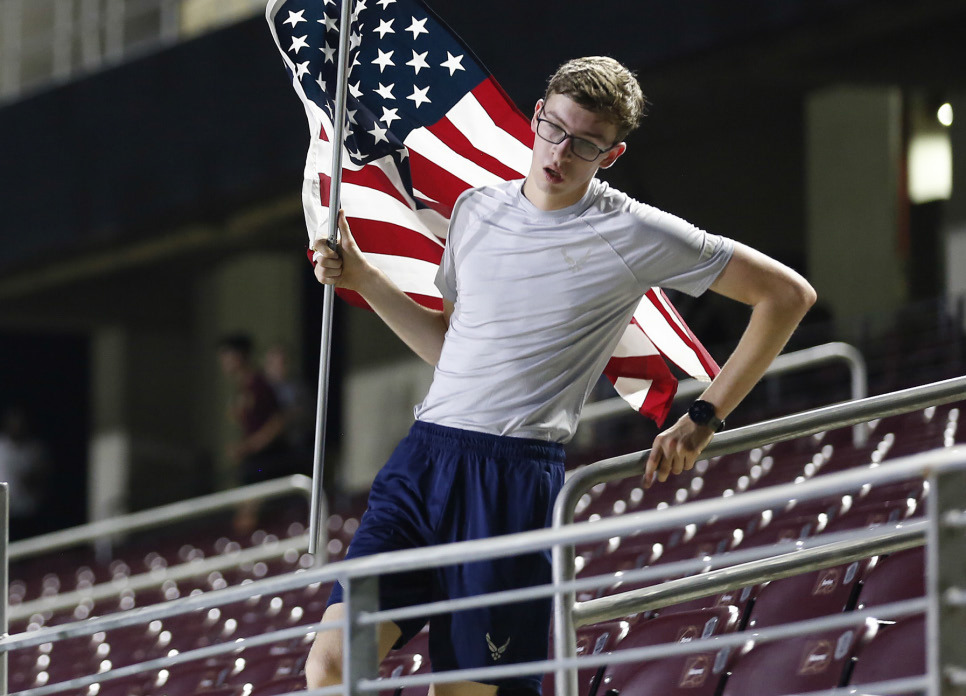
“I believe this event inspires young adults to become cadets,” Gonzales said. “Watching their peers represent something greater than themselves encourages other Texas State students to want to be part of it as well.”
Texas State President Kelly Damphousse spoke to ROTC members before the stair climb, encouraging them to think about 9/11 first responders. “Someday you’ll be asked to answer the call. And I hope as you’re walking up and down these stairs today, you’ll think about those firefighters who, instead of running away from a burning building, ran towards it, like so many first responders have done.”
“You will all be leading men and women, perhaps in the battle. Think about the responsibility you will soon share to keep this world safer, to make America stronger, and to protect and to serve the men and women who live in this country,” Damphousse said.
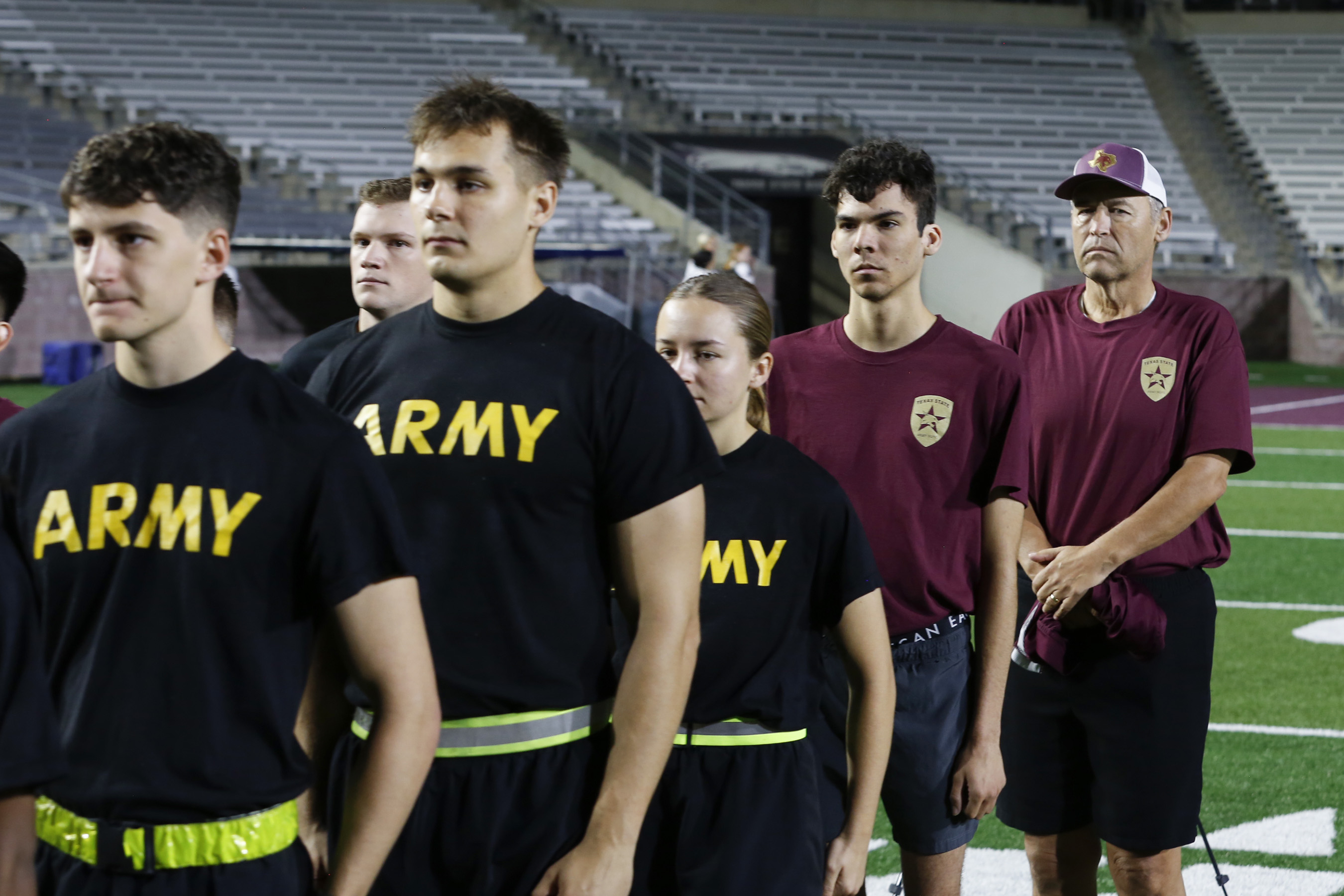
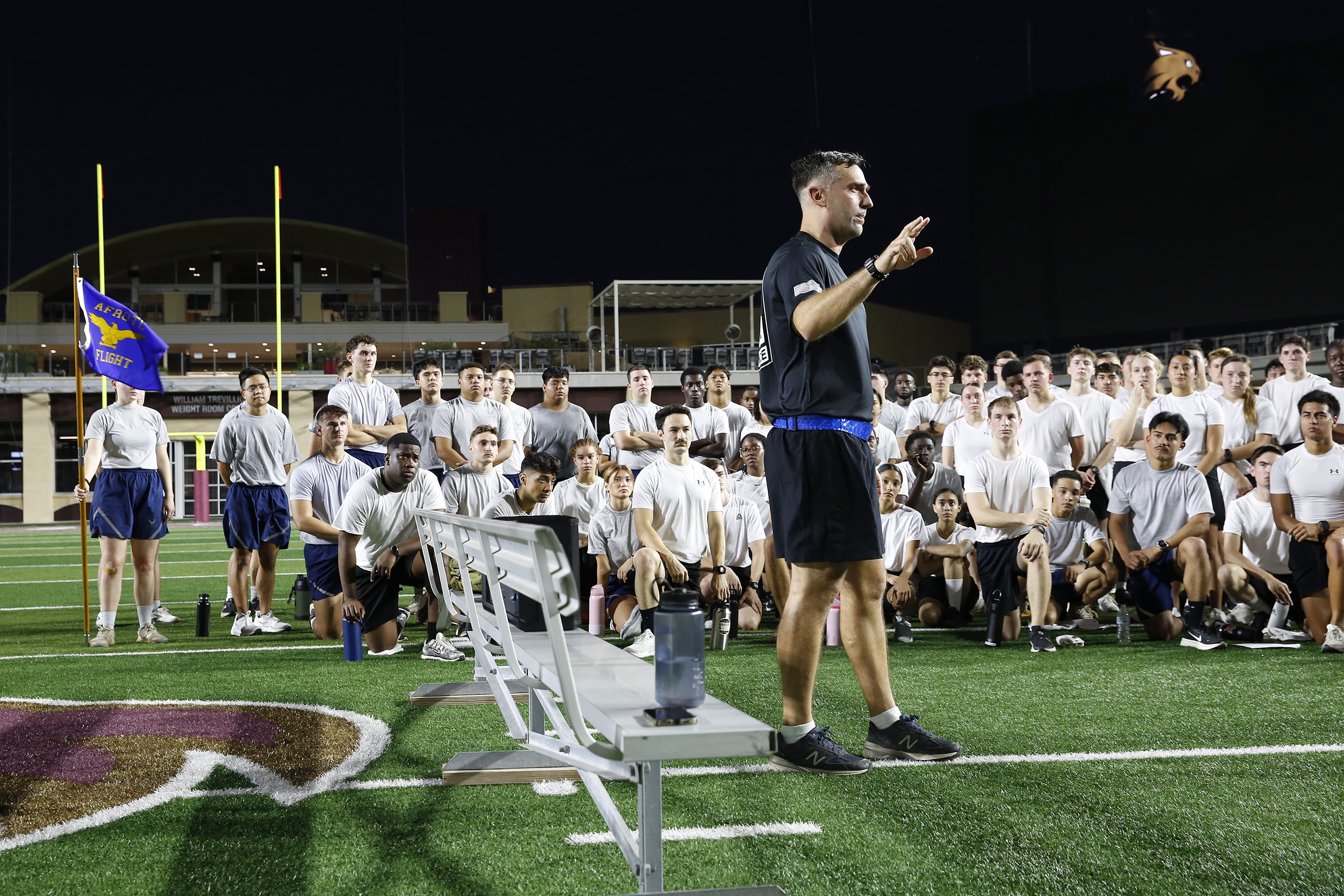
After the stair climb was completed, the cadets gathered at the 50-yard line for closing remarks.
Lieutenant Colonel Brice Roberts, Texas State professor of Military Science and Army ROTC instructor, spoke about the importance of mental and physical fitness in military training.
“Why do we work out? The answer I often hear is “so I can be in better shape.’ And that’s not quite right. Your platoon needs you to be in good shape. Your navigator, your wingman, needs you to be in good shape. Your country needs you to be in good shape.”
The featured guest speaker was James Eyester, a Marine Corps veteran who was one of the responding NYPD officers on 9/11.
“New York City is my backyard,” Eyester said. “That’s where I grew up. My grandfather worked in one of those towers.”
Eyester stressed the importance of being prepared for the challenges of direct action in a military operation, such as those which followed 9/11.
“You could be sitting around for hours being bored, followed by moments of terror, sheer terror. And you need to be physically and mentally prepared for that.”
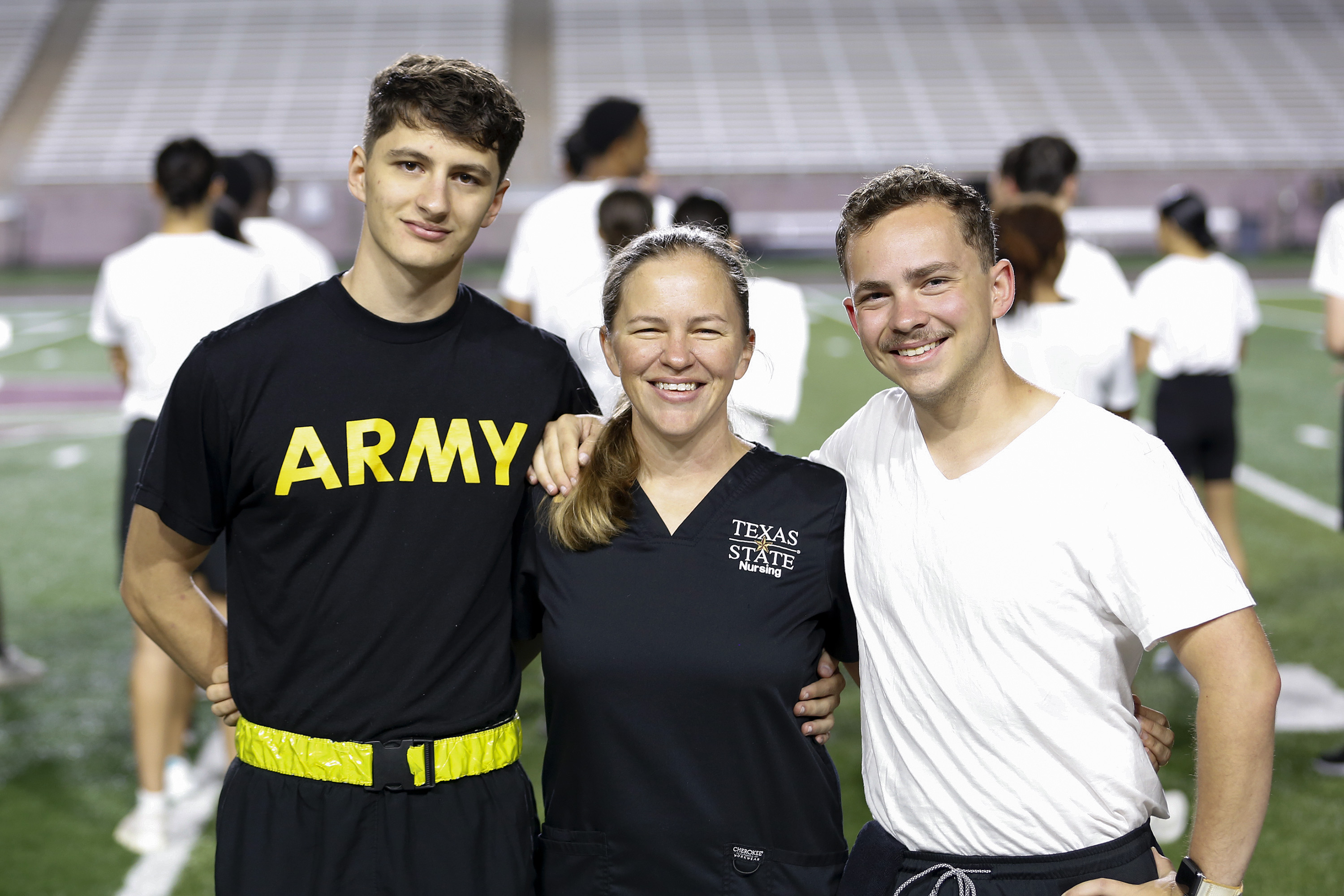
Veronica Hughes, Simulation and Program Coordinator for the San Marcos branch of the Texas State nursing program led a group of San Marcosbased Texas State nursing students on hand in case of injuries to stair climbers.
“We had a sprained ankle, a scraped knee and at least one puker, but that was about it” Hughes said.