The Appalachian Trail officially opened in 1937, but 11 years passed before the first person thru-hiked it from Georgia to Maine. That inaugural intrepid soul was named Earl Shaffer, a WWII veteran of the South Pacific, who undertook the entire 2,000-mile journey as a way to “walk off the war.”
Post-traumatic hiking is nothing new. The early Greeks had nostos, the long journey home after war, and most cultures have some form of homecoming journey for warriors after military service. For centuries, religions have codified these transitional moments by instituting rituals of pilgrimage, healing and reintroduction to peacetime living.
As recently as WWII, transportation limitations provided the necessary decompression, reflection and group processing time to help soldiers make the transition from the theater of war to their hometown theaters on the square. Yet with the advent of air travel, sol- diers, airmen, seamen and marines since the Vietnam War have gone from down range to down home in a matter of hours, creating a kind of soul-lag, as Nick Hunt calls it in his essay, “Traveling at the Speed of the Soul.”
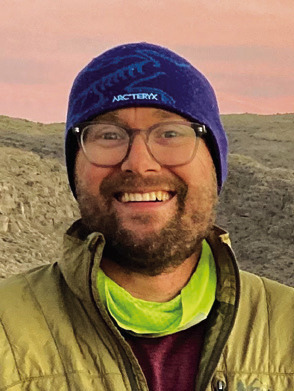
Hunt walked from Holland to Turkey and then flew home in a matter of hours over a route that took him 221 days to walk. Reflecting on the dislocation he felt, Hunt re-examined the old idea that the soul travels at the speed of walking. For many veterans, me included, the quick trip home from a deployment left something behind, something that could only be recovered by walking.
So it should come as no surprise that recent veteran organizations have sought to reclaim that lost processing time through hiking events. Warrior Expeditions literally follows in the footsteps of Earl Shaffer by organizing veteran group hikes of the Appalachian Trail, while non-profits like Sierra Club Military Outdoors provide long weekend, eco-therapy outings for veterans.
Regionally, we enjoy the work of Band of Runners, which is a San Antonio organization for veterans and their families to learn about trail running. Created by Liza Howard, an ultra-marathon champion from a military family, Band of Runners hosts a trail camp every Veterans Day weekend in central Texas that flies in some of the country’s best ultra runners to offer workshops to veterans and their families.
At the most local level, San Marcos plays host to VetRecOutdoors, which provides therapeutic outdoor adventures promoting community, camaraderie and compassion through nature. Founded by Blake Holbrook, a Texas State graduate and Purple Heart recipient for actions during Operation Iraqi Freedom, VetRecOutdoors offers hiking and paddling adventures for veterans all over Texas.
So if you or a veteran loved one is looking to walk off the war, or just find a little camaraderie, join me and VetRecOutdoors every Wednesday morning 0800 at the Lower Purgatory Trailhead. We hike for about an hour — sometimes with witty banter, sometimes in silence, but mostly with the intention of finding peace in nature by walking together.
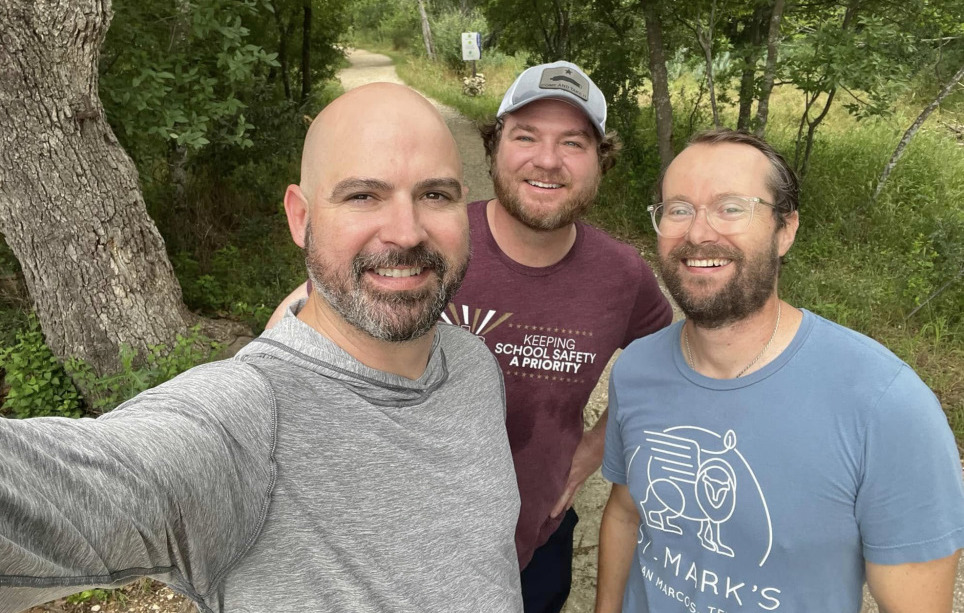
VetRecOutdoors at Lower Purgatory Photo courtesy of Christian Hawley