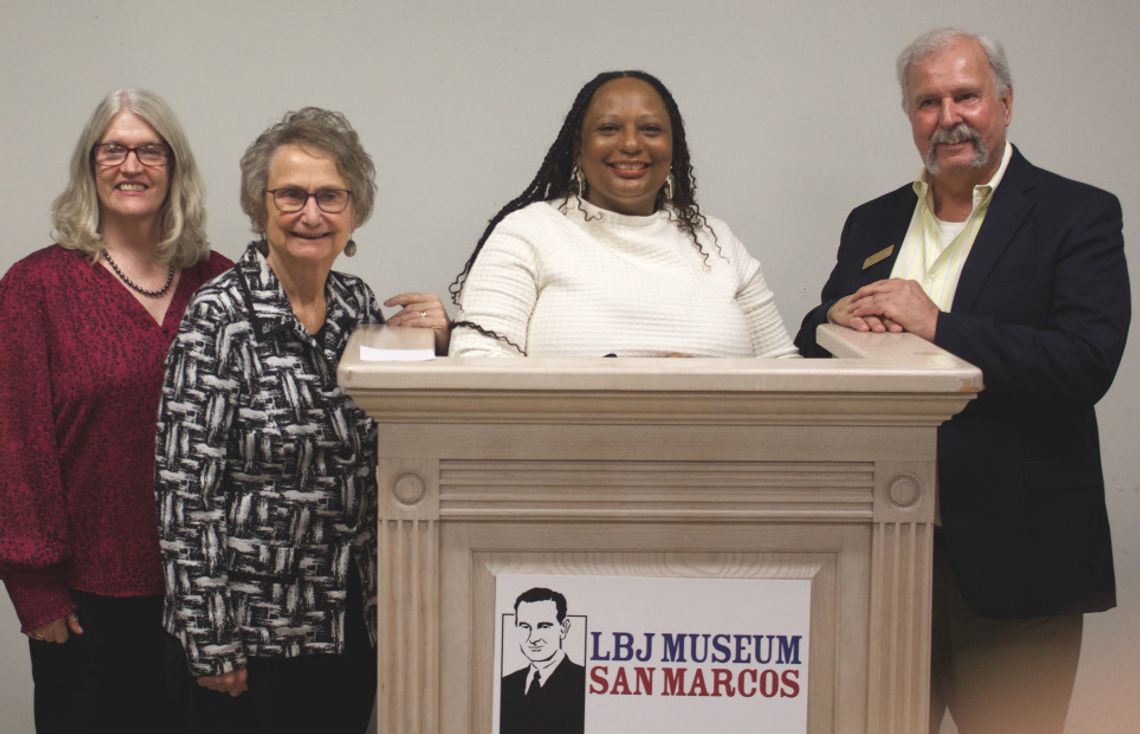
The LBJ Museum invited Casey Nichols, an assistant professor of history at Texas State University, to speak about “How Everyday People, Politicians and Activists Waged the War on Poverty.” Since 2013, the LBJ Museum has hosted an annual spring and fall lecture series where speakers present information on their expertise.
Throughout her lecture, Nichols referenced her book, “Poverty Rebels: Black and Brown Protest in Post-Civil Rights America.” She discussed the War on Poverty in the 1960s and 1970s, following President Lyndon B. Johnson’s signing of the Economic Opportunity Act of 1964.
Born in California, Nichols taught at California State University, East Bay, Long Beach and Dickinson College before she began teaching at Texas State in 2019. She specializes in the areas of African American history, Mexican American history, urban history, civil rights and social justice.
The lecture focused on developments in Los Angeles, a city which saw galvanized social justice movements following the allocation of $947 million to anti-poverty programs during the War on Poverty. These dollars energized Mexican Americans and African Americans to help address economic barriers to equality and to fight for political change, she said.
In “Poverty Rebels,” Nichols writes “Federal civil rights and antipoverty policies brought the excitement and challenges of organizing across residential and racial boundaries to the fore in 1964.”
Nichols emphasized that understanding the history of African American and Mexican American people in California prior to 1964 is crucial to understanding the developments in the War on Poverty and segregation. Racial tensions made cross-racial organizing difficult, as African Americans and Mexican Americans were increasingly split between South Central and East LA, she said.
The focus on youth as the main target of support programs in the War on Poverty created increased tension in the development of organized movements, according to Nichols. Youth activists in movements like the Black Panthers and Brown Berets presented a vision of social justice different from the one held by established institutions.
The LBJ Museum will be hosting a Christmas program on Dec. 4 at 6 p.m. For more details, visit lbjmuseum.com.
The Lyndon Baines Johnson Museum of San Marcos commemorates the formative role LBJ’s years as a college student and school teacher played in the landmark Great Society legislation he passed as president between Nov. 1963 and Jan. 1969.
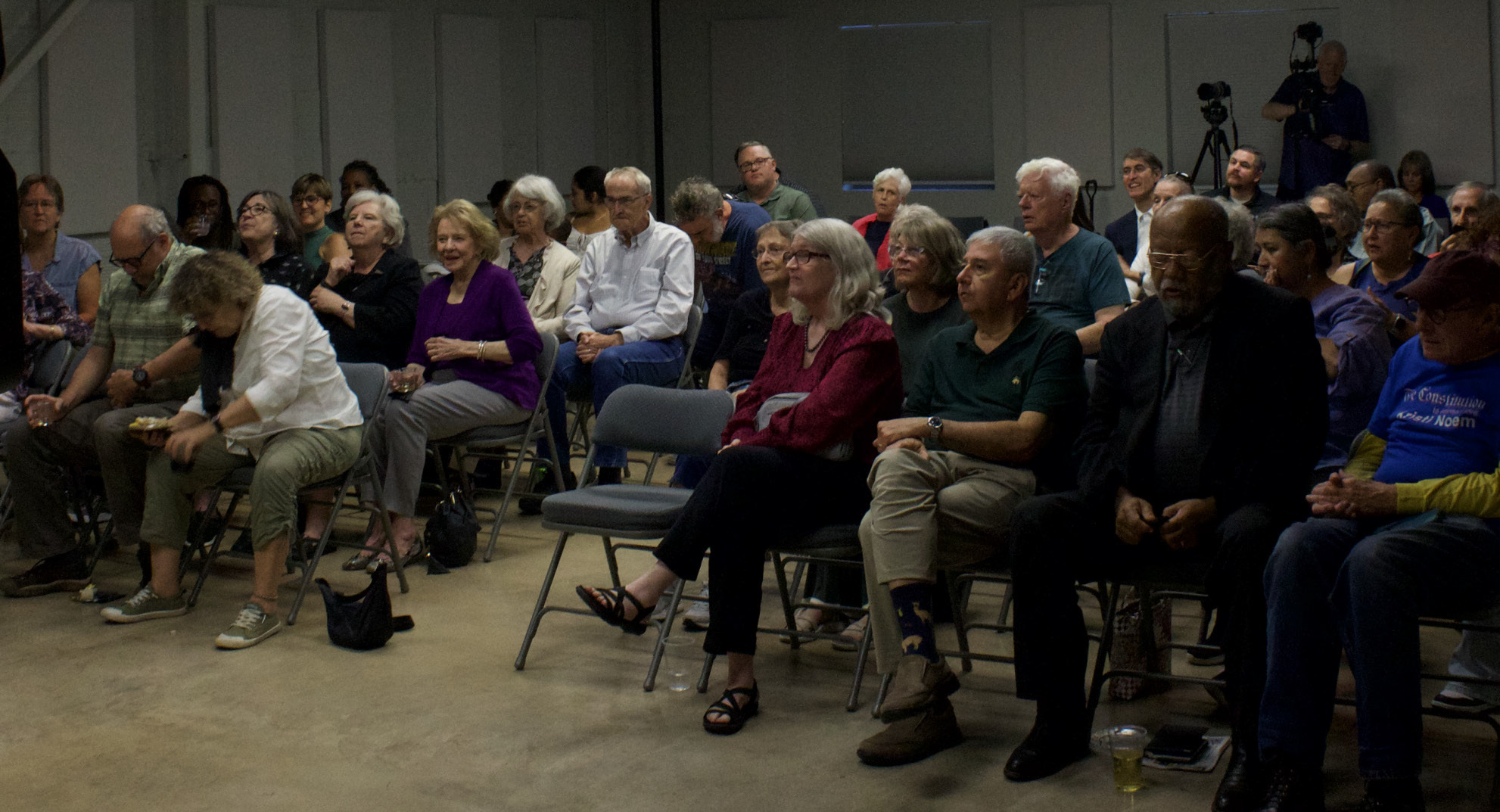
The crowd gathers at the LBJ Museum to see Casey Nichols for the Fall Lecture Series. Photo courtesy of Brad Hunt
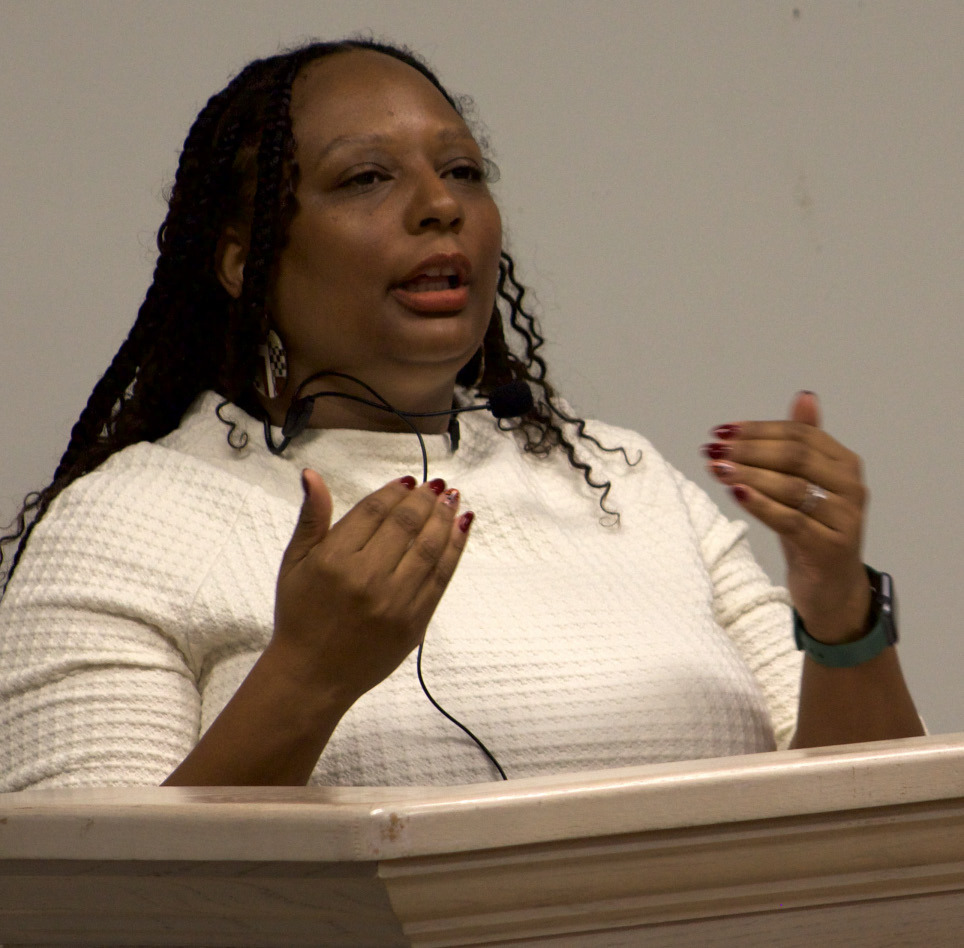
LBJ Museum guest speaker Casey Nichols, an assistant professor at Texas State University, discusses her book. Photo courtesy of Brad Hunt