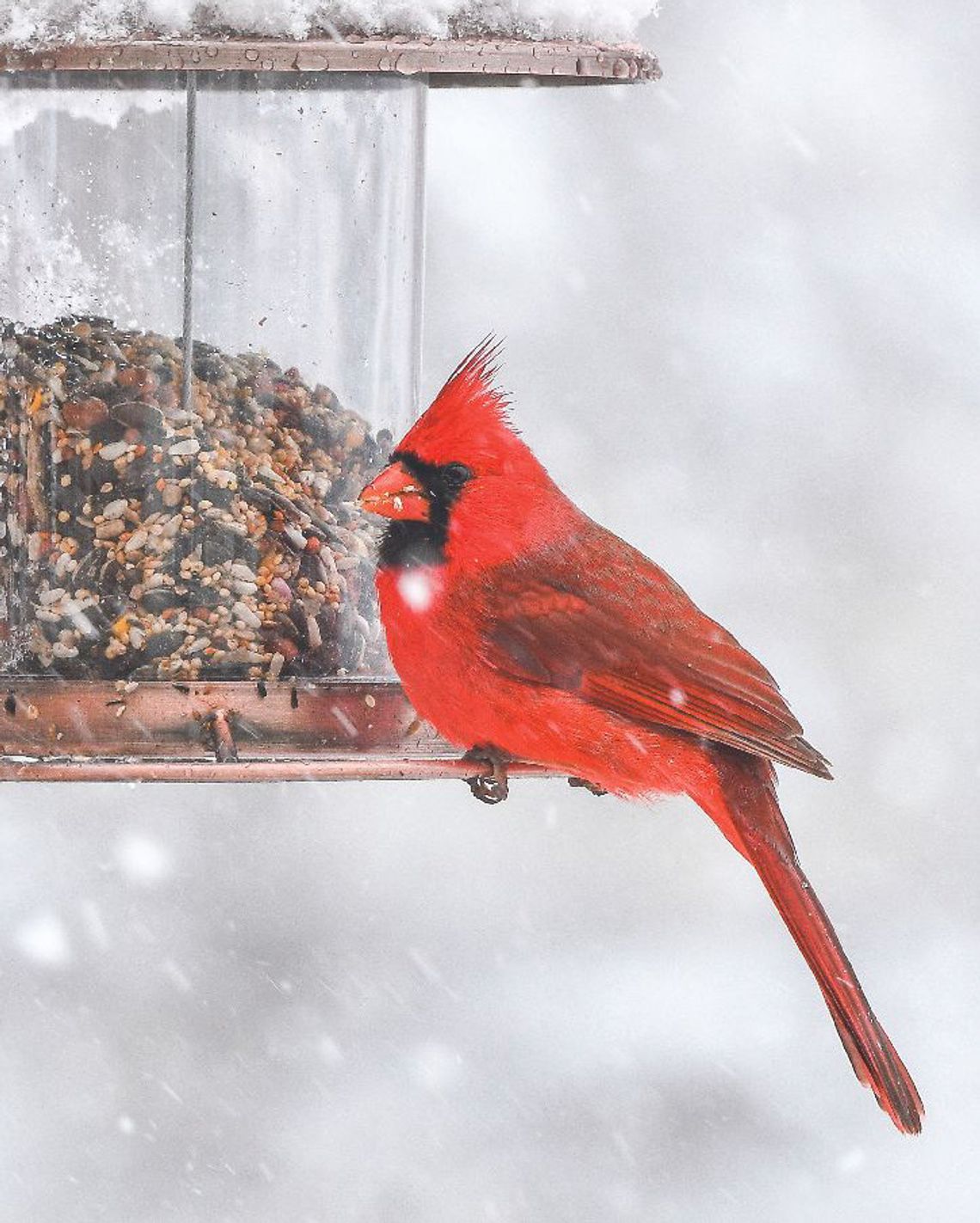
Staying alive in really cold weather can be a challenge for birds. They succeed in meeting that challenge in all sorts of ways.
Perhaps the greatest challenge is to find enough food to generate continuous body warmth. Common redpolls eat as much as 42 percent of their body weight in seeds during a single day. That’s the equivalent of 63 pounds of food for a 150-pound person.
Red crossbills can store 300 spruce seeds in a portion of their esophagus called the crop. Before roosting at night, they fill their crop with seeds and these are gradually swallowed throughout the night.
White-winged crossbills are also adept at seed snacking. They must eat about one seed every seven seconds during a wintry eight-hour day in order to survive.
American crows are masters at finding all manner of food during frigid weather. They eat lots of acorns and even small mammals such as field mice. Some birds have unique digestive systems which allow them to eat unusual winter foods.
Yellow-rumped warblers chow down on wax myrtle berries and bayberries, two berries that contain a waxy substance that many other birds cannot digest. And some birds store food for weeks or months thanks to phenomenal spatial memories.
Blue jays are especially adept at hiding thousands of acorns and nuts then dining on them throughout the winter.
Gray jays, Clark’s nutcrackers and pinyon jays also hide seeds for use during freezing weather. All in all, winter can be a tough time for many avian creatures, but they are generally up to the challenge and survive with grit, grace and determination.