PLANNING AND ZONING
Planning and Zoning Commission voted for rezoning after nearly 8 hours of public discourse
The San Marcos Planning and Zoning Commission voted 6-2 in favor of rezoning to allow the Highlander SM-1 Data Center to move forward with their plans to invest $1.5 billion into constructing a multi-building data center on 200 acres on Francis Harris Lane.
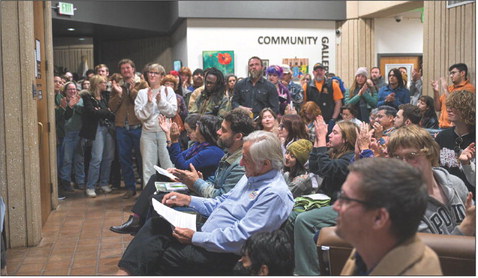
Over one hundred citizens packed into City Hall largely to voice their concerns about environmental impacts and neighborhood impact. Aside from the developers, the majority of those who spoke in favor of the data center were from Laborers Local 1095, a union based in Austin.
“Projects like this bring real value, tax revenue that strengthens cities, opportunities for local businesses, and most importantly, good jobs to build real careers. And not just any jobs, this developer has made a writ- ten commitment to work with union labor on this project,” Jim Neville said.

Temporary union construction jobs were promised. As to the long term, the data center is expected to employ around 20 people on site, according to the presentation by data center company Cyrus One in a meeting last August. The company was not disclosed during the first time through Planning and Zoning, with only the developer John Maberry representing the project. On the day of the Aug. 19 City Council meeting, Cyrus One backed out of the council process, leaving only the developer to represent the data center project proposal.
Nearly four hours of public comment started the meeting with a constant wave of residents voicing their opposition to the project. A group of citizens formed the Data Center Action Coalition, which has been organizing educational meetings and rallying citizens to share their concerns with council.
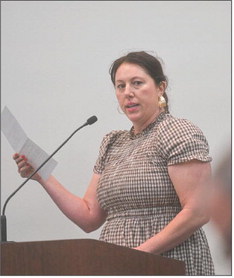
Torrie Martin, who is an immediate neighbor to the proposed data center, voiced her concerns on the immediate impact to the citizens who live in that area. With the Cloudburst Data Center underway and more data centers proposed for the area, what was once farm land is turning into a hub for these data centers.
“We are scared to not have water, with five metal three-story structures that will be irradiating heat. Our electricity bills will go up. Our units are going to be working harder and less efficiently than before because of the brownouts, and costing us more money. I hate to think of what this will do to our livestock, which my neighbors and I all depend on financially,” Martin said.
The identical proposal was voted on in March of last year but with a 71 vote against rezoning for the data center. In August, City Council voted 5-2 in favor of rezoning, but without a supermajority required the rezoning failed to pass through.
Since council technically did not deny the proposal, the developers were able to skip the one-year waiting period and refile the same proposal to be assessed again by Planning and Zoning, San Marcos City Attorney Samuel Aguirre said during the meeting.
The commission voted on two items proposed by the developers. The first was to change the preferred scenario map from “Conservation/ Cluster” to “Commercial/ Employment Low.” The preferred scenario map is a part of the Vision SMTX Comprehensive Plan, which the city adopted in Oct. 2024 and is meant to guide the evolution of the city for the next 2030 years. The zoning item was a request to change the land from “Future Development and Character District 2.5” to “Light Industrial.”
Maberry brought a draft of the restrictive covenant that his team plans to attach to the development of this project.
“That covenant runs with the land, meaning it’s binding, not just on the current owner, but on any future owner-operator,” Armbrust & Brown attorney Michael Whellan said.
The restrictive covenant promises restricted water use and decibel noise among other restrictions.
Amy Meeks and William Agnew voted against the proposals. David Case, Michele Burleson, Lupe Costilla, Maraya Dunn, Griffin Spell, and Rodney Van Oudekerke voted for the rezoning changes.
“We had well over 100 of our citizens [at the meeting] saying, don’t do this, we don’t want this,” Meeks said. “We do need to seriously consider the mass of people that have come to us tonight with the research that they have done, and we need to listen to that and consider that.”
Meeks voted against the data center rezoning citing potentially unknown health effects as data centers start to pop up in local communities across the country. She also emphasized the voice of the community, stating that out of the 16 letters received by council only four were for the data centers and those who wrote the letters had addresses outside of San Marcos.
Agnew voted against the data center rezoning because the language in the restrictive covenant raised concerns, pushing back on the proposed 20-year moratorium and lack of written language on how light, noise and energy usage will be monitored.
City Council will hold a public hearing about the data center project on Feb. 3 with the first reading on Feb. 17 and an ordinance reconsideration and second reading on Mar. 3.