LIFELONG LEARNING SMTX
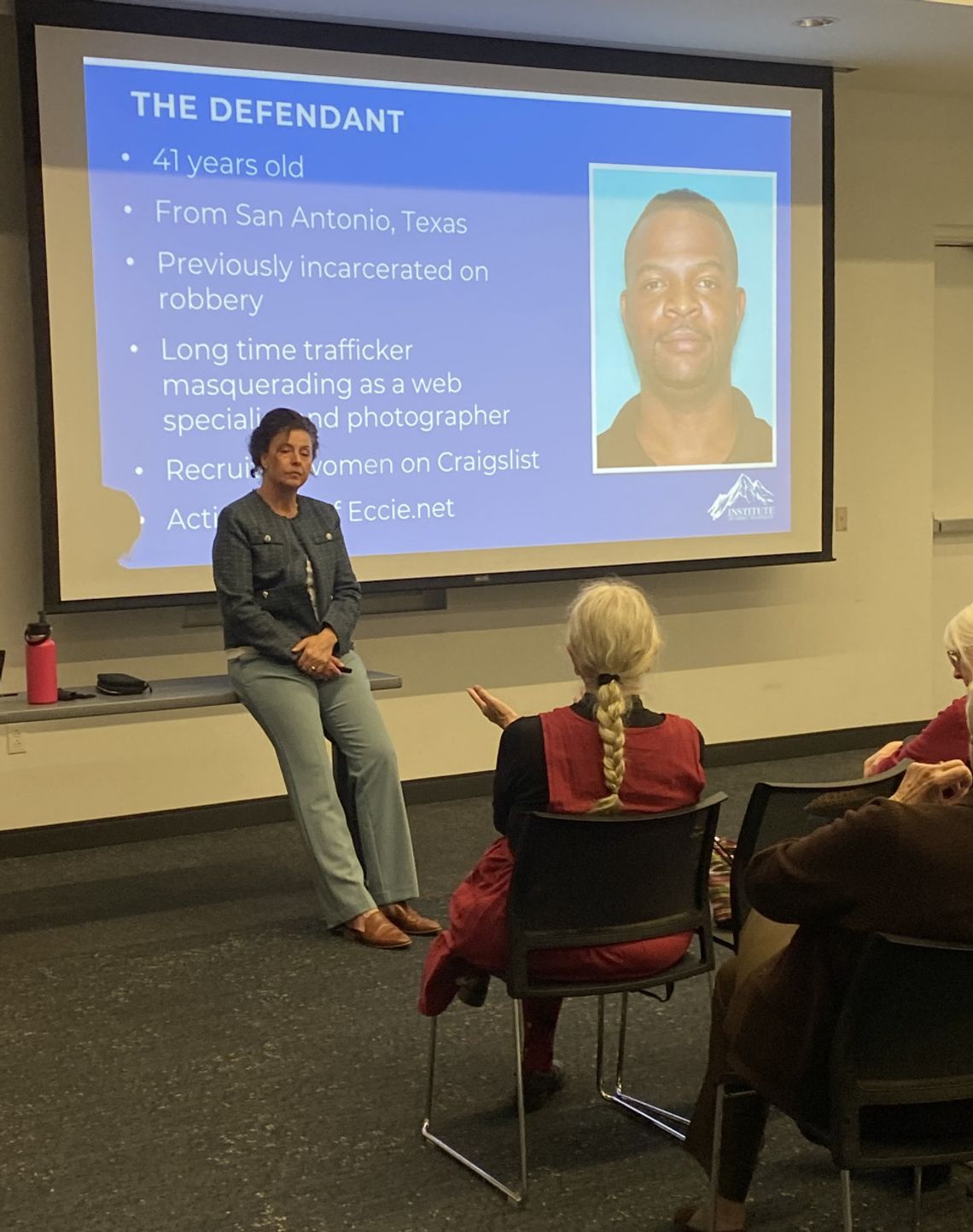
Lifelong Learning SMTX’s current lecture series featured Kirsta Melton, an attorney with 25 years of experience prosecuting traffickers, abusers, rapists and perpetrators of family violence. Melton walked learners through the prosecution of Steve Sumlin, a prolific San Antonio sex trafficker, who was 41 years old at the time of his trial.
Those who attended were walked through the case details, issues that arose and how they were ultimately able to connect the dots and prosecute Sumlin. (Editor’s Note: This story includes discussion of human trafficking and sexual exploitation that may be disturbing to some readers.)
Melton began by defining Human Trafficking, which is “the exploitation of men, women and children for forced labor or forced sex by a third party for their own profit or gain.” If the individual is under the age of consent, that is also Sex Trafficking. If no force, fraud or coercion is used or if the person is not underage, the charge for supplying and profiting from prostitution is Aggravated Promotion of Prostitution.
“Steve engaged in both of those forms of sex trafficking with an underage
SEE LIFELONG LEARNING PAGE 4 child as well as with an adult woman,” Melton said.
Sumlin was running a prostitution ring that spanned San Antonio, Austin and Dallas.
“He had created a website of his own where he was marketing the people that he was offering for sale for sex,” Melton said. “He had multiple people that he did not voluntarily recruit into that process but that ended up there because they were either underage or because he applied force, fraud or coercion to make them do that work.”
Sumlin would target young women in the community college system using Craigslist and would word the job in a way that did not imply prostitution.
“There were several people who ended up in Steve’s clutches who literally thought they were going to go on dates, like go to dinner and hang out with people for money,” Melton said.
Men would order the women being trafficked by Sumlin online, and they would meet them at either a hotel room or an apartment that he had rented solely for that purpose.
Initially, Sumlin was being investigated for Aggravated Promotion of Prostitution until he went to Gold’s Gym with a missing 16-year-old girl and was reported by staff. The girl was using a fake ID with the name Susie Rowland, and she believed that she and Sumlin were in love. He had even gotten her pregnant and forced her to abort it. She also admitted to engaging in prostitution with 40 or more men in three months, and Sumlin kept all of the money, Melton said.
“Once we had this information, we went from that Aggravated Promotion of Prostitution case that involved the other women that he had been engaging with, and now we had a Human Trafficking case because there was an underage child,” Melton said.
After being interviewed, the victim fled from the police and went straight back to Sumlin. They received a tip that Sumlin was at the Budget Suites, where officers found him in the room and the victim in the shower.
The officers found a phone in the hotel room and already had multiple emails related to Sumlin’s activities. However, there were multiple levels of concealment as they had been registered under various other names, which made Melton’s job more difficult. They also had an uncooperative witness.
“So, the question was, how are we gonna prove this case without the victim?” Melton said. “We pulled the gym records. We pulled the Uber records. We pulled hotel records. We pulled Gmails, phone records, ECCIE ads and reviews, [which is an online prostitution site], and we had the cell phone. When we went to trial, we had to prove things piecemeal by piecemeal.”
Melton went through each piece of evidence for the Lifelong Learners, and explained how they were able to relate it back to Sumlin.
But Melton said they were still looking for someone to “narrate what was going on during this period of time.” They were able to find and interview one of the other women who was working for Sumlin, who went by the alias “Dirty Blonde Bunny.” She had been a victim that Sumlin had forced or used fraud or coercion to do the work. She had reconnected with an old boyfriend and had a baby. She told Sumlin she wouldn’t be working for him anymore, and he told her that she would or he would tell her boyfriend.
Melton reindicted the crime with the addition of this victim and made the charge Continuous Trafficking of Persons, a 25-to-life offense involving two or more instances of trafficking in a period of 30 days or more.
“Ultimately, the jury did come back with a fairly fast guilty,” Melton said. “They gave the defendant 55 years in prison for trafficking.”
The Lifelong Learning lecture series occurs at 1 p.m. every Friday until Feb. 6 and covers a variety of topics. More information can be found at LLLsanmarcos.org.

Pictured is LLL Director Marianne Reese, prosecutor Kirsta Melton and LLL Assistant Director Stephanie Korcheck. Daily Record photos by Shannon West