TECHONOLOGY
CEO shares new AI strategies for business success
With the invention of AI rapidly taking over workplace tasks, it’s important to know how to leverage those tools to bolster the success of a business.
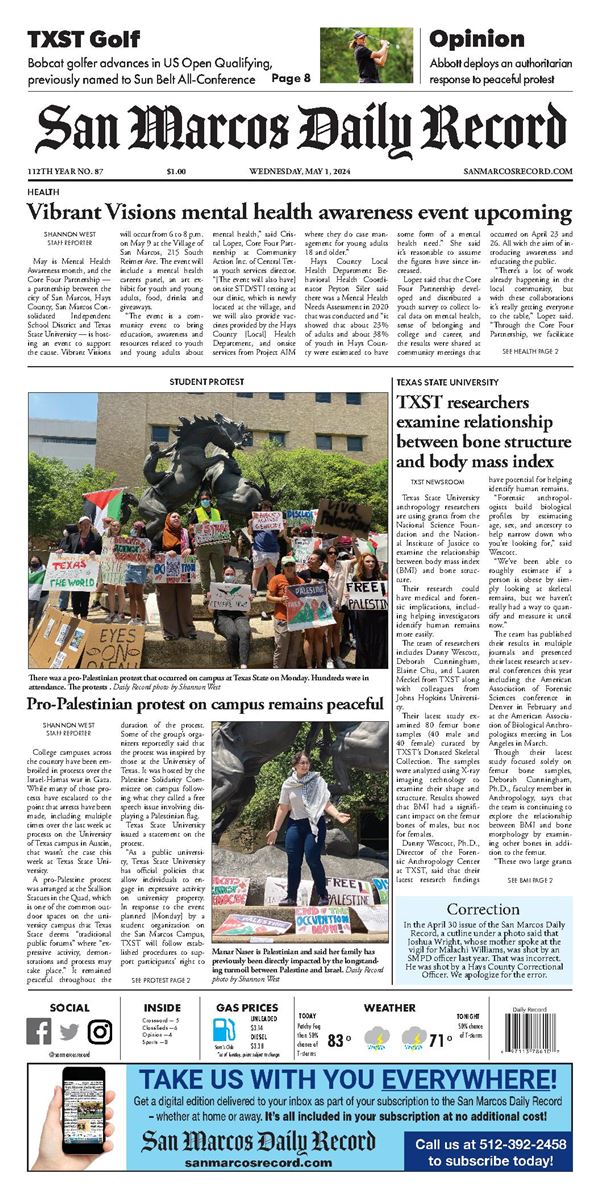
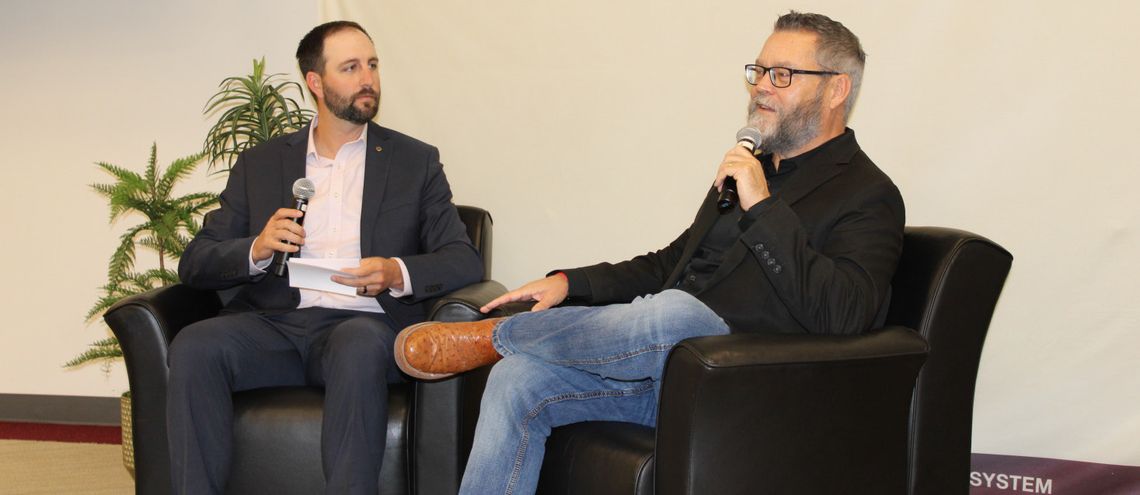
The San Marcos Area Chamber of Commerce hosted Randy Bryan, tekRESCUE CEO and founder, at Texas State University’s STAR Park to educate attendees on “5 AI Leverage Points Business Leaders Will Use to Win in 2026.”
Bryan discussed the use of AI: as a thought partner, embedded into workflows, to eliminate delays, managed as a core capability and the need to use it securely.
“The businesses out there that are winning with AI in 2026 — those businesses aren’t the ones that are just experimenting; they’re the ones that have learned how to take AI and actually apply it to their business in ways that can actually help their business,” Bryan said. “Winning with AI comes down to three things — knowing where you are, knowing where you’re going and getting there safely.”
Bryan encouraged using AI to make decisions based on actual data rather than a “gut feeling.”
“With AI, you can make better decisions. You can also have faster execution with AI. You can have reduced friction, improved velocity, and you can also have fewer surprises where you have proactive risk identification.”
Bryan said that, by default, AI would like to please the user, but he recommended using it as a thought partner.
“And I tell the AI, ‘You are a master of human sociology and psychology. Don’t let us [let things] slip through the cracks, deny things, forget stuff. Always point out the stuff that we’re not seeing,’” Bryan said. “We want it to challenge our assumptions.”
He used Chat GPT as an example of how to “train” AI. He recommended using memory for persistent preferences. For example, Bryan said one could tell it to call them by their preferred name and tell it to “save this in your memory.” Any information that AI saves into memory will be remembered for future conversation and used automatically. He said all of this can be done using plain language instructions, no coding required. He recommended using projects or workspaces for topic-specific content. Within that project, the AI will use previous information and build on it.
Bryan’s next leverage point was to embed AI into workflows.
“Using AI to get embedded into your workflows, you’ve got to step back and you’ve got to think about the big picture. What am I doing with my processes? How do I get from A to B?” Bryan said.
He gave examples of how to do this. At tek-RESCUE, Bryan uses AI to sort his emails and respond to them. He said it can be used to address finances by analyzing and forecasting data. It can be used to keep up with customers and remind business when it’s time to reach out.
The next AI leverage point was using it to eliminate delay. Bryan uses AI to respond to chats from customers right away. The message will identify itself as AI, and give recommendations for fixing the problem immediately, which often reduces the need for a real person to get involved.
“The handoffs happen quicker and decisions are made faster,” Bryan said. “Someone who’s winning with AI is learning how to take a step back, look at your processes and see how to take things that are costing time and then reduce that time using AI.”
Bryan discussed using AI as a core capability and gave examples of processes already embedded into every day work flows such as the use of a phone, phone number, email and computer.
“Just like you know how to do phones, just like you know how to do sales, you know how to do emails, it needs to be a core capability. Is it going to happen overnight? No,” Bryan said. “There’s going to be trial. There’s going to be error.”
Bryan said that it is crucial to use AI securely and intentionally, because the top litigation threat for businesses has to do with leaked data. He said the majority of the free AI tools take data, learn it then reuse it. He recommended some tools that are currently rated as the most secure, but he said that changes regularly and research should be done before deciding on a tool.
Bryan said Chat GPT for Business, paid versions of Copilot, paid versions of Google Workspace (some need a specific setting turned off to achieve this) and Claude (the setting for using data to train other AIs must be turned off) are currently rated very secure.
Though Bryan encourages the use of AI to bolster business, he acknowledged that powering AI is currently not sustainable.
“To make an image in Gemini, it’s the same [amount of power] as running a microwave for a month,” Bryan said. “It’s a very real issue that’s going to have to be dealt with, or we’re going to run into a brick wall. It’s not sustainable long term the way it’s going.”
He said environment aside, it’s not financially feasible either, as most people are paying around $20 a month for AI while businesses are throwing trillions of dollars into powering the tools.
“Eventually, all these things are gonna have to level out,” Bryan said.
Though Bryan acknowledged challenges that must be addressed with AI, he said businesses that embed AI into workflows, use it as a trusted thought partner and manage it as a core capability, can position themselves to compete — and win — in the years ahead.
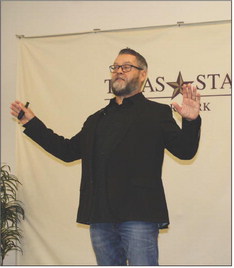
Bryan taught attendees how to leverage AI in business.
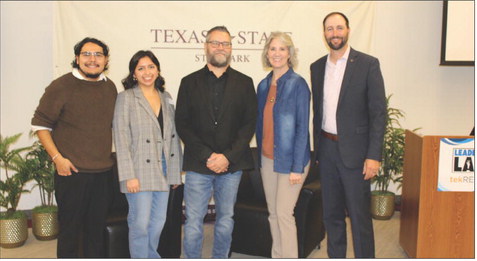
Pictured is the team behind the lecture: AJ Rubio, Joanne Ortega, Randy Bryan, Chamber President Page Michel, and Justin Payne.