NONPROFIT
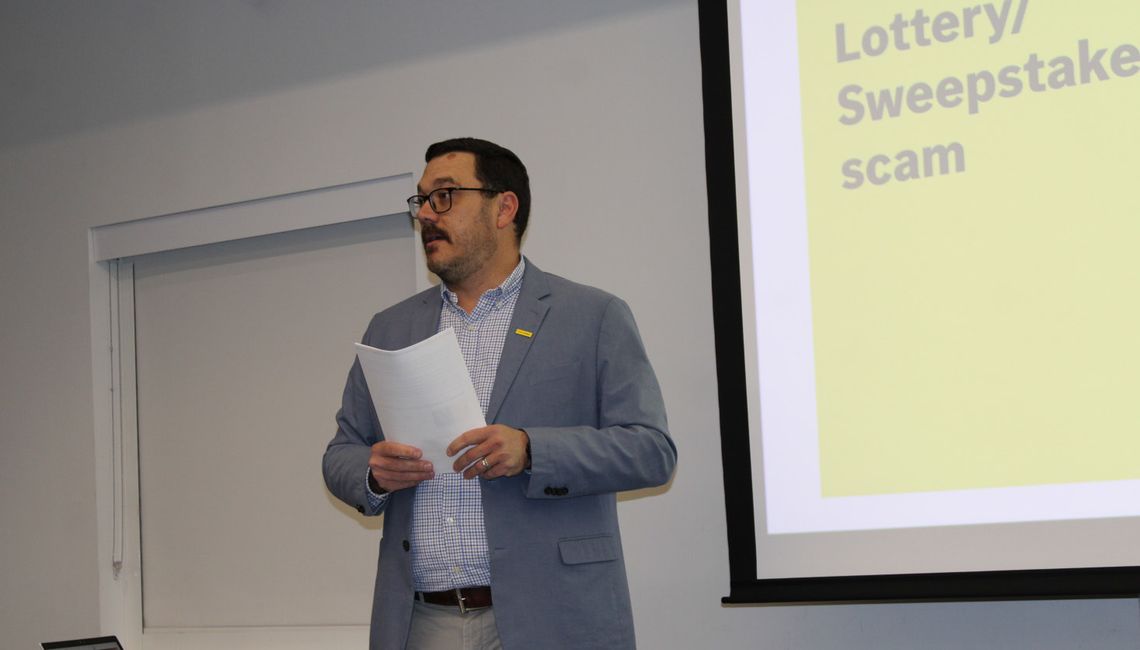
Anyone can fall prey to a scam, but knowing what to look out for can help avoid the devastation. Lifelong Learning SMTX hosted Jason Fischer, an Edward Jones financial advisor, for its most recent lecture series to educate participants on common scam tactics. “One out of 10 older adults are victimized financially, and 90% of it comes from people who the victim trusts in some form or fashion,” Fischer said. “Only one out of 24 cases are actually reported. And why is that? Embarrassment.”
Fischer went over the five types of scams: Romance, Collections, Sweepstakes, Imposter and Grandparent.
The person is targeted based on their loneliness in the Romance Scam. In this type of scam, the perpetrator will pretend to be a potential romantic partner and get to know the victim. After some time, the scammer will start requesting money for various things.
“These are multiple outreach attempts. These are phone calls. These are texts. These are emails. These people, they’re sophisticated enough to gather all this information from the Internet, from all kinds of things,” Fischer said. “Little by little, they’re going to gain trust. And then the money part comes in.”
The Collections Scam plays off of peoples’ fears. One example is of someone receiving a phone call from a person that said they are with the IRS and the victim owes back taxes that must be paid over the phone. Fischer said the red flag in this scenario is that the IRS will never call anyone. The perpetrator often will use fear by threatening to call the police. He also said that they can pretend to be the utility company and that they will cut the power during a heat or cold wave.
In the Sweepstakes Scam, a perpetrator will prey on excitement and call and say the victim has won a prize but must pay some money to receive it, often saying that money will take care of taxes and fees. Fischer said the main red flag would be if the victim did not sign up for whatever they supposedly won.
The Imposter Scam also works on peoples’ fears. This could be someone pretending to work at the victim’s bank or a text message that says it’s from UPS and the victim might miss their package. Fischer said these type of scams are increasing.
“In 2017, the Federal Trade Commission heard from 3,200 people about Social Security scams. They reported a loss of $210,000,” Fischer said. “Two years later, 2019, more than 35,000 people reported Social Security scams with losses of $10 million.”
In the Grandparent Scam, the perpetrator is preying on empathy and love. The person will call a grandparent pretending to be the grandchild and ask for money. Fischer said this works as the person may use multiple forms of communication — text, email, Facebook messenger and phone — and, oftentimes, the grandparent may not have spoken to their grandchild in some time or has difficulty hearing.
Fischer gave red flags to watch out for. There might be a sense of urgency, a request to verify identity, requesting to buy gift cards, asking to pay money to get money, a phone call from a government agency and the scammer getting mad if the victim does not do what they want. If any of these elements are present, one should remain aware.