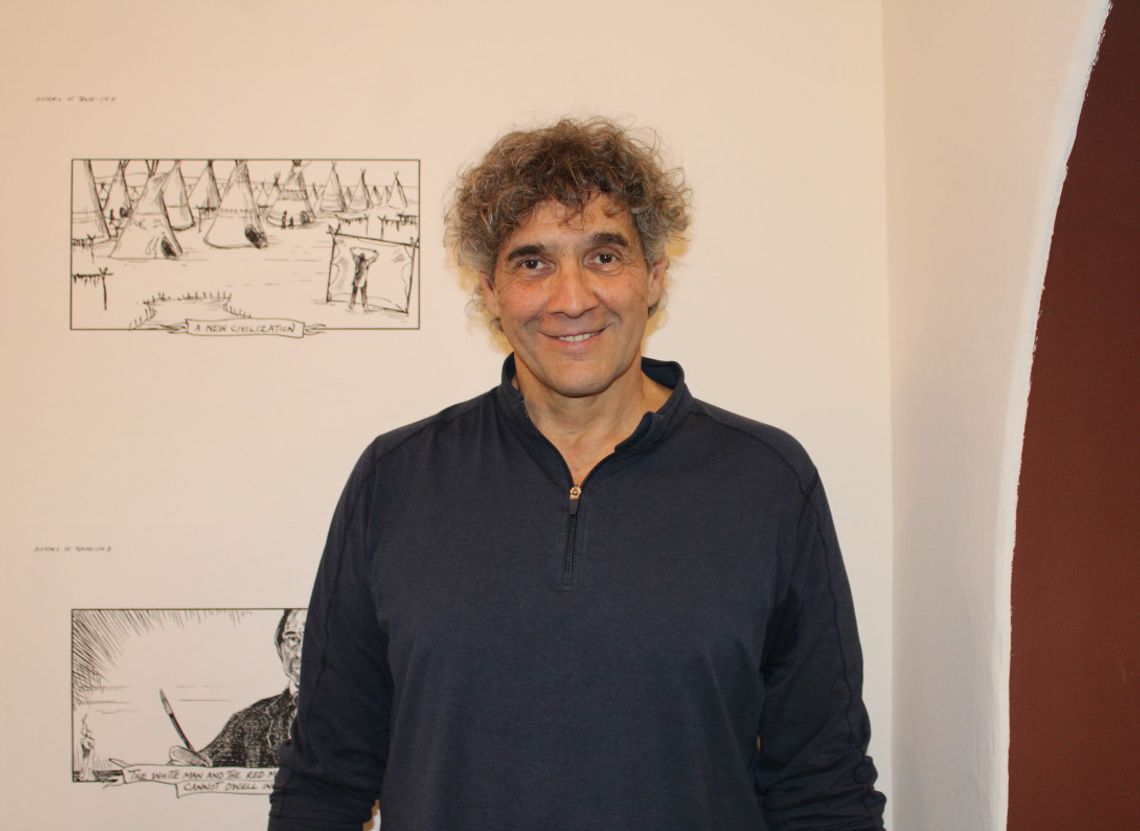
A lecture at Texas State University hosted by the Center for the Study of the Southwest explored trends in migrant deaths for those crossing the U.S./Mexico border. Dr. Alberto Giordano, TXST Department of Geography and Environmental Studies professor, walked the crowd at Brazos Hall through his extensive research on the topic.
Giordano said the study was multidisciplinary, utilizing data from GIS (Geographic Information Systems, which the U.S. Geological Survey website defines as ‘a computer system that analyzes geographical information tied to a unique location’), forensic anthropology (which the TXST website states studies human remains to determine data related to death and decomposition), medical examiners, geographers, law enforcement, humanitarian organizations and the National Missing and Unidentified Persons System.
“I think you can use this approach to improve identification outcomes,” Giordano said. “The key question here is, who is the person who died? Can we identify the person? Can we repatriate the body? Can we connect with their families?”
Giordano said the data was collected on identification status, age range, sex, race/ethnicity, nationality, condition of remains, date found or seasonality, landscape type, public or private land ownership and law enforcement narratives and case notes.
Giordano said the migrant death patterns differ dramatically by state and even by county. They found that, in Arizona, the migrants are found mostly on public desert land and deaths are largely exposure related. He said Arizona has a strong medical examiner system and better documentation than Texas.
For Texas, most land is private ranchland, so entry requires landowner permission. He said there is a heavy reliance on local Sheriff’s Deputies and the Justice of the Peace. They found less standardized documentation and a higher number of deaths classified as accidents in Texas.
He said across states, the migrant deaths were mostly adult males, but there were also a significant number of women and children. Many were found with identification but were still considered undocumented as there was no visa, which means entry was still not lawful.
“In the 90s and the early 2000s there was a … deliberate [push] … to deter migrants from crossing the border. And the way they did this, they concentrated enforcement in certain places and intentionally built the crossings in desert landscapes. I don’t think this really caused any deterrence in terms of [the] number [of migrants crossing],” Giordano said. “Enforcement does not eliminate crossing but alters where and how people die. That’s what has appeared very clear from our analysis.”
Giordano said his research team will do a second study that explores policy implications, the deterrence strategy and its geographic consequences and how patterns differ across the border, state, county and micro-location.
See the full study at tinyurl. com/Migrant-DeathStudy.