TEXAS STATE UNIVERSITY
Four people are dead, including the shooter, and 14 more injured in a mass shooting in Austin that authorities are investigating as a possible act of terrorism. The attack occurred in the early hours of Saturday, March 1 on West Sixth Street. Police shot and killed the gunman.
Those killed were Ryder Harrington, 19; Jorge Pederson, 30; and Savitha Shan, 21, were killed in the shooting.
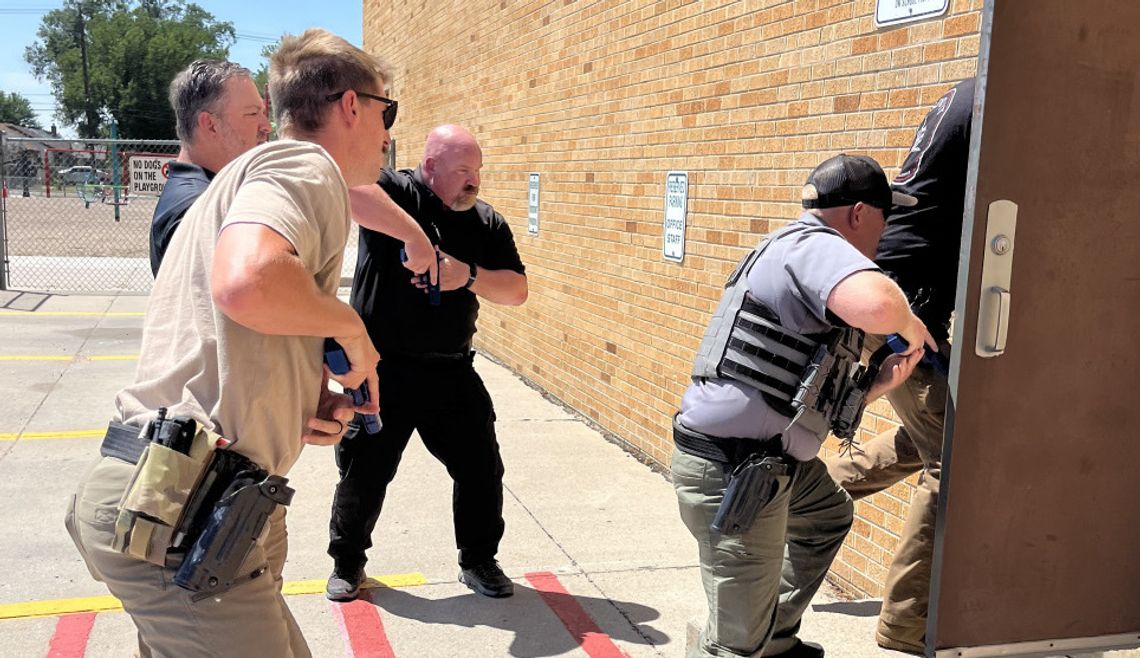
In the aftermath of the tragedy, authorities have pointed to multiple forms of training—including a program at Texas State University— for helping first responders save lives as they respond to the attack.
“In Texas we are fortunate to have the Advanced Law Enforcement Rapid Response Training— that is the ALERRT Center through Texas State,” Lisa Davis, chief of police for the Austin Police Department, said in a press conference following the shooting. “That training, there is no doubt that that training and coordinated response with EMS saved lives on this night.”
The ALERRT Center at Texas State started in 2002 as a partnership between the Hays County Sheriff’s Department, San Marcos Police Department and Texas State University to provide active shooter response training for first responders. It now trains more than 60,000 first responders every year on how to respond during an active attack.
“It has evolved, as we have seen over the years, people are utilizing all kinds of tools to carry out mass casualties, and so our curriculum has evolved as well,” James Keith, director of external relations for ALERRT, said. “Being based at Texas State University, we provide a research aspect to all of our training.”
The center develops curriculum with law enforcement partners like the FBI that is continually updated with the the latest tactics and strategies.
First responders said they arrived on scene on West 6th Street within 57 seconds. Officials said that coordination and speed are no accident.
“I talked about the ALERRT Center and our partnership with Texas State,” Davis said. “…We have CAST, which is our Counter Assault Strike Team. That includes EMS, AFD and APD and they sat in this very room [where the press conference was being held] every Friday, Saturday and Sunday night to address potential threat concerns from our entertainment areas. That is something that we have to be prepared for. When you have large-scale events… we are there and prepared.”
Keith said one focus of the training program is teaching different first-responding agencies to act under a “unified command.”
“That way you eliminate any sort of communication barriers, any sort of, ‘Who’s in charge’ sort of dilemma. And that’s what we saw happen in Austin. Their first responders worked together as a team. They moved quickly. They were on scene in less than a minute, and they were focused on taking out the gunman. That is the first thing that we teach in our training, is stop the killing, stop the dying, and then help those who are wounded.”
Beyond that, they focus on cross-training. It wasn’t standard practice a few decades ago for police officers to perform CPR. They are now trained to provide-life saving measures and to even transport a patient if needed.
“That’s exactly what we saw in Austin,” Keith said. “It was textbook. We have a great working relationship with Austin Police, fire and EMS. We work with them on a regular basis. We train with them on a regular basis. It was good to see those officers, those fire and EMS personnel, putting our training into practice to help stop this from becoming an even worse situation.”
He also said there was no doubt that the training helped save lives.
“We are saddened by the loss. We’re saddened by the tragedy that unfolded there. We are motivated to continue to provide this training around the world. We want our first responders to feel equipped and to know how to stop these incidents as quickly as possible.”
Texas State is working to help with that. Last month, the university announced plans to invest $25 million into a new training center for ALERRT. Many of the facilities currently in use are spread out across San Marcos at multiple locations that are aging.
“With that investment, we’re going to have one facility where we will all be under one roof. … It is really going to allow us to get those up to speed. We are able to host people from all around the world at the facility, and we want to be able to provide them with as many tools as we can. That should include a training facility that’s modern and up to date and that is what we’re going to be able to provide with this funding.”
Groundbreaking on the training facility near the San Marcos Airport is expected in April, with construction estimated to take around a year.
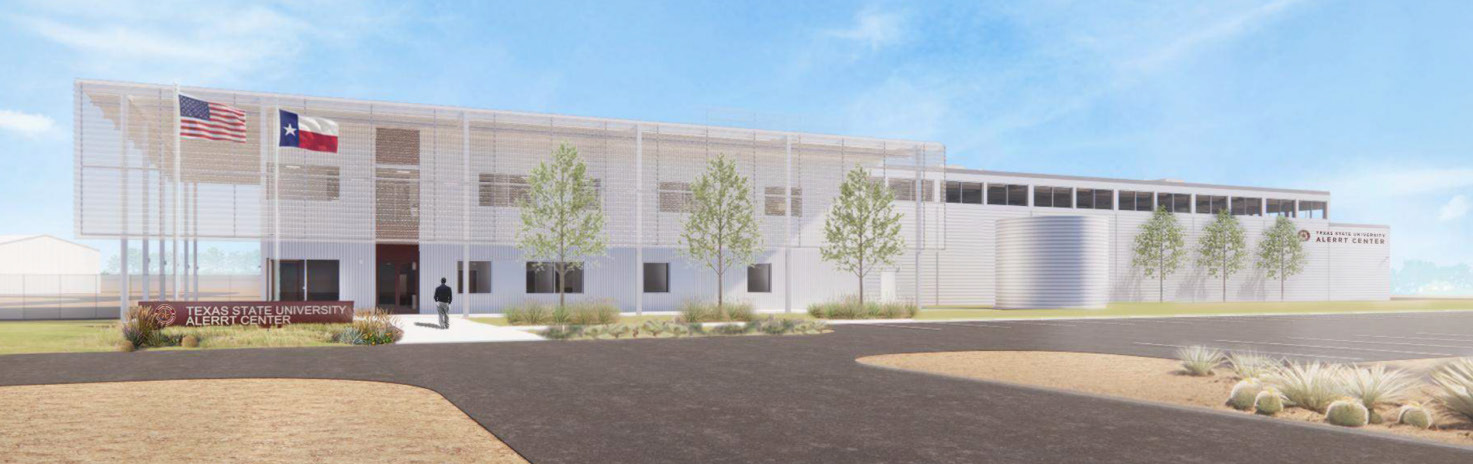
Last month, Texas State announced plans for a new $25 million training center for ALERRT. Rendering provided by the ALERRT Center