The railroad comes to San Marcos
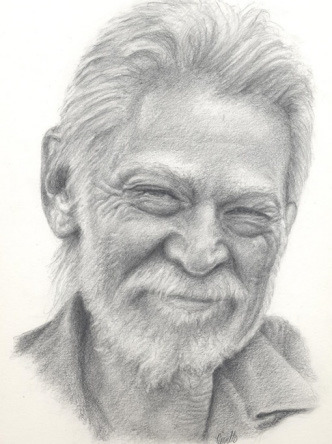
Henry Coffield was born in 1839 in Martin Co., NC. Sometime in the 1850s, the Coffield family moved to Burleson Co., TX. In 1860, Henry still lived with his parents, Thomas Reddick and Mary Elizabeth (Folk) Coffield in Burleson Co. The nearest post office was in Lexington, which is now in Lee Co.
On 12 Oct. 1861, Coffield enlisted as a private in Captain W.W. Carter’s Company for McLennan Co. By war’s end, Capt. Coffield commanded his own company D in J.P. Border’s Regiment, second Brigade, Maxey’s Division.
After the War, Coffield made his way to San Marcos and, in 1874, married Martha Ellen Wilson, who was called, variously, Mattie or Nellie.
A trained lawyer, Coffield set up a legal shop in San Marcos. That business must have been similar to musical chairs. In 1874, W.O. Hutchison and S.B. McBride were law partners; they split in 1876. Whereupon, McBride and Coffield made common cause; a union which lasted some six months.
By 1877, the firm of McBride & Coffield split and, that same year, Coffield joined Edward Reeves Kone in Kone & Coffield until they, too, split the blanket and Coffield joined O.T. Brown in Brown & Coffield. Coffield was to become San Marcos’ second mayor; O.T. Brown its third.
The first occurred in the general, and town, elections on 5 Nov. 1878, Henry B. Coffield became San Marcos’ second mayor.
Coffield kept busy. He had some land roughly where the Performing Arts Center is today. He put in an apple tree orchard, and got seedlings started. In December 1877, he offered them for sale, December being the time to transplant them. In November 1878, he was at it again: ten cents each.
He had 20 acres, way too much for an apple farm, so he began developing the land. He put in the Coffield Addition to San Marcos. I think the University slid down hill and covered it all.
Or almost all.
The railroad was coming to town. Maybe. The International & Great Northern railroad had begun construction at St. Louis, MO, and proposed to drive SW to Laredo, via Little Rock, Texarkana, Palestine, and Austin. Was it possible that I&GN might choose San Marcos on its push to San Antonio?
The I&GN thought long and hard about the best route from Austin to San Antonio. At one point, Seguin was a contender because it already had a railroad to which the I&GN could connect. San Marcos lobbied hard to be chosen. Fairly quickly, the railroad bowed to the inevitable and chose San Marcos. That required concessions, enthusiastically given, by the City; codified in yet another town ordinance, published in the Free Press on 10 July 1880.
Said ordinance granted to the International and Great Northern Railroad company the right of way through and over certain streets and alleys of the Town of San Marcos, and authorized said railroad company to construct depot buildings, side tracks and switches within the said town, and a bridge across the San Marcos River.
Whereas, the International and Great Northern Railroad company has submitted a proposition in writing to the mayor and board of aldermen of the town of San Marcos, in which it proposes and obligates itself in the construction of said railroad from the city of Austin to the city of San Antonio, to construct the same through the city of San Marcos; and whereas said railroad company has agreed to locate, build and maintain a passenger depot and freight depot on a certain eighteen and one half acres of land designated by said company for a depot and right of way grounds within the limits of said town: Sec. 1. Be it therefore be ordained by the town council of the Town of San Marcos that the right of way over, upon, across or through any portion of the streets and alleys embraced within the said eighteen and one half acres of land in said town is hereby granted, and permitted to the International and Great Northern Railroad company for its use and construction and maintenance of its railroad and the said passenger and freight depots in and through said town together with the right and privilege of constructing and maintaining a bridge over the San Marcos river at any place adjacent to and in connection with the said eighteen and one half acres, as may by said railroad company be deemed necessary and proper. And the said railroad company is further authorized and permitted to establish, construct and maintain a freight depot and a passenger depot on the same eighteen and one half acres of land, it having been donated by the citizens for that purpose to said company.
Sec. 2. The said railroad company shall be required to construct and maintain good and sufficient crosses where said Railroad crosses Austin St. but said company, in consideration of the premises, is hereby relieved from the necessity of making, maintaining or keeping in repair crossings on other streets of said town, and in view of the public inconvenience which would be occasioned by the construction of crossings where said Railroad crosses Comal, San Antonio, Fort, Cedar, Union, and Water streets, the Town of San Marcos further agrees and binds itself that no crossings shall hereafter be maintained or constructed, where said Railroad crosses said last named streets.
[Water and Union streets no longer exist; they were under what is now Veramendi Park. Cedar Street is probably Edward Gary. Fort Street was renamed Hopkins Street in 1950. The Fort Street Presbyterian Church preserves the name. Today, San Marcos has a Comal Street, but it is not the one specified in 1880; that Comal Street ran SW to intersect with the south end of North Street. It may have run where MLK runs now. The original San Antonio street appears to have survived.] Sec. 3. The Town of San Marcos further agrees and obligates itself to indemnify and hold harmless the said Railroad company from all damages that may be claimed by abutting proprietors for the use of any street for Railroad purposes: Provided, however, that said town shall not be liable in any damages claimed by abutting proprietors, which may arise from a negligent and unskillful construction or operation of said Railroad by the Railroad company.
Sec. 4. The said Railroad company shall be required to keep open a sufficient space on the north or west side of their track from end to end of the said 18 and one half acres, and a sufficient space on the south or east side of the said 18 and one half acres acres from Austin to Union streets for the safe and convenient passage of teams, carriages, and other vehicles and persons.
Sec. 5. This ordinance shall take effect and be in force from and after its passage and after its publication as required by law.
Board of Aldermen L.W. Mitchell, Thos R. Fourqurean, P. R. Turner, D. P. Hopkins H.B. Coffield, Mayor S.B. McBride, acting Secretary The I&GN reached Austin on 28 Dec. 1876 and money ran out. San Marcos would have to wait a little more for the railroad.
The San Marcos Free Press of Saturday 2 October 1880 said: IT HAS COME! Thursday was a great day in San Marcos — the greatest in fact, by far, in history. The construction corps of the International, which had been quietly but steadily “moving on our works” in spite of the late bad weather, suddenly made a “charge at double quick” across the bridge over the San Marcos, and soon held undisputed possession of our town, which all at once has bloomed out into a railroad headquarters — trains going and coming — engines screaming while the sturdy construction force, working day and night, are pushing still further ahead.
To our numerous juveniles and not a few adults who never before saw a railroad train, or a road in process of construction, the scene and the day will long be memorable.” ...
“Ex-Gov [James Webb] Throckmorton, accompanied by Capt. [William C.] Walsh, Commissioner of the Land Office, came over on a special passenger train--the first which ever reached San Marcos.” Throckmorton made a speech at the Court House at night to a large audience.
If Mayor Coffield felt called upon to say a few words, they are not recorded in existing copies in the Free Press archive.
It is hard to imagine that very many San Marcos residents had “never before” seen either a train nor a railroad in construction. I would guess that the road to Kyle saw considerable traffic in horses, buggies, and surreys as San Marcans rode north to view construction progress, estimate, and bet on, the road’s arrival time in San Marcos, and groan at the inevitable delays.
But come it did. Problem solved. Well, not quite. The North — South transportation problem was much reduced. Buggies, stage coaches and dray carts were put in storage. Not all. The NS problem might have gone away, but the WE problem had not.
In June 1880, just before the I&GN reached San Marcos, a couple of Blanco merchants sent letters to counterparts in San Marcos. All of their railroad business went through Austin, the nearest terminal, perhaps 15 miles further than to San Marcos. Not a paltry difference when you consider that a loaded muledrawn cart could be expected to travel at most 20 miles per day in good conditions.
Then they sweetened the deal by asserting their conviction that other westward towns would prefer meeting the railroad at San Marcos rather than at Austin. Fredericksburg, Mason, Miles, et al. Each county would straighten its part of the road, make it suitable for increased travel, especially by wagon, and maintain it in usable condition. The linchpin was San Marcos; if Hays county roads were impassable, it didn’t matter what other counties were willing to do.
All that would make San Marcos a railroad hub of considerable importance, not to mention the cash infusion as drivers and animals consumed food and beverages purchased from San Marcos merchants. Too, as Blanco drivers rose early and got on the road, they’d be lucky to make the 36-mile trek to San Marcos in a day, thus requiring an overnight stay in San Marcos and more business for locals. Blanco county saw the same potential for profit if, say, Fredericksburg drovers had to spend the night in Blanco.
San Marcos had a decided advantage; the soon-to-arrive railroad. Coffield had already talked to the I&GN Right of Way Agent for the International, and learned that the railroad’s custom was to give substantial aid to public improvements of this kind. Improve the roads that led to San Marcos? Sure, they’d bring business to the railroad.
Almost immediately, County Judge Kone appointed a committee to go over the Blanco and Wimberly Mill roads in person; to ascertain what changes if any in the present location of said roads may be advisable for the purpose of improving and shortening them, obtaining the assistance of a practical engineer if they think it necessary; to determine upon the best plan to adopt in working said roads; to estimate as accurately as possible the expenditure necessary to put said roads in first rate condition; and to report to this body at a meeting to be set for Saturday the 10th of July 1880 at 3 p.m.
The next time you go to Blanco on RR12, thank the railroad for its part in making it possible.
The railroad arrived in San Marcos on 30 Sep 1880. Coffield lived to see it. He died some 9 months later on 28 Jun 1881. He is buried in Old Original J in the San Marcos city cemetery on Old RR12. findagrave # 105453971 On Tuesday 2 Nov. 1880, Ossian Tignor Brown was elected as San Marcos’ third mayor. Join us next week.