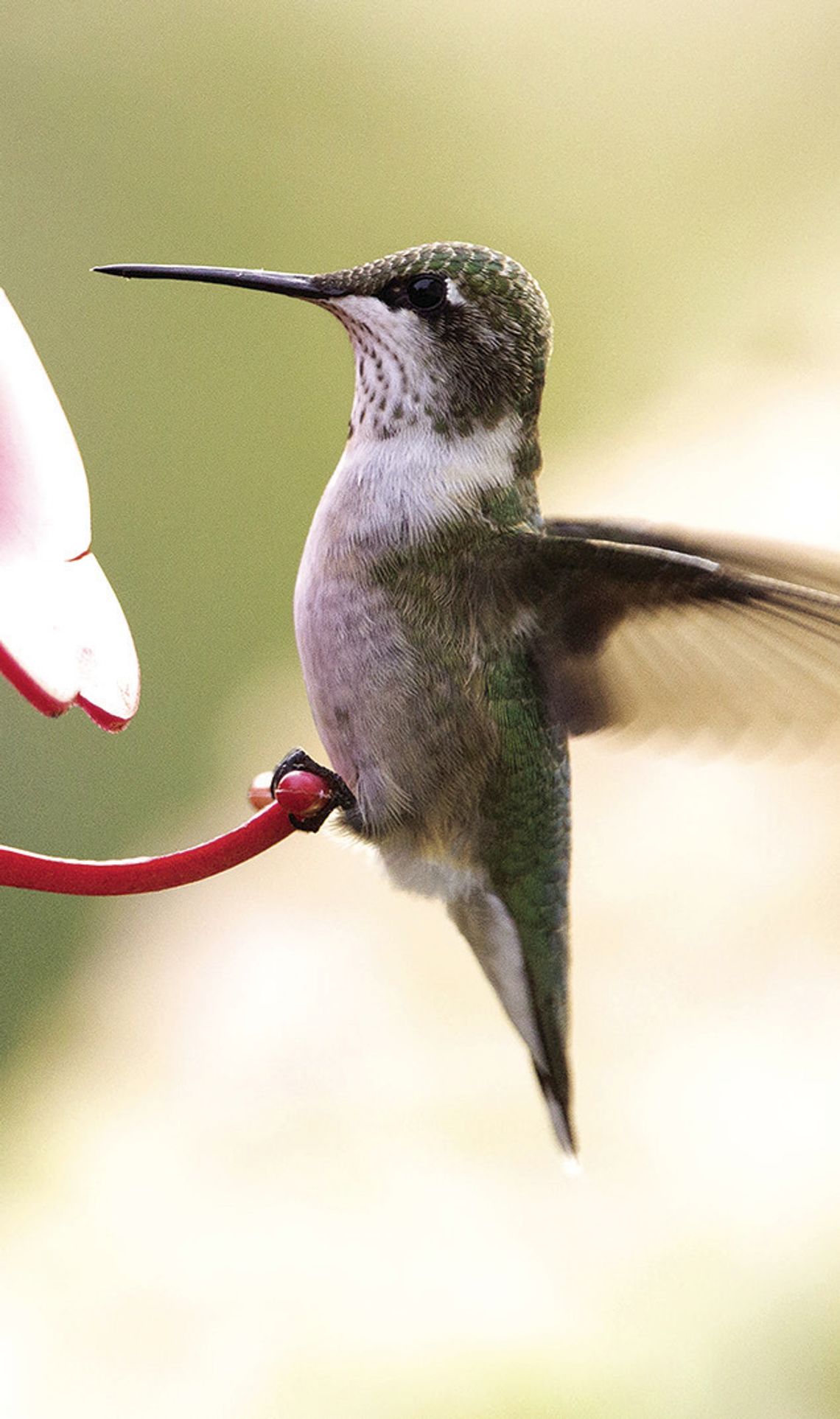
Keep an eye out and get those sugarwater feeders cleaned up – hummingbirds will soon be arriving. Spring also sees the return of purple martins and other birds that over-winter in Mexico and South America.
But it is the tiny hummingbird that I most look forward to.
For about three years, I had a little black-chinned male that showed up at my place like clockwork on March 17, St. Patrick’s Day. I thought he might be Irish.
But last year he was late, zipping in on March 23. I surely hope he comes back this year; I would miss the little rascal.
The most common hummers in our area are the ruby-throated and the black-chinned. I also spotted a bluethroated species one year, but that was a rarity.
The smallest hummer I have seen was the bee hummingbird, about two inches long and the smallest bird in the world. I saw it in Cuba. I have not seen the largest hummer – the Giant hummingbird, which is some nine inches long and found in South America.
There are no hummingbirds in Europe; it is strictly a New World bird.
Most hummers are dressed in iridescent, glittering feathers that turn the bird into a tiny jewel. Their wings beat so rapidly, they are almost invisible and they spend their day darting from flower to flower, sipping nectar and sometimes pollinating plants with the pollen carried around their beak.
The recommended mixture for sugar-water is four parts water to one part sugar. I like to zap my mixture for about three minutes in the microwave to insure it really mixes.
Some 320 species occur throughout the Americas, from Alaska to southern Chile. Columbia is home to 150 varieties but there are only 15 species nesting in the United States and Canada.
For a creature weighing little more than a dime, the hummingbird adds lots of glitter and glamour to the world of birds.
I hope you soon have a visit from this remarkable little bird.