TEXAS STATE
How officers solved the decades-old cold case
Four teenage girls were brutally murdered in a yogurt shop in Austin in 1991, before the business was set ablaze. The killer, Robert Eugene Brashers, was not identified until 2025, when he was connected to a series of similar crimes involving murder and sexual assault of minors across several states.
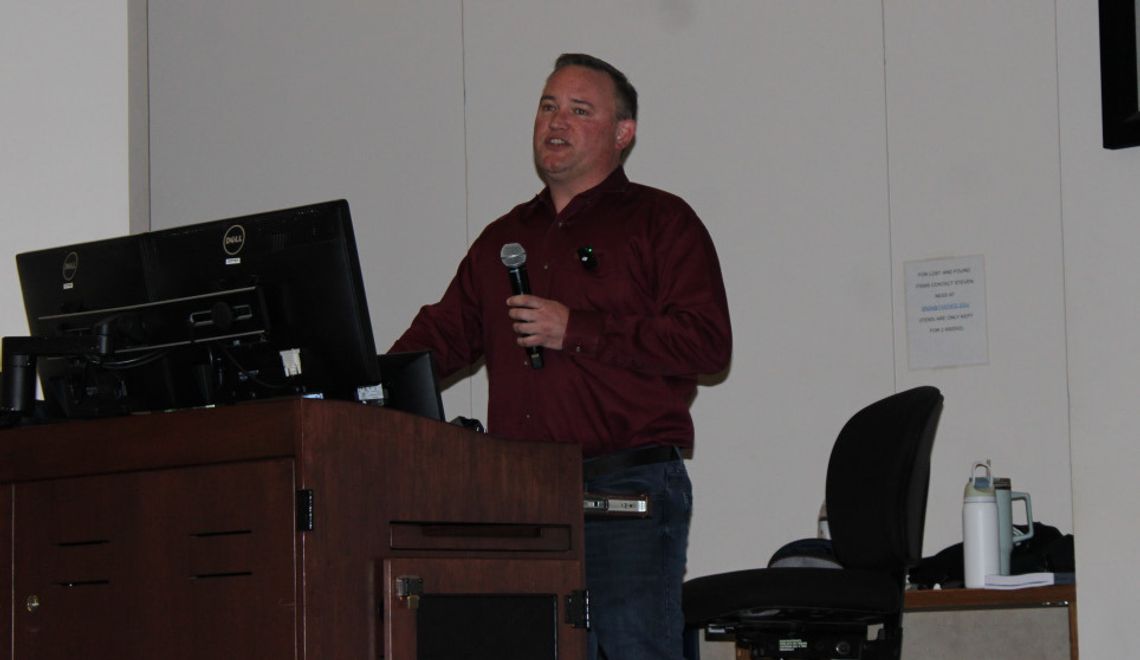
The officer who solved the case, Detective Dan Jackson, of the Austin Police Department’s Cold Case Unit, walked attendees through the false confessions, wrongful convictions, DNA and ballistic evidence, testing advancements and each step involved in solving the case, at Texas State University on March 11.
Amy Ayers, Eliza Thomas, Jennifer Harbison and Sarah Harbison were each tied up with their own clothing used as ligatures and shot in the back of the head, all with a .22 caliber and one with a second shot using a .380 caliber, before the building was set on fire.
“The way it happened is the fire department knocked out the fire. There was no electricity, just black in there, and one fireman bumps into something on his feet, looks down and sees the body of a nude teenager on the ground. Then he sees the second one and a third one, and then a short time later, they find the fourth one.”
The detectives took vaginal swabs at the scene and again during the autopsy, which resulted in DNA evidence, though that was harder to interpret at the time. The police also found a .380 caliber shell casing on the floor.
Early in the investigation, Maurice Pierce, 16 years old at the time, was stopped walking a few blocks from the yogurt shop with a .22 caliber gun that he claimed was the gun used in the murders. Pierce was interrogated alone for hours, which led to inconsistent confessions.
“Now, you’d probably lose your job,” Jackson said, referring to the fact that Pierce was underage and questioned without a guardian for such a long time.
During his confession, Pierce mentions his friends Forrest Welborn, Michael Scott and Robert Springsteen. All four of them were interviewed, which placed them in the area.
In the mid-1990s a task force was created, and in 1999 the boys were reinterviewed, eight years after the crime. Scott and Springsteen confessed. Jackson said that, although there was no evidence linking them to the scene, all four were arrested for Capital Murder with various outcomes.
Scott and Springsteen were tried separately and convicted largely based on each other’s confessions. Scott received life without parole and Springsteen got the death sentence. A Grand Jury ruled there was insufficient evidence to indict Forrest Welborn, and charges against Maurice Pierce were dismissed three years after his arrest.
Fortunately for the accused men, Jackson said a landmark Supreme Court ruling came during the appeals process in 2004. Crawford v. Washington changed the parameters for when hearsay statements can be admitted in criminal cases, so Scott and Springsteen were granted new trials.
Additionally, Y-STR DNA testing, which at the time only tested for 16 markers of Y-chromosome or male DNA, was utilized on the DNA found at the scene. It was not a match for any of the four men, so the charges were dismissed pending further investigation.
Pete Blair, a Texas State professor in the School of Criminal Justice and Criminology, was asked to analyze Scott’s confession for truthfulness as the threat of having another trial still loomed, and he turned to philosophy to help him do so. The concept of Coherence determines if a story is believable and all parts logically fit together, and Blair said a story can be internally consistent but still false, for example if it is a delusion. The concept of Correspondence suggests that the truth will match real-world evidence. Blair gave the example of a wet patio and lawn suggesting rain, but the lack of rain on the neighbor’s yard could mean that it was actually sprinklers.
In his method to evaluate the confession, Blair identified verifiable facts. He then did a Correspondence test by comparing those facts to investigation records and case files. He then looked for Coherence over time by examining whether details remained consistent throughout interrogation. He then checked for information leakage in which the officers accidentally or intentionally revealed details that could influence the confession. He found 17 potentially verifiable facts, and after each concept was accounted for, only one verifiable fact remained. The verifiable fact was that one of the victim’s shirts said “ICBY,” an acronym for the name of the shop, I Can’t Believe it’s Yogurt.
“I can’t say for certain whether this confession is true or false,” Blair said. “What I can say is, in reviewing the confession, I don’t see any information in the confession that would seem to indicate to me that Michael Scott knew things about this crime that only the criminal would know.”
Jackson said the original kid who confessed, Pierce, was killed after stabbing a police officer in the neck while fleeing during a traffic stop in 2010. Around 2018, evidence was submitted for testing again when DNA testing had advanced to the point of being able to identify 25 markers.
In 2022, Jackson was assigned the case with a mandate to take it in a new direction. He resubmitted the .380 caliber shell cartridge to the National Integrated Ballistic Information Network, and a match was made to an unsolved cold case in Lexington, Kentucky in which Linda Rutledge was shot in the head with a .380 caliber bullet, the same caliber that was used to shoot one of the Yogurt Shop victims. She was also left nude, and the building was set on fire. The offender, Brasher, was already deceased.
Jackson asked labs across the nation to manually search their YSTR DNA offender database, using the newly available 25-marker tests. It matched a solved sexual assault and homicide in 1990 out of Greenville, South Carolina, perpetrated by Brashers. Brashers was charged with several crimes during his life: a Homicide and Aggravated Battery in 1985, a stolen vehicle and stolen firearm in Georgia in 1992 and an attempted break-in and shooting in Arkansas in 1998.
After a standoff with the police in 1999, Brashers committed suicide using the .380 caliber gun that was used in the Yogurt Shop murders. Post-mortem, he was connected with a 2006 South Carolina double homicide, a 2016 home invasion and sexual assault, a 1998 double homicide in Missouri and a 1998 attempted home invasion in Tennessee.
All four original suspects’ charges were dismissed with prejudice, meaning they cannot be refiled.
Jackson said he will be collaborating with other agencies to uncover additional crimes committed by Brasher.
“I guarantee there’s more out there,” Jackson said.
He said he will also be doing training presentations to different agencies around the countries to show what they did and possibly spark ideas for their own cold cases.
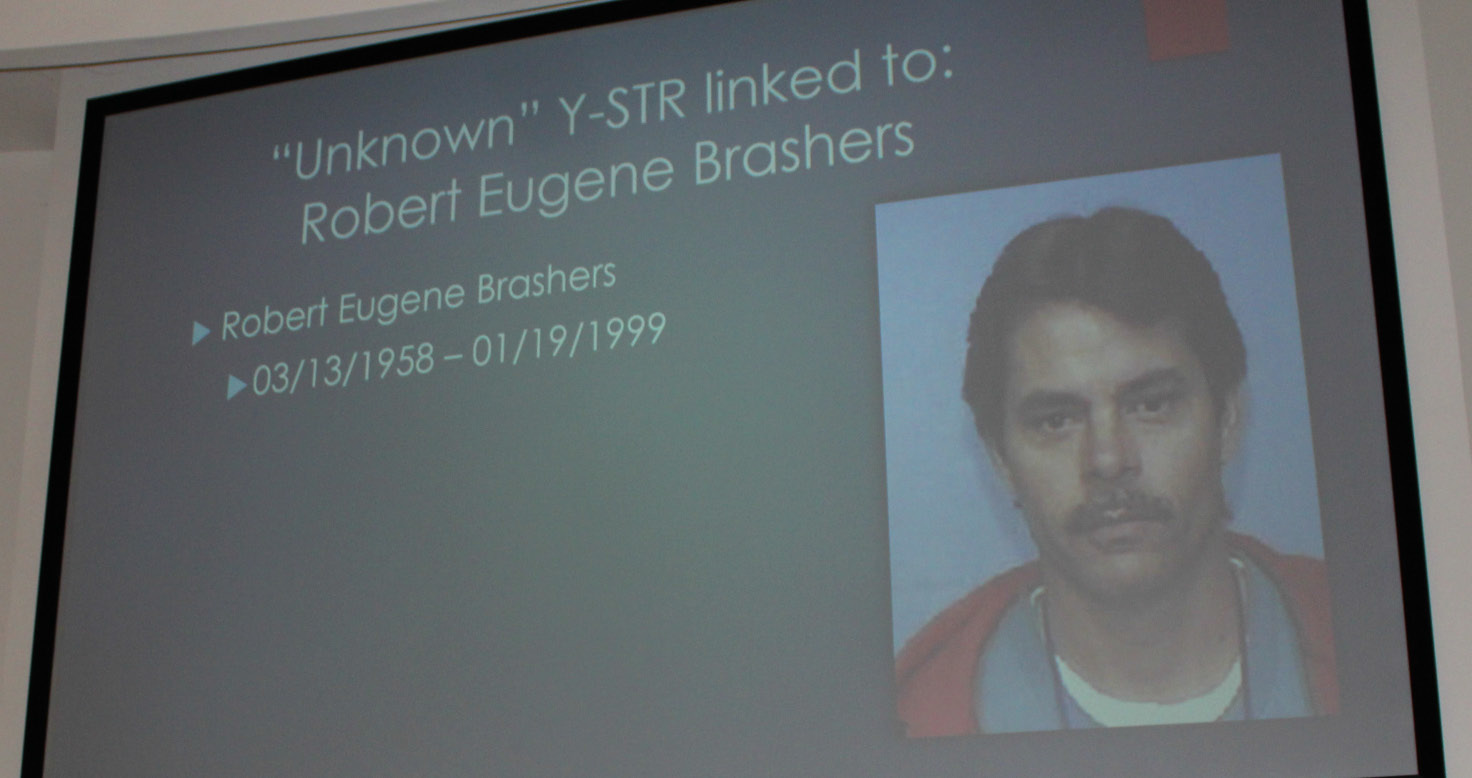
Jackson explained how Robert Eugene Brashers was tied to the Yogurt Shop Murders in addition to many other crimes.
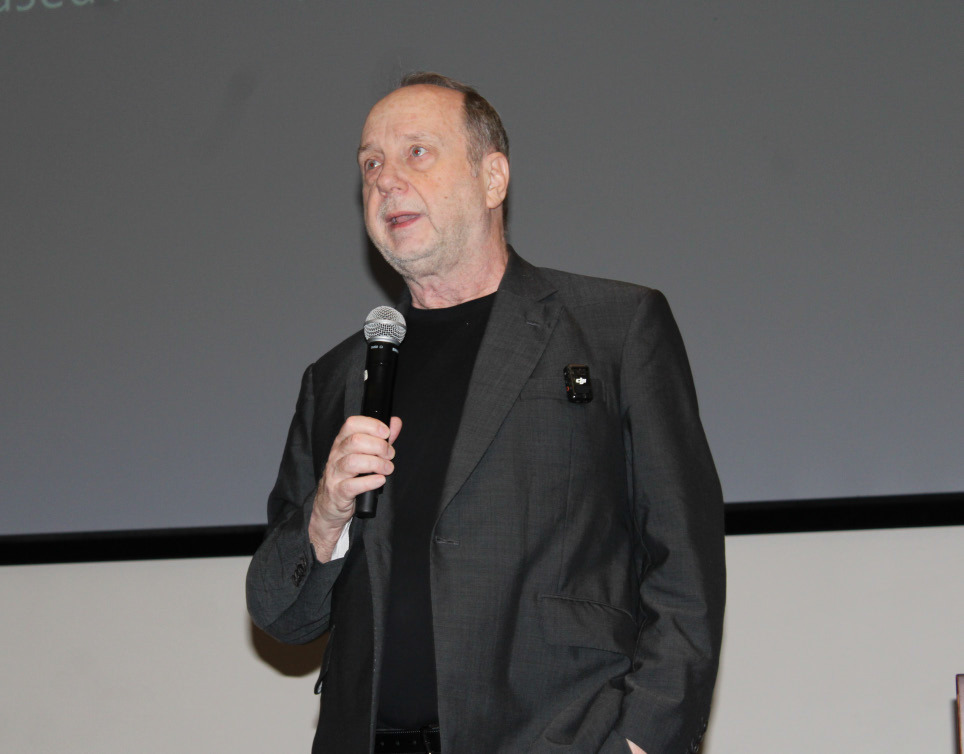
Kim Rossmo, PhD, a Texas State professor in the School of Criminal Justice and Criminology, explained the pitfalls of the original investigation, with its narrow focus on the original suspects.
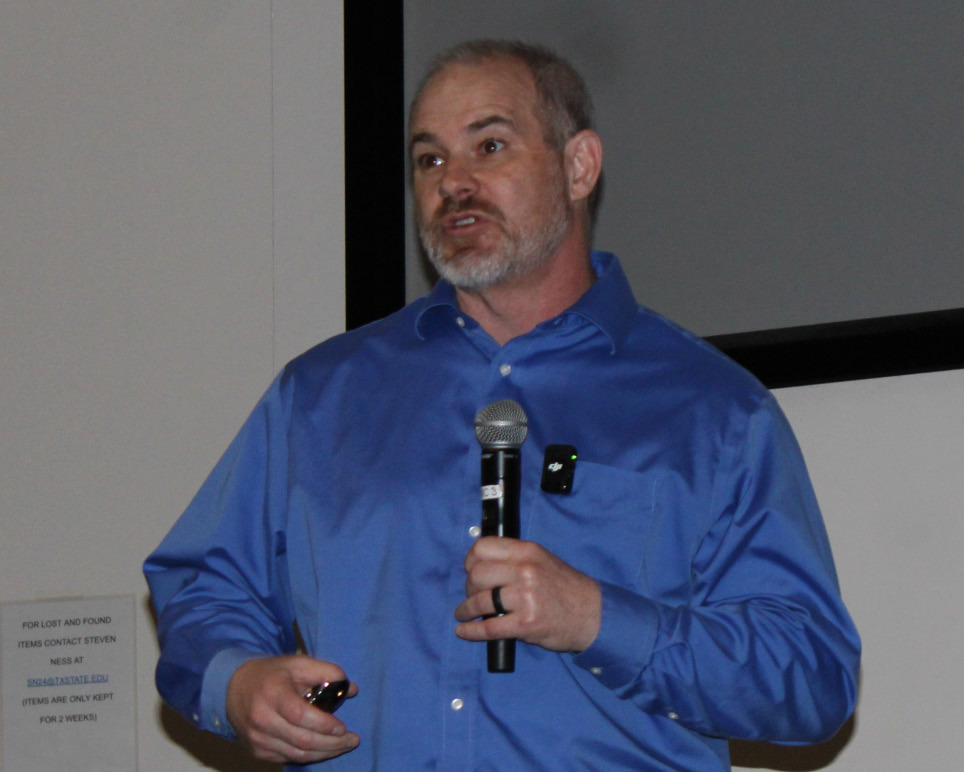
Pete Blair, a Texas State professor in the School of Criminal Justice and Criminology, walked the attendees through the process of determining the truthfulness of one of the suspect’s confessions.