MEADOWS CENTER
Much like the underground water systems that make up the Edwards Aquifer, little is known about what lies below. For Gwendolyn Hustvedt, using an atypical art form is her way of highlighting life less acknowledged.
Hustvedt, a fashion merchandising professor at Texas State University, was on a study abroad tour in London in 2017 when she visited the Fashion and Textiles Museum and a workshop caught her eye. After the tour, she attended the workshop for the Serti silk painting technique.
Serti, French for “fence,” is a silk painting technique in which designs are outlined with gutta or starch-based resist on dry, white, prewashed silk. Once the resist dries, it acts as a barrier for the dye, keeping the color in the outlined areas and achieving sharp, defined borders. The process is repeated, dye and resist layered on top of each other until the desired results.
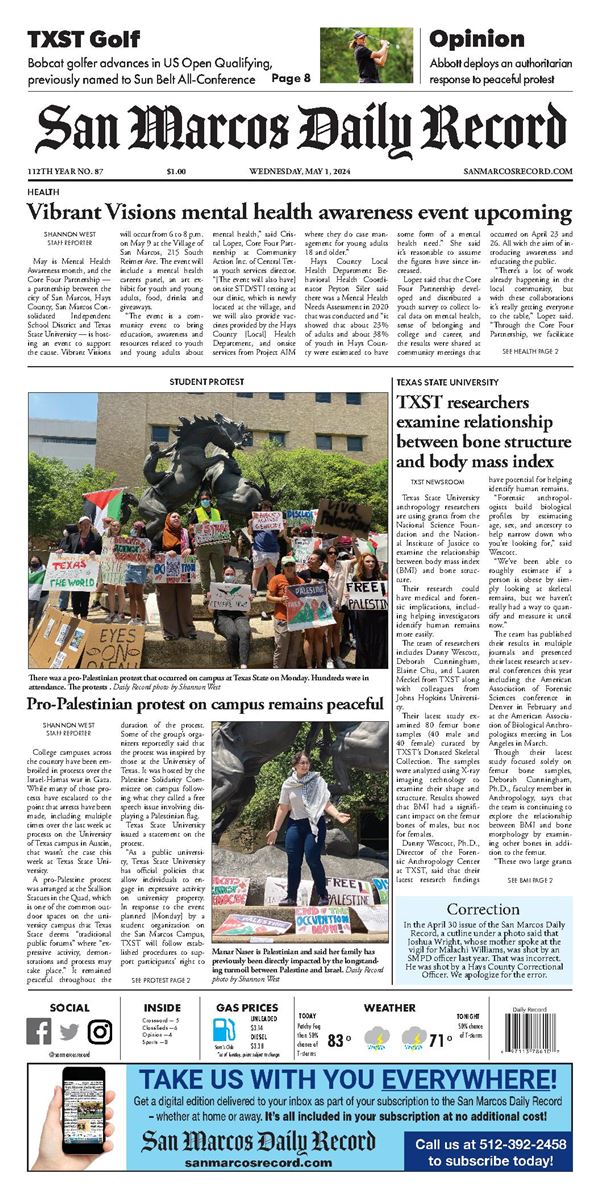
Hustvedt utilized her textiles background and the Serti technique to create 15 silk banners for her gallery at The Meadows Center for Water and Environment, “Groundwork: Honoring the Aquifer.”
“Groundwork: Honoring the Aquifer” is Hustvedt’s homage to what lies below the surface, the hidden foundations of life. It is a meditation on connection and sustainability. She was working on her sabbatical, and it was her chance to make something ambitious with silk painting.
With trees in mind, she began to think of the ground where trees are planted, where the roots grow and what’s beyond. Inspired by the San Marcos River and the Edwards Aquifer, she tapped into the curiosity of the subterranean and created her gallery.
“I wanted people to feel feelings about the literal actual ground they’re standing on because that’s part of what it means to be human,” said Hustvedt. “It makes me feel calm and connected to this ancient resource.”
Anna Jones, science communications manager for The Meadows Center, said the gallery is the first of its kind to be featured at Spring Hall, which is the exhibit space at the Meadows Center.
“It’s a special use of our site, we don’t get something like it very often,” said Jones. “But I love to incorporate art and events in our space as much as we can.”
Hustvedt offered a workshop at The Meadows Center at the end of February, demonstrating the Serti silk technique to complement her exhibit. Due to an overwhelming demand, she also added another workshop during March.
“Relax, let go of your ambitions to create a spirit of a creature, not an actual drawing of it,” said Hustvedt. “This medium involves lots of artistic acceptance.”
Marie White and Heather Swienten, students at Texas State, attended the workshop after reading about it in the San Marcos Art Center Newsletter.
“It is a good balance of mindlessness and creativity,” said White. “We try to do something new every week, like a weekly craft night. I am very satisfied with how it came out.”
“Groundwork: Honoring the Aquifer” is currently free to the public on the third floor of Spring Hall at The Meadows Center and is available for viewing until April 26. The Meadows Center is open all week from 9:30 a.m. to 4 p.m.
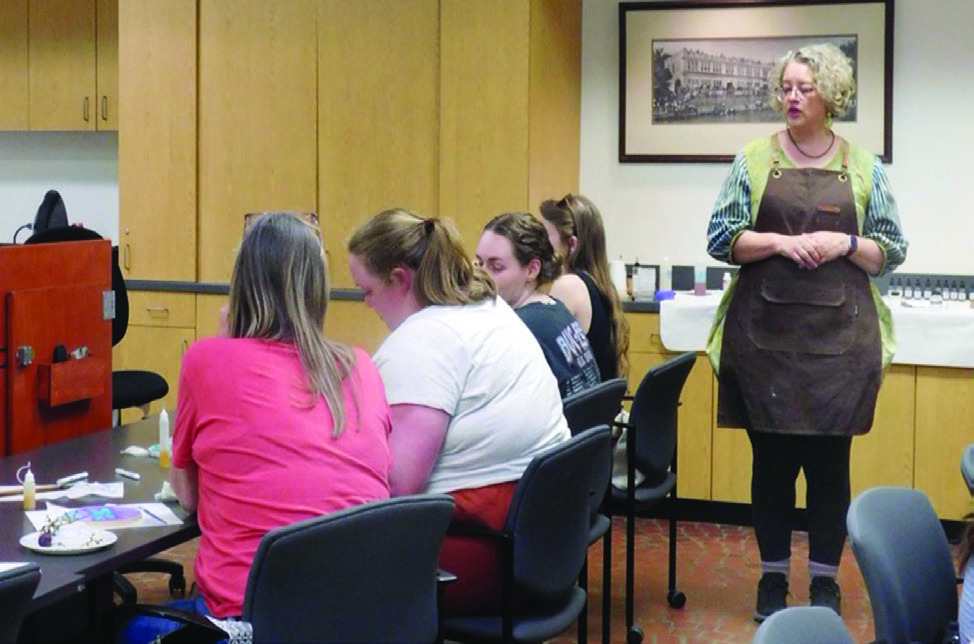
Gwendolyn Hustvedt leads a silk-painting course at the Meadows Center on Feb. 28. Photo courtesy Kira Utter
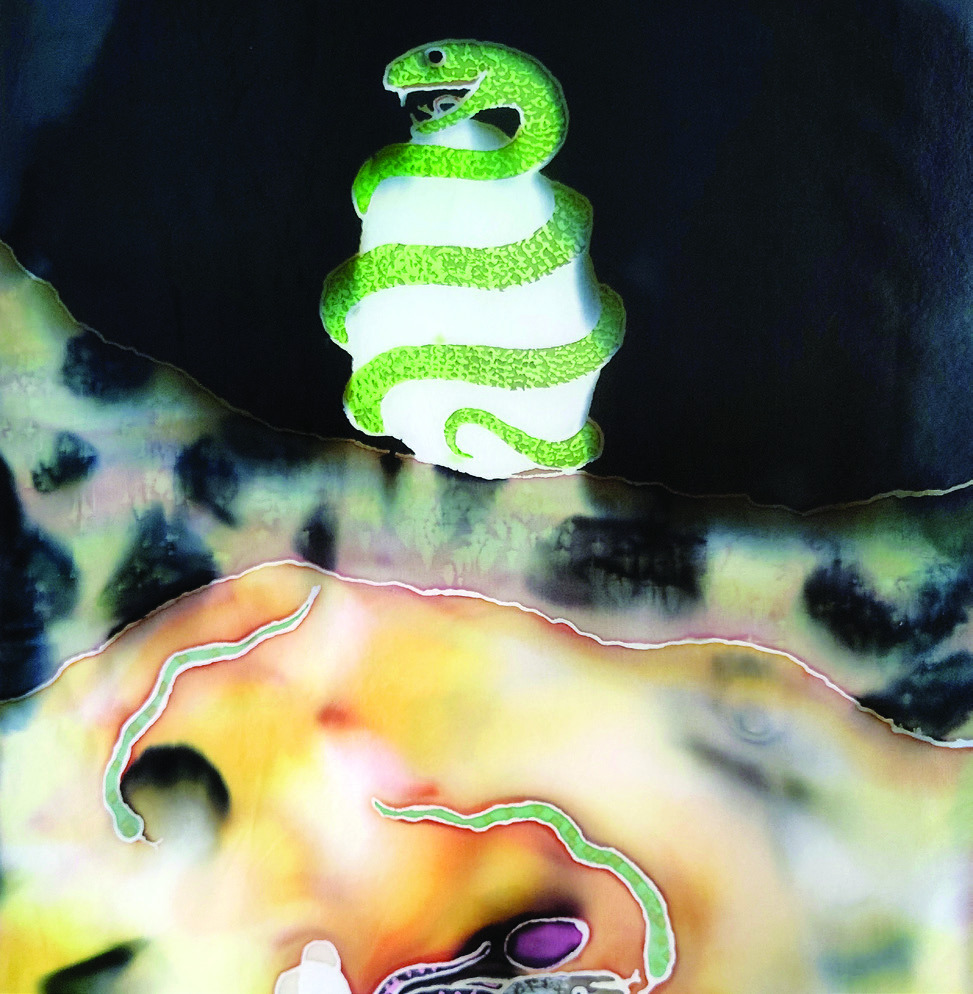
Detail from “Snakes and Eggs,” part of the the “Groundwork: Honoring the Aquifer” exhibit of silk paintings at the Meadows Center. Photo courtesy Texas State University.