KIWANIS CLUB OF SAN MARCOS
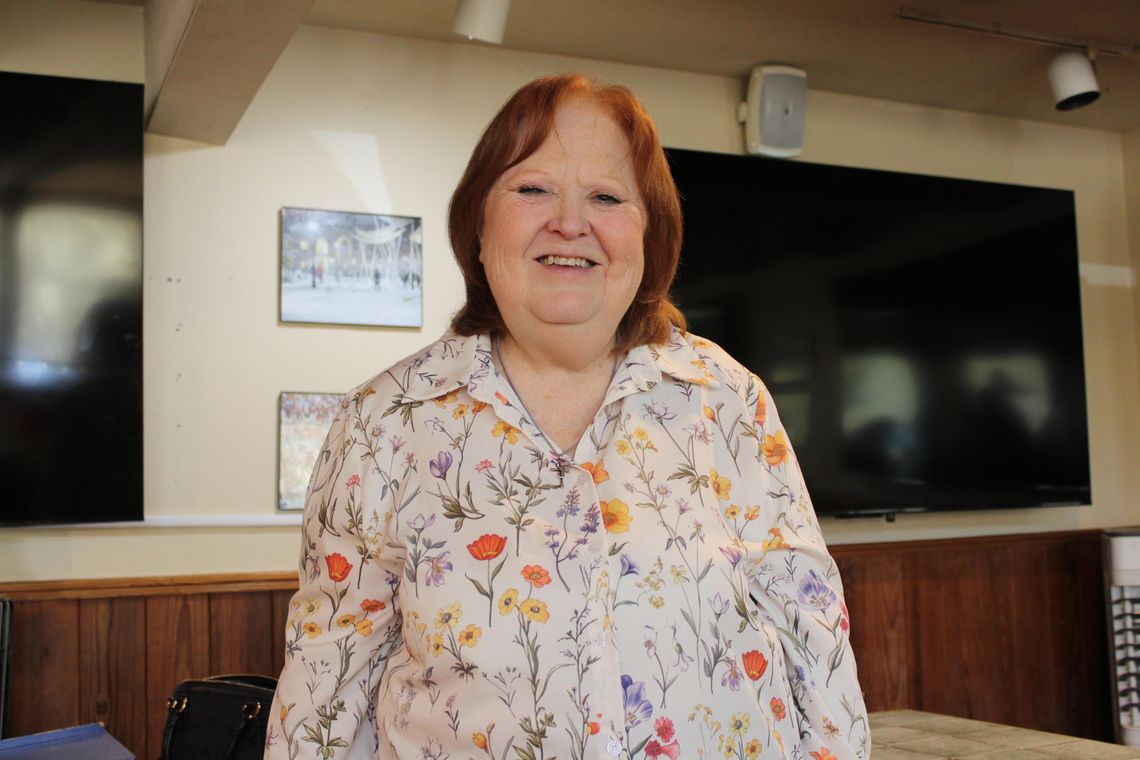
The history of San Marcos is unfolding across three months at Grin’s Restaurant. The Kiwanis Club of San Marcos is hosting local historian Linda Coker to tell the town’s story. Coker told part one of the history at the March 19 meeting.
Though people have inhabited the area for several thousands of years, Coker began at San Marcos de Neve in 1808 when European settlers arrived at the intersection of what is now Old Bastrop Highway and the river. Manuel Antonio Cordero y Bustamante and Don Felipe Roque de la Portilla decided to bring people to the area and 81 volunteered to come.
“They were promised plenty of land, 25 natives to help clear the land and stuff, seeds, equipment, soldiers, a priest, a school and a teacher,” Coker said. “They never got the seeds or the equipment. The soldiers came, and they immediately left and went to San Antonio. They didn’t get the priest. They didn’t get the school. They didn’t get the teacher. They didn’t get the Indians.”
The first settlers did not fare well when a flood hit, and a series of unfortunate events made life in San Marcos de Neve untenable.
“These intrepid people started out with 1,620 cattle, 1,400 horses and 72 bureaus of what they brought with them. Within a year, they had 300 cattle, 570 horses and 30 of the bureaus left, and they had been flooded out,” Coker said. “There was a severe drought, and they never grew any crops. Then there was another flood, and then the Comanches kept attacking them. They ended up losing more than half of those settlers, and they abandoned the site and all ran back to Refugio.”
It went uninhabited for some time until after the Texas Revolution when soldiers were paid with land. The Lieutenant Governor of Texas had several parcels and offered to sell some land to John Pitts. It was located where Kissing Tree now sits.
“That became the town called Stringtown, which predates San Marcos,” Coker said. “A lot of people have never even heard of Stringtown.”
A man named James Purdy donated a building for a school, a general store and a blacksmith shop, which made up Stringtown’s downtown. The flat side of town is where all the ranching occurred.
Coker said the only thing left of Stringtown is three-quarters of a stone building located on the property where the school district stores its buses.
“It was the Cone family’s homestead. It was a smokehouse or storage. I’m sure they used it for multiple things,” Coker said. “The last building before that was a slave cabin that was actually torn down to use in reconstruction of ... Veramendi Plaza — to help fix it.”
After the Civil War, the inhabitants of Stringtown lost access to slave labor and began selling the land.
“Most of the families moved into town, like the Burlesons, the Cones, the Purdys, the Pitts. There’s a lot of descendants that still live here,” Coker said. “San Marcos had people coming in. The original building in San Marcos was the Moon Hotel, which was about where Colloquium Books was, and the first public building was right next to it. The county built it.”
Coker will tell the second part of the city’s history at the meeting at Grin’s from 11:30 a.m. to 1 p.m. on April 23 and part three at the same time on May 21. The Kiwanis Club will purchase lunch for any guest considering membership.