TEXAS STATE UNIVERSITY
Intimacy coordinators bring awareness to on-set consent
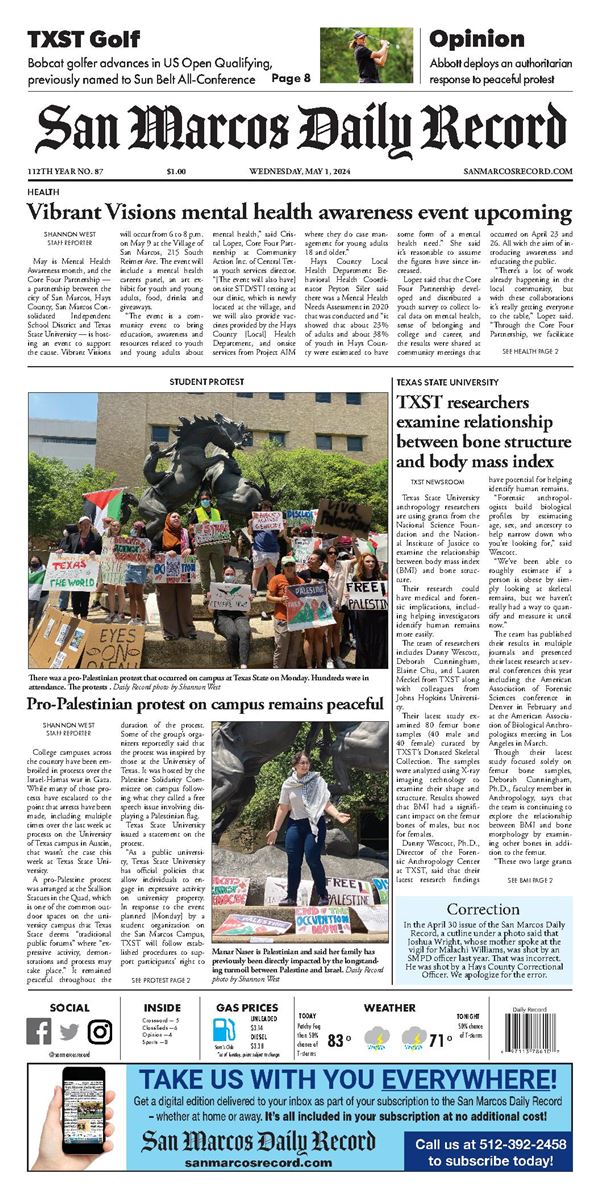
Students Against Violence (SAV) partnered with the Texas State Department of Theater and Dance to host a screening of the film “Make It Look Real” on April 20, followed by discussions on consent and sexual assault in recognition of Sexual Assault Awareness Month.
The 2024 film “Make It Look Real” follows Claire Warden, an intimacy coordinator in Broadway and Hollywood, docu- menting the vital role professionals play in ensuring consent on stage and screen.
Intimacy coordinators choreograph and supervise sex scenes for films, television and stage performances. This role emerged in 2018, gaining prominence during the 2020 #MeToo movement when women began sharing their experiences related to intimate scenes.
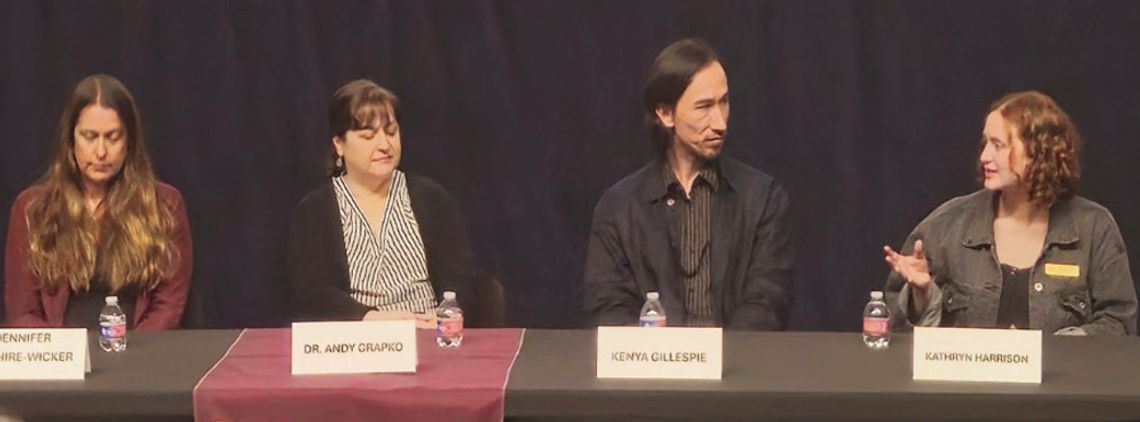
Andy Grapko, the intimacy coordinator at The University of Texas at Austin, shared her perspective as a former actor. She recalled the lack of intimacy protocols or during her time on stage, leaving her unaware of her partner’s actions.
“I never knew from night to night what was going to happen, where my partner’s hands were going, or if he was going to shove his tongue down my throat. We were winging it through the scene,” said Grapko. “Passion fades, but choreography is forever. It stays the same, and it’s reliable and dependable.”
The protocols Grapko mentioned ensure that everyone involved, both cast and crew, gives their consent and feels fully comfortable with everything that will happen in the intimacy scenes before filming or rehearsal.
Warden, who wasn’t at the Texas State event but was the focus of “Make It Look Real,” said in the film, she requires actors to sign a consent form outlining their comfort levels regarding each scene, including those involving kissing or touching.
Kara-Lynn Vaeni, the intimacy coordinator at Texas State, emphasized that even though performances involve college students, verbal consent is still required for these scenes.
“It’s also their (the intimacy coordinator) job to make sure that everyone who is working around the intimacy has a chance to give consent to working on that scene or not working on that scene,” Vaeni said. “Everyone who’s going to be present when we rehearse that needs to know in advance that is what’s happening so that they can decide for themselves if they want to be there when it happens or not.”
Intimacy coordinators officially joined SAG-AFTRA (Screen Actors Guild – American Federation of Television and Radio Artists) in February 2026, which provides them with additional benefits and recognition on film sets. Training is also now offered through special programs.
“There’s a lot of controversy in the industry about whether you have to be certified or not certified,” said Grapko. “And there are certainly a lot of great coordinators who know what they’re doing or not certified, but they’re increasingly, I think we’re going to see more certification because we have to have some ability to standardize training and know that people have a certain level of quality. It’s still up in the air, but I think that’s where we’re heading.”